
Backcasting (Working Backward from a Positive Future)

Most lapsed patients don't avoid coming back because they've stopped caring about their health, they avoid it because they can't see a clear path from where they are now to where they want to be. That gap between present pain and future possibility feels overwhelming, and when the brain perceives a goal as distant or murky, it defaults to inaction. What if your re-engagement messages could close that gap in a single sentence?
The Science Behind Backcasting (Working Backward from a Positive Future)
Backcasting is a strategic thinking technique in which you begin by vividly imagining a desired future state, then work backward to identify the specific steps, decisions, and conditions that would need to exist to make that future a reality. Unlike forecasting, which starts in the present and projects forward into uncertainty, backcasting anchors the mind in a positive destination first, making the path feel navigable rather than daunting. The concept was formalised in planning and environmental science contexts in the 1970s and 1980s, most notably by researcher John Robinson, but has since been applied broadly in decision-making, coaching, and behavioural psychology.
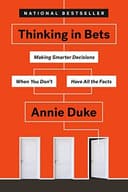
The psychological power of backcasting lies in how it interacts with mental simulation and goal-directed thinking. Research in cognitive psychology consistently shows that when people mentally simulate a positive future outcome in concrete, sensory detail, not just 'I'll feel better' but 'I'll be kicking a ball with my kids on Saturday afternoon without wincing', they experience a measurable increase in motivation and a reduction in perceived barriers. This is partly explained by what psychologists call 'prospective cognition': the brain's capacity to simulate future events activates many of the same neural pathways as actually experiencing them, which means a vivid future vision carries real motivational weight. Annie Duke, in her work on decision quality under uncertainty, builds on this by arguing that working backward from a defined positive outcome forces people to identify the concrete decision points that separate where they are from where they want to be, turning abstract hope into actionable strategy.
What makes backcasting particularly powerful in a health context is that it sidesteps one of the most common psychological obstacles to re-engagement: present bias. Present bias describes the well-documented human tendency to overweight immediate costs (the effort of booking, the awkwardness of returning after a long gap, the expense) relative to future benefits (being pain-free, mobile, and active). When a patient is asked to simply 'book an appointment,' their brain automatically runs a cost-benefit analysis anchored in the present moment, and the costs often win. Backcasting flips this architecture. By establishing the future benefit as the starting point, vivid, emotionally resonant, and personally meaningful, it reframes the appointment not as a cost to be weighed, but as an obvious and necessary step on a path the patient has already emotionally committed to.
Research on implementation intentions, conducted extensively by psychologist Peter Gollwitzer, supports the effectiveness of this backward-planning approach. Studies show that people who specify not just what they want to achieve, but the specific situational steps required to get there, are significantly more likely to follow through, in some studies, two to three times more likely than those who set goals without a concrete pathway. Backcasting operationalises this at the motivational level: it helps patients mentally construct the 'if-then' chain that connects a desired outcome to a first, specific, manageable action.
The Research
One of the most instructive demonstrations of future-focused mental simulation improving health behaviours comes from research by Gabriele Oettingen and her colleagues on a technique called Mental Contrasting with Implementation Intentions (MCII). In a series of studies, Oettingen found that simply fantasising about a positive future (without contrasting it against present obstacles) actually reduced motivation, the brain, having simulated the reward, partially experienced it and relaxed its drive to pursue it. However, when participants were guided to vividly imagine a positive future outcome and then systematically work backward through the obstacles and steps required to achieve it, essentially a structured form of backcasting, their commitment and follow-through rates increased substantially. In one study examining health-related behaviour change, participants who used this structured backward-planning approach were significantly more likely to initiate the target behaviour within a set timeframe compared to those who either fantasised freely or received standard goal-setting instructions. The critical mechanism was specificity: the backward-planning process forced participants to identify the precise first action, which dramatically reduced the ambiguity that otherwise leads to procrastination.
This finding maps directly onto the re-engagement challenge facing allied health practices. When a lapsed patient receives a generic reminder message, they have no mental pathway constructed, just a vague sense that they 'should probably get back in.' But when a message guides them to first picture a specific positive outcome and then traces that outcome back to a single concrete next step (booking one appointment this week), it does the cognitive work of pathway construction for them, dramatically lowering the psychological activation energy required to act.
How to Apply This in Your Practice
The first step in applying backcasting to patient re-engagement is to build future-state visualisation into your outreach messaging. Rather than leading with appointment availability or a discount offer, lead with a vivid, personally relevant health destination. Your SMS or email might open with something like: 'Picture yourself three months from now, back on the tennis court, sleeping through the night, or carrying the shopping without that familiar ache in your lower back. For most of our patients who felt exactly where you do now, the path there started with one appointment.' This framing does two things simultaneously: it activates prospective cognition (the patient mentally simulates the positive future) and it immediately provides the backward-traced first step, compressing the entire decision pathway into a single, low-friction action.
To make this approach work at scale across your practice, you need to segment your lapsed patient list by presenting complaint or treatment history. A backcasting message that resonates for a postpartum physio patient returning after pelvic floor treatment is fundamentally different from one aimed at a tradesperson managing chronic lower back pain. Routiq's behavioural data layers allow you to personalise the future-state scenario based on what the patient was originally treated for, which is where the technique moves from mildly effective to genuinely compelling. Generic futures don't activate the brain the same way specific, personally relevant ones do, a podiatry patient doesn't visualise a generic 'active lifestyle,' they visualise walking the Camino they've been talking about, or standing through a full work shift without their heels burning.
Your workflow should follow a three-message sequence built around progressive backcasting. The first message (sent around the 60-day lapse mark) plants the future-state vision: 'You were making great progress with your shoulder. Imagine where you could be in another 8 weeks with a bit more consistency, we'd love to help you get there.' The second message (around day 75) makes the backward path explicit: 'Most patients who reach [specific goal relevant to their condition] tell us the turning point was simply not leaving too big a gap. One session can reset your momentum, we have availability this week.' The third message (around day 90) introduces gentle urgency grounded in the backcasting logic: 'The gap between where you are now and where you want to be doesn't close on its own, but it can close quickly with the right support. Here's a direct link to book.' Each message assumes the patient wants the positive future (because most do), and each one traces the path back one step further.
Finally, consider training your reception and clinical staff to use verbal backcasting during calls with lapsed patients. When a patient rings to enquire but hesitates to commit, a simple prompt from your receptionist, 'What would it mean for you to have this sorted by [specific upcoming event or timeframe]?', invites the patient to construct their own future vision, which is even more powerful than one you provide for them. Once they've articulated it aloud, the receptionist can reflect it back: 'So if we got you in on Thursday, you'd be well on track for that. I can book that right now if you'd like.' This verbal backcasting technique converts hesitation into commitment by making the path feel both personally meaningful and immediately actionable.
Get one behavioral science principle per week
Applied to patient retention. Backed by research. No fluff.
Seeing It in Action
Marcus is a 41-year-old project manager who completed a six-session course of treatment for chronic neck pain and tension headaches at a chiropractic clinic in Brisbane. His discharge summary noted excellent progress, with a recommendation to return for a maintenance review in six to eight weeks. Twelve weeks passed. Marcus hadn't re-booked, not because his neck had stopped bothering him (it had started tightening up again during a stressful project period), but because the gap now felt awkward, he wasn't sure he 'needed' another full course, and booking felt like admitting things had deteriorated. He was stuck in the present, weighing the friction of booking against a vague future benefit.
The clinic's Routiq-powered re-engagement sequence triggered at the 90-day mark with a message personalised to his treatment history: 'Marcus, when you finished with us you'd gone from daily headaches to almost none. Picture that again, waking up clear-headed, getting through a full work day without that familiar tension building through your shoulders. For most patients who were where you are now, getting back there started with a single 30-minute session. We have a spot Thursday at 5:30pm, want us to hold it for you?' The message didn't ask Marcus to evaluate his current pain level or weigh up costs. It invited him to re-inhabit the positive future he'd already experienced, and then handed him the first backward step on a plate.
Marcus replied within 20 minutes and booked the Thursday appointment. At the session, his chiropractor used a light verbal backcasting prompt, 'Where do you want to be with this by Christmas?', which led to a brief conversation about an upcoming family hiking trip. They agreed on a three-session plan with that specific goal in mind. Marcus completed all three sessions and self-referred his wife for shoulder treatment the following month. The practice hadn't offered a discount, hadn't guilted him about the gap, and hadn't led with availability. They'd simply given his brain a vivid destination and a clear first step backward from it.
Your Action Plan
- 1Audit your current re-engagement messages and identify whether they lead with present friction (availability, reminders, discounts) or future possibility, then rewrite them to open with a specific, condition-relevant positive future state the patient has already experienced or aspired to during treatment.
- 2Segment your lapsed patient list by presenting complaint so that backcasting messages reference a personally relevant future (e.g., returning to sport for musculoskeletal patients, pain-free work shifts for occupational injury patients, comfortable walking for podiatry patients) rather than generic wellness language.
- 3Build a three-message re-engagement sequence in Routiq that progressively traces the path backward, first planting the future vision, then making the pathway explicit, then connecting a specific available appointment to that pathway, spaced approximately two weeks apart starting from the 60-day lapse mark.
- 4Train reception staff in a one-sentence verbal backcasting prompt ('What would it mean for you to have this resolved by [specific date or event]?') to use during inbound enquiry calls with lapsed patients, and coach them to immediately reflect the patient's own answer back as a reason to book now.
- 5At the end of every treatment episode, document the patient's stated future goal (not just the clinical outcome) in a field visible to your reception team, so that any future re-engagement communication can reference their specific aspiration rather than their diagnosis, making backcasting messages feel personal rather than automated.
Key Takeaway
When you give a lapsed patient a vivid, specific vision of their positive health future and then trace the path back to a single appointment this week, you don't just remind them to book, you remove the psychological ambiguity that was always the real reason they hadn't.
Related Principles
Resulting (Outcome vs. Decision Quality): Help Patients See Past 'I Feel Fine' Luck
Switch and Thinking in Bets Combined Application: Decision Quality Under Uncertainty · Annie Duke
People judge the quality of their decisions by the outcome, not by the quality of the decision-making process. A patient who stopped treatment and didn't get wo
Reframing Uncertainty as Normal: Acknowledge Uncertainty to Build Credibility
Switch and Thinking in Bets Combined Application: Decision Quality Under Uncertainty · Annie Duke
Most people avoid decisions that feel uncertain. They'd rather do nothing (which feels safe) than act (which might be wrong).
Status Quo Bias: Why Patients Stick with Routines (and How to Use It)
Nudge · Richard H. Thaler & Cass R. Sunstein
People prefer the current state of affairs and resist change, even when change would benefit them. Disrupting their routine requires effort they instinctively a
Feedback Loops: Show Patients Their Progress to Prevent Treatment Drop-Off
Nudge · Richard H. Thaler & Cass R. Sunstein
People make better decisions when they receive clear, timely feedback on the consequences of their choices.