
The Complete Guide to Behavioral Science for Patient Retention
82 principles from 20 books. Each one explained, then applied to the challenge of getting lapsed patients back.
~111 min read · 20 books · 82 principles
Book 1
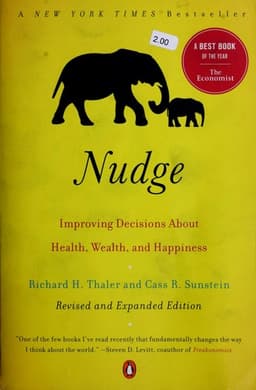
Nudge: Improving Decisions About Health, Wealth, and Happiness
Richard H. Thaler & Cass R. Sunstein (2008)
How small changes in the way choices are presented ("choice architecture") can dramatically influence decisions without restricting freedom.
Default Effects
People overwhelmingly stick with whatever option is presented as the default. When no active choice is required, inertia wins.
Read the full deep-dive →Status Quo Bias
People prefer the current state of affairs and resist change, even when change would benefit them. Disrupting their routine requires effort they instinctively avoid.
Read the full deep-dive →Simplification and Friction Reduction
The more steps required to complete an action, the less likely people are to follow through. Complexity kills compliance.
Read the full deep-dive →Planning Prompts (Implementation Intentions)
Research shows that simply asking people to make a specific plan (when, where, how) dramatically increases follow-through. Yale students who received a campus map and were asked to plan their route were 9x more likely to get a tetanus shot (28% vs 3%).
Read the full deep-dive →Feedback Loops
People make better decisions when they receive clear, timely feedback on the consequences of their choices.
Read the full deep-dive →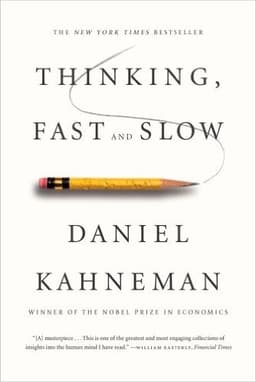
Book 2
Thinking, Fast and Slow
Daniel Kahneman (2011)
Our brains use two systems, fast/intuitive (System 1) and slow/deliberate (System 2), and understanding when each takes over explains most decision-making errors.
System 1 vs. System 2 Processing
Most daily decisions are made by the fast, automatic System 1. People don't deliberate about routine health appointments, they either have an automatic habit or they don't.
Read the full deep-dive →Loss Aversion
People feel the pain of losing something roughly twice as strongly as the pleasure of gaining the equivalent. Losses loom larger than gains.
Read the full deep-dive →The Anchoring Effect
People rely heavily on the first piece of information they encounter (the "anchor") when making decisions, even if it is arbitrary.
Read the full deep-dive →WYSIATI (What You See Is All There Is)
People make judgments based only on the information available to them, without considering what they don't know. If a patient doesn't see reminders about their health, it falls out of their mental model.
Read the full deep-dive →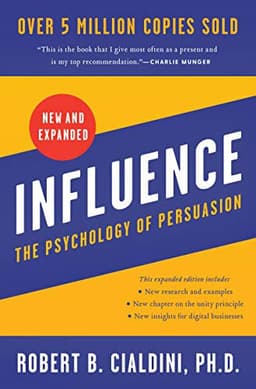
Book 3
Influence: The Psychology of Persuasion
Robert B. Cialdini (1984)
Six (now seven) universal principles explain why people say "yes", and how to apply them ethically.
Social Proof
People look to what others are doing to determine correct behavior, especially in uncertain situations.
Read the full deep-dive →Commitment and Consistency
Once people make a commitment (especially publicly or in writing), they feel internal pressure to behave consistently with it.
Read the full deep-dive →Reciprocity
People feel obligated to return favors. When someone gives us something, we feel compelled to give something back.
Read the full deep-dive →Scarcity
People assign more value to opportunities that are limited in availability. Fear of missing out drives action.
Read the full deep-dive →Authority
People defer to experts and authority figures, especially in domains where they feel uncertain.
Read the full deep-dive →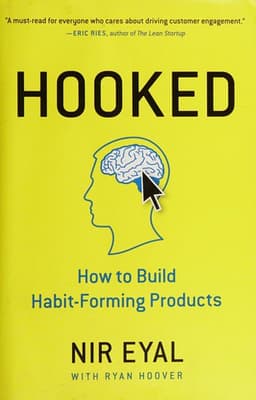
Book 4
Hooked: How to Build Habit-Forming Products
Nir Eyal (2014)
The four-step Hook Model (Trigger, Action, Variable Reward, Investment) explains how products create habitual user behavior.
External and Internal Triggers
Habits start with external triggers (notifications, emails) but graduate to internal triggers (emotions, routines) once established. A lapsed patient has lost both.
Read the full deep-dive →Reducing Action Barriers (Simplicity)
The easier an action is to perform, the more likely it is to happen. Fogg's principle: Behavior = Motivation x Ability x Prompt.
Read the full deep-dive →Variable Rewards
Unpredictable rewards are more engaging than predictable ones (the slot machine effect). The brain's dopamine system responds most strongly to anticipation and surprise.
Read the full deep-dive →Investment and Stored Value
The more someone invests in something (time, data, effort, social capital), the more they value it and the harder it is to leave.
Read the full deep-dive →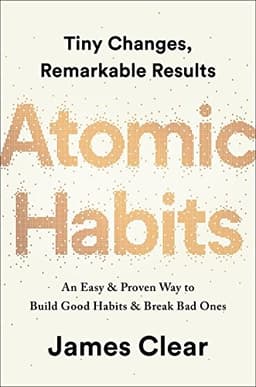
Book 5
Atomic Habits
James Clear (2018)
Small, incremental changes to daily habits, guided by four laws of behavior change, compound into transformative results over time.
Make It Obvious (Cue Design)
Habits are triggered by cues. If the cue is invisible, the habit dies. Lapsed patients have lost the environmental and calendar cues that prompted their visits.
Read the full deep-dive →Make It Attractive (Temptation Bundling)
Pair a behavior you need to do with one you want to do. Link the less appealing action with something enjoyable.
Read the full deep-dive →Make It Easy (Two-Minute Rule and Friction Reduction)
Scale down the desired behavior to something that takes two minutes or less. Reduce friction to near zero.
Read the full deep-dive →Make It Satisfying (Immediate Reward)
We repeat behaviors that are immediately rewarding and avoid those that are immediately punishing. The problem with health behaviors is that the reward is delayed.
Read the full deep-dive →Identity-Based Habits
Lasting change comes from shifting identity, not just behavior. "I am someone who takes care of my body" is more powerful than "I need to go to physio."
Read the full deep-dive →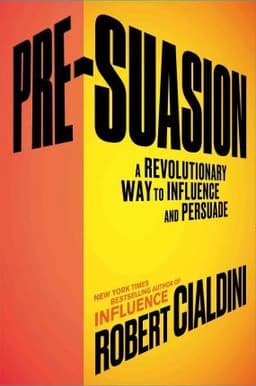
Book 6
Pre-Suasion: A Revolutionary Way to Influence and Persuade
Robert B. Cialdini (2016)
What happens in the moment before a message is delivered matters as much as the message itself, the art of preparing people to be receptive.
Privileged Moments
There are identifiable windows in time when people are most receptive to a message. The same offer can produce drastically different results depending on when it is presented.
Read the full deep-dive →Attention Channeling
Whatever captures attention is perceived as more important. Simply drawing focus to an idea increases its perceived significance.
Read the full deep-dive →Priming Through Association
Exposure to certain words, images, or concepts primes people to respond in predictable ways. The environment shapes the response.
Read the full deep-dive →The Unity Principle
People are most influenced by those they perceive as part of their in-group, people who share their identity, values, or experiences.
Read the full deep-dive →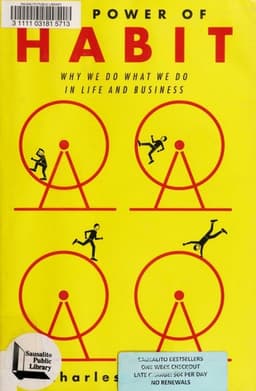
Book 7
The Power of Habit
Charles Duhigg (2012)
All habits follow a three-step loop (Cue, Routine, Reward), and understanding this loop is the key to changing behavior at individual and organizational levels.
The Habit Loop (Cue-Routine-Reward)
Every habit operates on an automatic loop: a cue triggers a routine, which delivers a reward. Once established, habits run on autopilot without conscious thought.
Read the full deep-dive →The Golden Rule of Habit Change
You cannot eliminate a habit; you can only replace the routine while keeping the same cue and reward.
Read the full deep-dive →Craving Drives the Loop
Habits stick because we develop cravings for the reward. Without craving, the loop weakens and breaks.
Read the full deep-dive →Belief and Community
Belief in the possibility of change is essential, and it is strengthened by community and social connection.
Read the full deep-dive →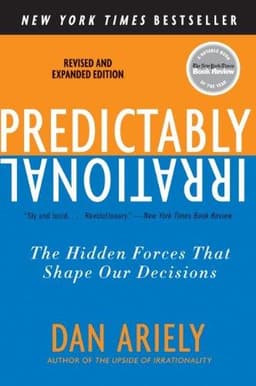
Book 8
Predictably Irrational
Dan Ariely (2008)
Our irrational behaviors are systematic and predictable, and understanding them reveals hidden forces that shape every decision we make.
The Decoy Effect (Asymmetric Dominance)
When choosing between two options, adding a third "decoy" option that is clearly inferior to one of them makes the superior option far more attractive.
Read the full deep-dive →The Power of FREE
"Free" is not just a price, it is an emotional trigger that makes people disproportionately excited. The zero price effect causes people to overvalue free items.
Read the full deep-dive →Social Norms vs. Market Norms
When interactions operate under social norms (relationships, care, community), people behave generously. When market norms are introduced (prices, transactions), the relationship becomes transactional and cold.
Read the full deep-dive →The Endowment Effect
People overvalue what they already have or feel ownership over. Possession, even psychological possession, increases perceived value.
Read the full deep-dive →Procrastination and Self-Control
People consistently procrastinate, even when they know action is in their best interest. External deadlines and commitment devices help overcome this.
Read the full deep-dive →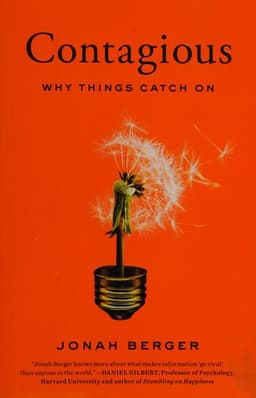
Book 9
Contagious: Why Things Catch On
Jonah Berger (2013)
Six principles (STEPPS) explain why certain ideas, products, and behaviors spread, and how to engineer word-of-mouth sharing.
Social Currency
People share things that make them look good, knowledgeable, or ahead of the curve to their social circle.
Read the full deep-dive →Triggers (Environmental Reminders)
Ideas spread when they are linked to frequent environmental triggers. The more often something is triggered, the more it stays top-of-mind.
Read the full deep-dive →Practical Value
People share information that is genuinely useful. Practical content travels farther than promotional content.
Read the full deep-dive →Stories (Narrative Transport)
Information wrapped in a story is more memorable, shareable, and persuasive than facts presented alone. People retell stories.
Read the full deep-dive →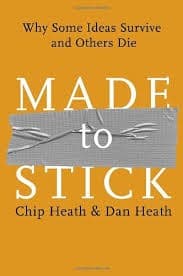
Book 10
Made to Stick: Why Some Ideas Survive and Others Die
Chip Heath & Dan Heath (2007)
Sticky ideas share six traits (SUCCESs), Simple, Unexpected, Concrete, Credible, Emotional, Stories, that make them understandable, memorable, and action-driving.
Simplicity (Find the Core)
Strip a message down to its most essential, compact form. If you say three things, you say nothing.
Read the full deep-dive →Unexpectedness (Surprise and Curiosity Gaps)
Surprise gets attention. Curiosity gaps, opening a question without immediately answering it, keep attention.
Read the full deep-dive →Concreteness (Vivid, Specific Details)
Abstract ideas don't stick. Concrete, sensory language does. "Improve your health" is abstract. "Touch your toes without wincing" is concrete.
Read the full deep-dive →Emotional Appeal (Make People Care)
People act on feelings, not statistics. Connect your message to something they care about personally.
Read the full deep-dive →Credibility (Internal Credibility)
People believe claims they can verify for themselves. Telling patients to "test it" is more credible than citing a study.
Read the full deep-dive →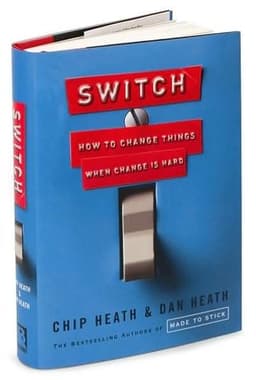
Book 11
Switch: How to Change Things When Change Is Hard
Chip Heath & Dan Heath (2010)
Successful change requires directing the rational mind (the Rider), motivating the emotional mind (the Elephant), and reshaping the environment (the Path).
Direct the Rider: Find the Bright Spots
Instead of analyzing problems, find what's already working and replicate it. Study successes, not failures.
Read the full deep-dive →Motivate the Elephant: Shrink the Change
Large changes feel overwhelming. Break them into small, achievable steps that build momentum through early wins.
Read the full deep-dive →Motivate the Elephant: Feel the Change
Analytical arguments rarely motivate action. People change when they feel something, not when they know something.
Read the full deep-dive →Shape the Path: Tweak the Environment
Make the desired behavior the path of least resistance by changing the situation around the person, not the person themselves.
Read the full deep-dive →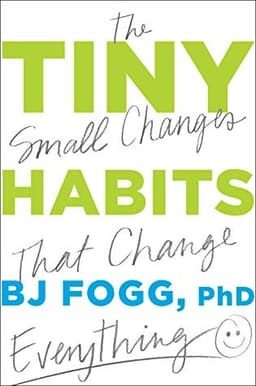
Book 12
Tiny Habits: The Small Changes That Change Everything
BJ Fogg (2019)
Behavior happens when Motivation, Ability, and a Prompt converge at the same moment (B=MAP), and the key to lasting change is starting absurdly small.
B=MAP (Behavior = Motivation x Ability x Prompt)
For any behavior to occur, three elements must be present simultaneously: sufficient motivation, sufficient ability, and an effective prompt. If any one is missing, the behavior will not happen.
Read the full deep-dive →Start Tiny (The Minimum Viable Behavior)
Scale the target behavior down to its smallest possible version. Make it so easy that motivation is almost irrelevant.
Read the full deep-dive →Anchor to Existing Routines
Attach new behaviors to existing habits or moments. "After I [existing behavior], I will [new behavior]."
Read the full deep-dive →Celebration and Positive Emotion
Immediate positive emotion after a behavior is the most powerful tool for making it stick. Celebration wires the habit into the brain.
Read the full deep-dive →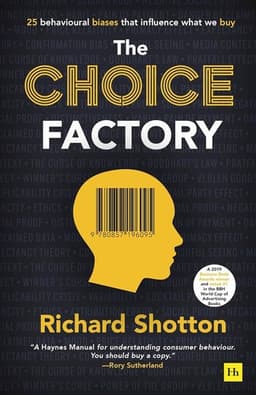
Book 13
The Choice Factory: 25 Behavioural Biases That Influence What We Buy
Richard Shotton (2018)
A practical guide to 25 cognitive biases, each with real-world marketing applications and original experimental evidence.
The Pratfall Effect
People find individuals and brands more likable when they show a small, endearing flaw. Perfection creates distance; vulnerability creates trust.
Read the full deep-dive →The Peak-End Rule
People judge an experience based on how they felt at its most intense point (peak) and at the very end, not as an average of the whole experience.
Read the full deep-dive →The Fundamental Attribution Error
We overestimate personality and underestimate context when explaining behavior. We assume people don't rebook because they "don't care," when the real reason is usually situational.
Read the full deep-dive →Habit Formation and Disruption
Habits are most susceptible to change during life transitions, new jobs, moves, seasonal changes, life events.
Read the full deep-dive →
Book 14
Alchemy: The Surprising Power of Ideas That Don't Make Sense
Rory Sutherland (2019)
The most effective solutions to human problems are often psychologically creative rather than logically rational, perception matters more than reality.
Psycho-Logic Over Logic
Human decisions are driven by psychological perception, not rational calculation. What feels true matters more than what is true.
Read the full deep-dive →Reframing Changes Everything
The same reality, described differently, creates a completely different emotional response. Reframing is the most cost-effective intervention available.
Read the full deep-dive →Satisficing Over Optimizing
People don't search for the best option, they accept the first option that's good enough. Don't make patients evaluate options; give them one good-enough path forward.
Read the full deep-dive →The Red Bus / Placebo Effect
Small details that signal quality or care disproportionately influence perception. A red London bus is just a bus, but the redness and the double-deck design create emotional resonance far beyond its function.
Read the full deep-dive →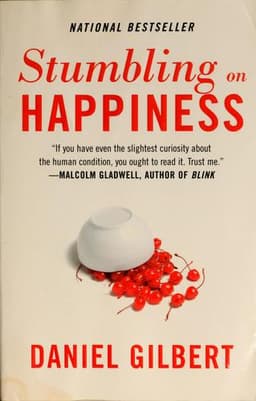
Book 15
Stumbling on Happiness
Daniel Gilbert (2006)
Humans are poor predictors of what will make them happy, our imaginations systematically mislead us about our future emotional states.
Impact Bias (Overestimating Future Pain)
People overestimate how bad negative experiences will be and how long negative feelings will last. They also underestimate their ability to adapt.
Read the full deep-dive →Presentism (The Present Dominates Imagination)
Our imagination of the future is heavily colored by how we feel right now. If a patient feels fine today, they can't imagine needing treatment.
Read the full deep-dive →The Psychological Immune System
People underestimate their ability to rationalize and cope with negative events. This means lapsed patients have likely convinced themselves that stopping treatment was fine.
Read the full deep-dive →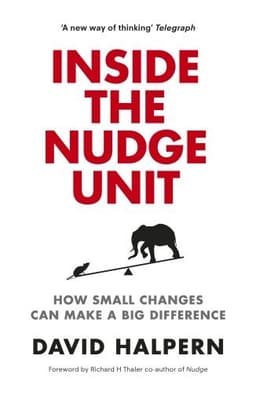
Book 16
Inside the Nudge Unit: How Small Changes Can Make a Big Difference
David Halpern (2015)
The story of the UK Behavioural Insights Team and their EAST framework, making desired behaviors Easy, Attractive, Social, and Timely.
Make It Easy (Friction Reduction)
The single most important factor in behavior change is reducing friction. Even tiny barriers stop people from acting.
Read the full deep-dive →Make It Attractive (Salience and Presentation)
People respond to how something is presented, not just what it is. Visual design, personalization, and framing all affect engagement.
Read the full deep-dive →Make It Social (Peer Norms)
People are strongly influenced by what others around them are doing. Descriptive norms ("most people do X") are more powerful than instructions.
Read the full deep-dive →Make It Timely (Trigger at the Right Moment)
The same intervention at different moments produces vastly different results. Timing is often the difference between success and failure.
Read the full deep-dive →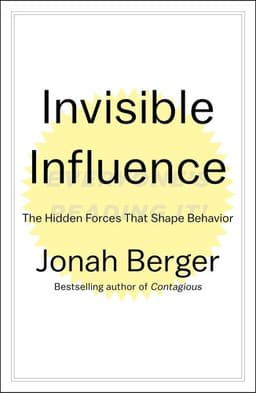
Book 17
Invisible Influence: The Hidden Forces That Shape Behavior
Jonah Berger (2016)
Social influence invisibly shapes nearly every decision we make, through both imitation and differentiation, and most people dramatically underestimate its power.
The Power of Invisible Social Influence
People deny being influenced by others, but research shows conformity happens even when people are completely unaware of it.
Read the full deep-dive →Optimal Distinctiveness
People want to fit in with their group while also feeling unique. They seek the perfect balance between belonging and individuality.
Read the full deep-dive →Social Facilitation (Being Seen)
People perform better and are more likely to follow through when their behavior is visible to others.
Read the full deep-dive →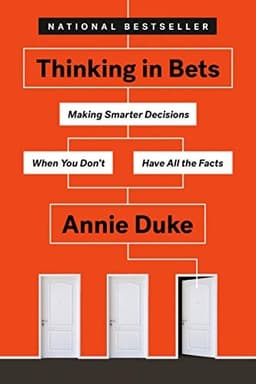
Book 18
Switch and Thinking in Bets Combined Application: Decision Quality Under Uncertainty
Annie Duke (2018)
Life is more like poker than chess, learning to think in probabilities (not certainties) leads to better decisions under uncertainty.
Resulting (Outcome vs. Decision Quality)
People judge the quality of their decisions by the outcome, not by the quality of the decision-making process. A patient who stopped treatment and didn't get worse thinks they made a good decision, even if they just got lucky.
Read the full deep-dive →Reframing Uncertainty as Normal
Most people avoid decisions that feel uncertain. They'd rather do nothing (which feels safe) than act (which might be wrong).
Read the full deep-dive →Backcasting (Working Backward from a Positive Future)
Imagine a positive future outcome and work backward to determine what steps were necessary to get there.
Read the full deep-dive →
Book 19
The Illusion of Choice: 16-1/2 Psychological Biases That Influence What We Buy
Richard Shotton (2022)
A sequel to The Choice Factory, offering 16-1/2 additional biases with evidence-based strategies for applying each to real-world business challenges.
The Generation Effect
Information that people generate themselves is remembered far better than information they passively receive.
Read the full deep-dive →Extremeness Aversion
People avoid extreme options and gravitate toward the middle. When presented with three choices, the middle option is disproportionately selected.
Read the full deep-dive →The Precision Effect
Precise numbers are more credible than round numbers. "$97" feels more calculated and trustworthy than "$100."
Read the full deep-dive →Framing Effects
The same information, presented in different frames, produces different decisions. Positive frames and negative frames activate different psychological responses.
Read the full deep-dive →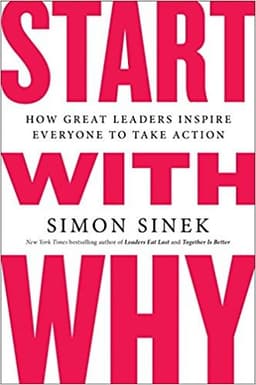
Book 20
Start with Why: How Great Leaders Inspire Everyone to Take Action
Simon Sinek (2009)
People don't buy what you do, they buy why you do it, and organizations that communicate their purpose first inspire greater loyalty and action.
Start with Why (Purpose-Driven Communication)
Most organizations communicate from the outside in (what > how > why). Inspiring organizations communicate from the inside out (why > how > what).
Read the full deep-dive →The Golden Circle and Emotional Decision-Making
The "Why" maps to the limbic brain (emotions, decisions, loyalty). The "What" maps to the neocortex (rational analysis). People make decisions emotionally and justify them rationally.
Read the full deep-dive →Building a Loyal Community Around Shared Beliefs
Customers (patients) who share the organization's "Why" become loyal advocates, not just transactional users.
Read the full deep-dive →The Celery Test (Consistency Filter)
If your "Why" is health, every decision you make should pass the "celery test", is this consistent with our stated purpose?
Read the full deep-dive →Quick Reference: Principles by Category
Overcoming Inertia
Getting lapsed patients to take that crucial first step back through friction reduction, defaults, and tiny commitments.
View all posts →Crafting Compelling Messages
Writing re-engagement messages that patients actually read and act on using loss aversion, curiosity gaps, and storytelling.
View all posts →Building Long-Term Habits
Turning one-off appointments into automatic routines through habit loops, identity shifts, and variable rewards.
View all posts →Leveraging Social Dynamics
Using social proof, community norms, and belonging to make continued treatment feel like the obvious choice.
View all posts →Timing and Context
Reaching patients at the exact moment they are most receptive through privileged moments, priming, and environmental triggers.
View all posts →Pricing and Offer Design
Structuring pricing, packages, and offers using decoy effects, scarcity, and the psychology of perceived value.
View all posts →This is what Routiq does automatically
Every principle in this guide is baked into the Routiq platform. We apply behavioral science to re-engage your lapsed patients. on autopilot.
Learn more about Routiq