
Loss Aversion

A patient completes four physiotherapy sessions, gains 35% more shoulder range of motion, and then simply... stops coming. No dramatic reason, no complaint, they just drift away. What if the single biggest lever you have to bring them back isn't promising them more improvement, but reminding them exactly what they stand to lose by not returning?
The Science Behind Loss Aversion
Loss aversion is one of the most robust and well-documented findings in behavioural economics and cognitive psychology. At its core, the principle states that people feel the pain of a loss approximately twice as intensely as they feel the pleasure of an equivalent gain. Losing $100 feels roughly twice as bad as winning $100 feels good. This asymmetry isn't rational by traditional economic standards, but it is deeply human, and once you understand it, you'll see it operating everywhere in your patients' decision-making.
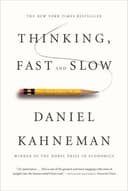
The principle was identified and formalised by psychologists Daniel Kahneman and Amos Tversky through their development of Prospect Theory, first published in 1979 and later popularised in Kahneman's landmark 2011 book 'Thinking, Fast and Slow.' Their research demonstrated that when people evaluate potential outcomes, they don't assess them in absolute terms, they assess them relative to a reference point, typically their current state. Crucially, the psychological response to moving away from that reference point (a loss) is far steeper and more emotionally charged than the response to moving toward a gain of equivalent size. Kahneman and Tversky estimated this ratio at approximately 2:1, meaning losses loom roughly twice as large as gains in our psychological calculus.
This has profound implications for how you communicate with lapsed patients. Most re-engagement messaging in allied health is framed around future gains: 'Book your next appointment and keep improving.' This kind of forward-looking, gain-framed language is intuitive for practitioners who are genuinely motivated by helping patients progress. But it runs directly against the grain of how human brains actually respond to motivation. Your lapsed patients aren't primarily motivated by abstract future gains, they're far more sensitive to the prospect of losing something they've already earned. The progress they've made, the mobility they've recovered, the pain reduction they've experienced, these represent a reference point. Framing your re-engagement message around protecting that reference point, rather than expanding beyond it, is psychologically far more compelling.
It's worth noting that loss aversion isn't about manipulation, it's about accurate communication. When a patient stops attending after making real clinical progress, they genuinely are at risk of losing that progress. Muscle strength, joint mobility, postural improvements, and pain management strategies all deteriorate without reinforcement. Telling a patient 'you risk losing the progress you've worked hard for' isn't a marketing trick, it's the clinical truth, delivered in a way that actually motivates behaviour. Loss aversion gives you permission to be honest in a more effective way.
The Research
The most well-known experimental demonstration of loss aversion comes directly from Kahneman and Tversky's foundational research described in 'Thinking, Fast and Slow.' In one classic experiment, participants were presented with a straightforward choice: receive a guaranteed $900, or take a 90% chance of winning $1,000 (with a 10% chance of winning nothing). The expected value of both options is identical at $900, yet the overwhelming majority of participants chose the guaranteed amount, demonstrating risk aversion in the domain of gains. Then the researchers flipped the scenario: participants could either accept a guaranteed loss of $900, or take a 90% chance of losing $1,000 (with a 10% chance of losing nothing). Here, participants overwhelmingly preferred the gamble, even though the expected value was again identical. The mere framing of the situation as involving a potential loss dramatically changed behaviour, people became risk-seeking specifically to avoid locking in a loss.
This experiment elegantly illustrates that it isn't the objective outcome that drives decisions, it's whether that outcome is perceived as a gain or a loss relative to a reference point. For your practice, the reference point is the clinical progress your patient has already achieved. Every week they don't return, they edge closer to losing it, and framing your outreach around that reality taps directly into the same psychological mechanism Kahneman and Tversky identified in their decades of research.
How to Apply This in Your Practice
The first step in applying loss aversion to patient re-engagement is establishing a clear, specific reference point for each lapsed patient, ideally drawn from their actual clinical notes. Generic messages like 'we miss you, book in today' fail because they don't activate any meaningful reference point in the patient's mind. Instead, pull specific, measurable progress data: range of motion improvements, pain score reductions, functional milestones achieved, or number of sessions completed. The more concrete the reference point, the more psychologically potent the loss feels. A message that reads 'Your last four sessions improved your lower back pain score from 7/10 to 3/10, don't let that progress slip away' is working directly with loss aversion. The patient's reduced pain is their reference point; the message makes the threat to that reference point visceral and real.
When writing re-engagement message copy, apply a simple but powerful reframe: audit every sentence for whether it's describing a future gain or a current loss. 'Book in and continue improving your mobility' is gain-framed, rewrite it as 'Protect the mobility improvements you've already worked hard to achieve.' 'Resume your treatment plan and strengthen your core' becomes 'The core strength you've built over six sessions begins to decline after four weeks without maintenance.' You're not changing the clinical facts, you're presenting them through the psychological lens that actually drives action. For SMS or email outreach, keep the loss frame prominent in the first sentence, since that's where attention is highest. A subject line like 'Your progress from 6 sessions is at risk' will consistently outperform 'Ready to continue your treatment?'
Workflow-wise, the most effective implementation involves setting automated triggers at clinically meaningful intervals. Research on detraining and injury recurrence suggests that many of the gains from physiotherapy, chiropractic, and osteopathic treatment begin to reverse within three to six weeks of stopping care. Build your re-engagement sequence around this window: a first message at three weeks post-last-appointment (loss-framed, referencing specific progress), a second at six weeks (escalating the urgency, 'It's been six weeks since your last visit; the mobility gains from your treatment are likely beginning to reverse'), and a third at twelve weeks if still unresponsive. Each message should reference the patient's specific history, not a generic template.
For podiatry, massage therapy, and other allied health disciplines where progress may be less numerically measurable, you can still apply loss aversion by referencing functional and lifestyle gains. 'You told us the foot pain that was stopping your morning walks had almost resolved, don't let it come back' is every bit as loss-framed as a mobility percentage. The principle isn't about numbers specifically, it's about anchoring the patient's current improved state as something worth protecting. Train your front desk or care coordinators to listen during appointments for the specific activities, goals, or quality-of-life improvements patients mention, and record these as notes to fuel personalised re-engagement later.
Get one behavioral science principle per week
Applied to patient retention. Backed by research. No fluff.
Seeing It in Action
Marcus is a 47-year-old project manager who presented to Coastal Physiotherapy with chronic neck pain rated at 6/10, significantly limiting his ability to work at a screen for more than two hours without discomfort. Over five sessions across seven weeks, his treating physio reduced his pain score to 2/10 and improved his cervical rotation by 28 degrees. Marcus left his fifth appointment feeling genuinely better and, like many patients who experience meaningful relief, quietly concluded he didn't need to come back. Six weeks passed with no booking.
Using a loss-aversion framed re-engagement sequence, the practice sent Marcus an SMS at the four-week mark: 'Hi Marcus, it's been four weeks since your last session. Your neck pain had dropped from 6/10 to 2/10 over your treatment, research shows cervical improvements begin to reverse without maintenance. Your physio has a spot available this Thursday. Want to protect the progress you've made?' The message didn't promise Marcus anything new, it reminded him of something he already had and stood to lose. He replied within the hour and booked.
At his return appointment, Marcus mentioned to his physio that the message had caught him at the right moment, he'd actually started noticing his neck tightening again at his desk and the message had made the risk feel concrete. This is loss aversion working precisely as the research predicts: the patient's reference point (significantly reduced pain) was made salient, the threat to that reference point was credibly communicated, and the activation energy required to re-book dropped dramatically. Marcus subsequently enrolled in a monthly maintenance programme. The practice didn't acquire a new patient, they retained one they'd already invested in building trust with.
Your Action Plan
- 1Audit your current re-engagement messages and identify every gain-framed sentence, rewrite each one to lead with what the patient risks losing, drawing on their specific clinical progress notes rather than generic language.
- 2Implement a structured data-capture habit during appointments, note specific pain scores, functional milestones, and patient-stated lifestyle goals so you have concrete, personalised loss-frame material ready for any future re-engagement message.
- 3Set automated re-engagement triggers at the three-week and six-week post-appointment marks, timed to align with when clinical research suggests treatment gains begin to deteriorate without reinforcement.
- 4Test two versions of your re-engagement SMS or email, one gain-framed ('continue improving') and one loss-framed ('protect what you've achieved'), and track re-booking rates over 60 days to build internal evidence for what works in your patient population.
- 5Train your reception and clinical team on the principle of loss aversion so that verbal re-engagement conversations at the front desk, not just written messages, consistently reference the patient's existing progress as something worth protecting, not just future outcomes worth chasing.
Key Takeaway
Your lapsed patients aren't unmotivated, they're unmoved by the wrong message; remind them what they've already earned and stand to lose, and you'll trigger a psychological response twice as powerful as any promise of future gains.
Related Principles
System 1 vs. System 2 Processing: Design Messages for Fast, Intuitive Patient Decisions
Thinking, Fast and Slow · Daniel Kahneman
Most daily decisions are made by the fast, automatic System 1. People don't deliberate about routine health appointments, they either have an automatic habit
The Anchoring Effect: Anchor to Past Visit Frequency to Re-Engage Patients
Thinking, Fast and Slow · Daniel Kahneman
People rely heavily on the first piece of information they encounter (the "anchor") when making decisions, even if it is arbitrary.
Status Quo Bias: Why Patients Stick with Routines (and How to Use It)
Nudge · Richard H. Thaler & Cass R. Sunstein
People prefer the current state of affairs and resist change, even when change would benefit them. Disrupting their routine requires effort they instinctively a
Feedback Loops: Show Patients Their Progress to Prevent Treatment Drop-Off
Nudge · Richard H. Thaler & Cass R. Sunstein
People make better decisions when they receive clear, timely feedback on the consequences of their choices.