
System 1 vs. System 2 Processing
Your lapsed patient didn't consciously decide to stop coming. They just... stopped. No dramatic moment of cancellation, no deliberate choice to discontinue care, their appointments simply faded from automatic habit into forgotten intention. Understanding why this happens, and how the human brain actually makes decisions about routine health behaviours, is the difference between re-engagement messages that get ignored and ones that bring people back through your door.
The Science Behind System 1 vs. System 2 Processing
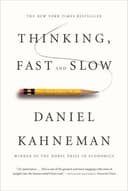
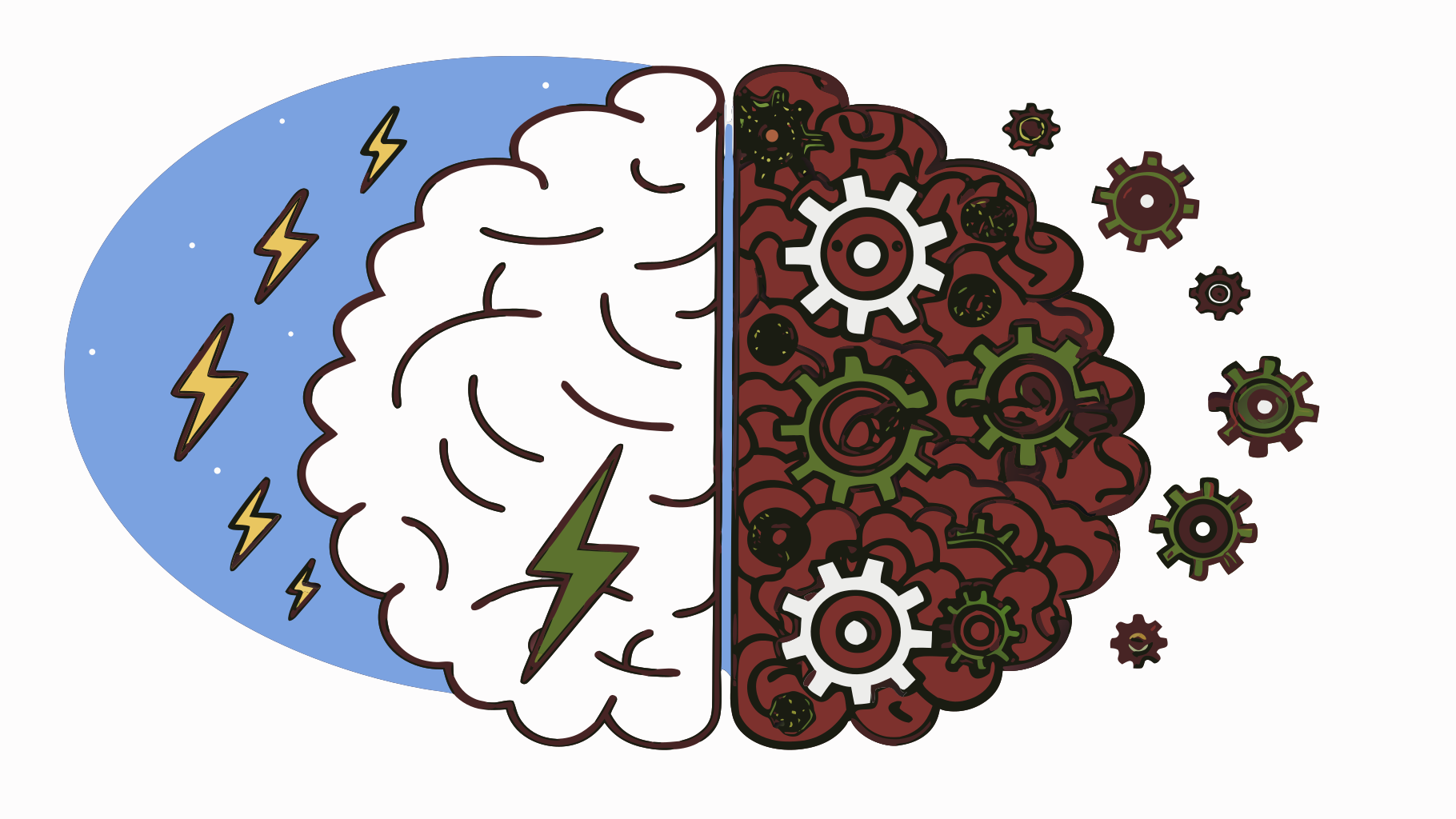
In 2011, Nobel Prize-winning psychologist Daniel Kahneman published 'Thinking, Fast and Slow,' synthesising decades of research into a framework that fundamentally changed how we understand human decision-making. At its core, Kahneman describes two distinct systems of thinking operating in every human brain. System 1 is fast, automatic, emotional, and largely unconscious, it handles the vast majority of daily decisions with almost no cognitive effort. System 2 is slow, deliberate, analytical, and effortful, it kicks in when we need to solve a complex maths problem, weigh up a major purchase, or navigate an unfamiliar situation. The critical insight is that System 1 is not the exception; it is the default. We are, as Kahneman puts it, 'thinking machines that feel,' and most of what we think of as considered decision-making is actually post-hoc rationalisation of what System 1 already decided.
For allied health practices, this has profound implications. When a patient first books their initial appointment with a physiotherapist or chiropractor, they may be engaging System 2, researching, comparing, deliberating. But by their fourth or fifth appointment, if all goes well, that decision-making has transferred to System 1. The appointment becomes routine, automatic, habit-driven. The problem arises when something disrupts that routine: a holiday, an illness, a busy period at work, or simply a gap in the appointment schedule. Once the habit loop is broken, the decision to rebook requires System 2 effort, and System 2 is lazy by design. The cognitive overhead of re-evaluating 'do I still need this?' 'is my condition bad enough?' 'do I have time this week?' is often enough to result in indefinite delay.
Kahneman's research, built on decades of collaboration with Amos Tversky, also revealed that System 1 operates heavily through pattern recognition, emotional association, and what psychologists call 'cognitive ease.' When something feels familiar, fluent, and low-effort, System 1 approves it. When something requires parsing, evaluating, or effort, System 2 is recruited, and System 2 often concludes it doesn't have the bandwidth right now. This is why a lengthy, clinically detailed email explaining the long-term benefits of continued osteopathic care produces far less re-engagement than a short, warm, personally framed message that requires a single tap to act on. One speaks to System 1; the other demands System 2 show up to work.
Research in behavioural economics and consumer psychology consistently supports what Kahneman's framework predicts: reducing friction and increasing cognitive ease dramatically increases the likelihood of follow-through. Studies on choice architecture, the design of decision environments, show that when the 'right' action is made simpler, more familiar, and more emotionally resonant, uptake increases significantly without any change to incentives or information. For your practice, this means the way you frame, time, and structure your re-engagement communications matters as much as, arguably more than, what clinical information they contain.
The Research
One of the most well-known demonstrations of System 1 versus System 2 processing comes directly from Kahneman's own research: the 'bat and ball' problem. Participants are told: 'A bat and ball cost $1.10 in total. The bat costs $1.00 more than the ball. How much does the ball cost?' The overwhelming majority of respondents, including students at elite universities, answer 10 cents. The intuitive, System 1 answer feels immediately correct. But it is wrong. The correct answer is 5 cents. What this experiment reveals is not that people are unintelligent, but that System 1 generates a plausible-seeming answer so quickly and confidently that System 2 rarely bothers to check its work. When cognitive load is high, when people are distracted, or when a message doesn't signal that careful thinking is required, System 1 governs the response entirely.
Kahneman and his colleagues also demonstrated the 'cognitive ease' effect through font and fluency experiments, showing that information presented in a harder-to-read font was rated as less trustworthy and less likely to be acted upon than identical information in a clean, legible format. The implication is stark: a re-engagement SMS written in plain, warm, conversational language will consistently outperform a formally worded, information-dense message, not because patients are unsophisticated, but because their brains are efficient, and efficiency means defaulting to System 1 whenever possible.
How to Apply This in Your Practice
The first strategic shift your practice needs to make is to stop designing re-engagement communications for System 2 and start designing them for System 1. This means fundamentally reconsidering what you're trying to achieve with a re-engagement message. You are not trying to educate a lapsed patient about the clinical rationale for continued podiatric care. You are trying to trigger a familiar feeling, the feeling of their regular appointment, and make the action of rebooking as automatic and frictionless as possible. System 1 responds to familiarity, warmth, brevity, and emotional resonance. It does not respond well to paragraphs, bullet points of clinical benefits, or anything that requires deliberation.
In practice, this means your re-engagement SMS or email should be short enough to read in under five seconds, personally framed to reference something specific about the patient's history (their usual day, their practitioner's name, their presenting complaint), and should contain a single, unmistakable call to action. Compare these two approaches: 'Dear patient, we noticed it has been some time since your last appointment. Regular physiotherapy is important for maintaining your recovery and preventing recurrence of injury. We encourage you to book at your earliest convenience.' versus 'Hey Sarah, it's been a while since your Thursday session with Jake. Your lower back will thank you for coming back. Tap here to grab your usual slot.' The second message bypasses System 2 entirely. It creates cognitive ease, emotional resonance, and a clear, effortless next step.
Timing is also a System 1 consideration. Kahneman's research on priming shows that context shapes automatic responses, the right cue at the right moment activates System 1 in your favour. Sending a re-engagement message on the day of the week a patient used to attend their appointments is a simple but powerful application of this principle. If your patient always came in on Wednesday mornings, a message arriving Wednesday at 8:30am lands in a context already primed with the felt sense of 'this is my appointment day.' Their body and brain are already in a mild version of that familiar routine, making the suggestion to rebook feel natural rather than like a cold-call interruption.
For implementation, your patient management system or a platform like Routiq should be segmenting lapsed patients not just by time-since-last-visit, but by their historical appointment patterns. A patient who had a fixed fortnightly slot should receive a message referencing that specific cadence. A patient who attended for a distinct episode of care (say, post-surgical rehabilitation) needs a slightly different frame, one that acknowledges the gap might feel normal, but opens a door with low friction: 'It's been six months since your knee rehab wrapped up, how are things feeling? If you'd like a check-in, Jake has a spot this Thursday.' Both messages are designed to feel like a natural continuation of a relationship, not a marketing communication requiring evaluation.
Get one behavioral science principle per week
Applied to patient retention. Backed by research. No fluff.
Seeing It in Action
Consider a fictional but representative scenario: Marcus, a 41-year-old project manager, had been attending a chiropractic clinic every three weeks for lower back management. He'd been seeing the same practitioner, Daniel, for eight months, and his Tuesday 6pm appointment had become as automatic as his commute home. Then Marcus's team launched a major project, his schedule blew up, and he missed two appointments. He intended to rebook 'when things settled down,' but System 2 never quite got around to it, because System 2 is also managing his project deadlines, his family calendar, and approximately forty other demands. Six weeks passed. Then twelve.
The clinic's automated re-engagement workflow, triggered at the eight-week mark, sent Marcus a single SMS on a Tuesday evening at 6:05pm, precisely when he would normally have been walking into the practice. The message read: 'Hey Marcus, your Tuesday slot with Daniel has been quiet lately. Your back probably has some thoughts about that. Tap here to grab a time this week.' The timing, the familiar reference to his usual day, and the gently humorous framing bypassed any need for Marcus to deliberate. System 1 recognised the pattern, Tuesday, Daniel, back care, and the 'tap here' required no evaluation, just a familiar muscle memory response.
Marcus rebooked within four minutes of receiving the message. He attended the following Tuesday and continued for another six months. The clinic didn't offer a discount, didn't send a lengthy explanation of why chiropractic care was beneficial, and didn't follow up with a second message. They simply spoke to the part of Marcus's brain that was already primed, at exactly the right moment, and made the next step effortless.
Your Action Plan
- 1Audit your current re-engagement messages against the System 1 checklist, are they under 40 words, personally framed, emotionally warm, and do they contain a single-tap call to action? Rewrite any that require more than five seconds to read and understand.
- 2Configure your patient management system to tag each patient's historical appointment day and time, then trigger re-engagement messages at that exact time on that exact day of the week to exploit temporal priming.
- 3Personalise message copy to reference the patient's practitioner by first name and, where possible, their presenting condition or usual appointment type, familiarity signals to System 1 that this is a continuation of an existing habit, not a new decision.
- 4Remove all clinical rationale and educational content from re-engagement messages, that content is for System 2, which won't show up for a routine rebook. Save clinical education for in-clinic conversations and newsletters to active patients.
- 5A/B test short, emotionally resonant message variants against your current templates and measure rebook rates over 30 days, the data will confirm what Kahneman's research predicts, and you'll have your own practice-specific evidence to optimise from.
Key Takeaway
Your lapsed patients don't need more information to come back, they need a message so familiar, warm, and effortless that their System 1 brain makes the decision before System 2 even knows there was a choice to make.
Related Principles
Loss Aversion: Frame What Patients Lose to Drive Rebooking
Thinking, Fast and Slow · Daniel Kahneman
People feel the pain of losing something roughly twice as strongly as the pleasure of gaining the equivalent. Losses loom larger than gains.
The Anchoring Effect: Anchor to Past Visit Frequency to Re-Engage Patients
Thinking, Fast and Slow · Daniel Kahneman
People rely heavily on the first piece of information they encounter (the "anchor") when making decisions, even if it is arbitrary.
Status Quo Bias: Why Patients Stick with Routines (and How to Use It)
Nudge · Richard H. Thaler & Cass R. Sunstein
People prefer the current state of affairs and resist change, even when change would benefit them. Disrupting their routine requires effort they instinctively a
Feedback Loops: Show Patients Their Progress to Prevent Treatment Drop-Off
Nudge · Richard H. Thaler & Cass R. Sunstein
People make better decisions when they receive clear, timely feedback on the consequences of their choices.