
The Red Bus / Placebo Effect

A lapsed patient receives two messages on the same day. The first says: 'We noticed you haven't visited recently. Book your next appointment today.' The second says: 'Hi Sarah, Dr. James wanted to personally check in, it's been 8 weeks since your last shoulder session and he's keen to see how you're travelling.' Both messages cost the same to send. One gets deleted. One gets a reply. The difference isn't the offer, it's the signal.
The Science Behind The Red Bus / Placebo Effect
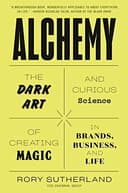
In his 2019 book *Alchemy*, behavioural economist Rory Sutherland introduces a deceptively simple observation: a red London double-decker bus is, at its core, just a vehicle that moves people from one stop to another. Its function is identical to a beige minibus. Yet the redness, the height, the iconic silhouette, these details create an emotional response entirely disproportionate to their practical contribution. Tourists photograph them. Children point at them. They've become symbols of a city. Sutherland's point is that the signals surrounding a thing often matter more than the thing itself, because human beings don't process the world through logic, they process it through meaning.
This principle connects directly to what psychologists call the placebo effect, a phenomenon most people associate with sugar pills in clinical trials but which operates far more broadly in everyday life. The placebo effect isn't merely about deception, it's about how context, signals, and perceived care alter the actual experience of something. When a doctor in a white coat administers a treatment with warm eye contact and a confident explanation, patients genuinely report better outcomes than when the same treatment is delivered perfunctorily. The signal of care becomes part of the medicine. Research published in *The Lancet* has demonstrated that even the colour, size, and branding of placebos influence their effectiveness, a large red pill outperforms a small white one for pain, even when neither contains any active ingredient.
What Sutherland argues, and what decades of consumer psychology research supports, is that human beings are not rational evaluators of objective quality. We are, instead, exquisitely sensitive to signals of intent, effort, and care. When we perceive that someone has taken trouble over us specifically, our entire emotional valuation of the interaction shifts upward. This is why a handwritten note feels more valuable than a typed one with identical words. It's why a barista who remembers your order creates more loyalty than a cheaper café that serves technically better coffee. The signal, the small, sometimes irrational detail, carries disproportionate psychological weight.
For allied health practices, this has profound implications. Most patient re-engagement communications are designed by people thinking about efficiency: how do we reach the most patients with the least effort? But behavioural science suggests this is exactly backwards. A message that reaches 500 patients but signals 'you are one of 500' will dramatically underperform a message that reaches 50 patients but signals 'we are thinking about you, specifically.' The red bus isn't red by accident. Every specific detail in your re-engagement communication is a signal, and signals, not content, drive response.
The Research
One of the most compelling real-world demonstrations of this principle comes from research conducted by Robert Cialdini and colleagues on the power of personalisation in communication. In studies examining charitable donation requests, researchers found that simply adding a handwritten 'P.S.' with the recipient's name to an otherwise identical letter increased response rates significantly compared to the generic version, in some trials by as much as double. The mechanism wasn't that the postscript contained new information; it was that it signalled individual attention in a sea of mass communication. The recipient's brain registered: someone touched this specifically for me.
Sutherland himself discusses the famous British Rail tea trolley experiment in *Alchemy*, noting that passengers' satisfaction with their journey increased measurably when a tea trolley came through the carriage, not because tea made the train faster, but because it signalled that someone was attending to their comfort. The perceived care improved the objective experience of the journey. This is the operating principle your re-engagement messages need to harness: the goal is not to convey information, but to create the felt sense that a real human being, specifically their practitioner, is thinking about this specific patient.
How to Apply This in Your Practice
The strategic insight is this: every personalised detail in a re-engagement message functions as a signal of care, and each signal compounds the others. A message that includes the patient's first name, their specific condition, their preferred practitioner's name, and the precise time elapsed since their last visit isn't just more friendly, it's behaviourally distinct from generic marketing. It triggers a completely different cognitive and emotional response. The patient's brain stops categorising the message as 'promotional material to be ignored' and starts processing it as 'a communication from someone who knows me.' That single cognitive reclassification is the difference between a 3% response rate and a 30% one.
In practice, this means your re-engagement workflow needs to pull specific data fields for every message. Do not send: 'We haven't seen you in a while, book today.' Instead, build templates that populate dynamically: 'Hi [First Name], [Practitioner Name] wanted to reach out, it's been [X weeks] since your last [specific treatment, e.g., plantar fasciitis session], and they'd love to check in on how your [body part] is holding up.' Each bracketed field is a red bus detail. Each one signals: this isn't automated. Someone noticed. Even when patients intellectually understand that software is involved, the specificity still triggers the emotional response, just as we know a placebo is a placebo but still feel calmer taking one.
The medium and timing of your signal also matters. Research in behavioural science consistently shows that unexpected, non-automated-feeling channels outperform expected ones. An SMS from what appears to be the practitioner's direct line, sent mid-morning on a Tuesday rather than at 9am on Monday (the classic 'batch send' tell), already signals more human intention before the recipient has read a single word. If your practice management software allows it, consider having messages appear to come from the practitioner's name directly: 'James from Coastal Physio' rather than 'Coastal Physio.' This is not deception, it's signal design, the same way a restaurant dims its lights not to hide the food but to shape the emotional context in which it's experienced.
Finally, layer your signals across the re-engagement sequence rather than front-loading everything into one message. A warm, specific first touch ('Dr. Amy noticed it's been 10 weeks since your last neck session') followed by a second message a week later that references the first ('We reached out last week about your neck, we still have a spot on Thursday if you'd like to come in') creates a narrative of persistent, genuine concern. This sequencing mimics how a caring practitioner would actually behave, and that mimicry is itself a powerful signal. Patients who feel genuinely attended to are not only more likely to rebook; research on patient satisfaction consistently links the perception of personalised care to longer retention, higher treatment compliance, and stronger referral behaviour.
Get one behavioral science principle per week
Applied to patient retention. Backed by research. No fluff.
Seeing It in Action
Tom, 44, had been seeing Dr. Priya at a Melbourne osteopathy clinic for recurring lower back pain related to long hours at his desk. After six sessions over three months, his acute pain had settled enough that he stopped booking follow-up appointments, not because he'd discharged himself deliberately, but because life got busy and the pain wasn't screaming at him anymore. Twelve weeks passed. The clinic's practice management system flagged him as lapsed and, in the old workflow, would have sent him a generic email: 'It's time to book your next appointment. Click here.' That message, had it been sent, would have been categorised as marketing and ignored.
Instead, the clinic's new re-engagement workflow pulled Tom's last treatment date, his presenting condition, and his treating practitioner's name. The SMS that arrived read: 'Hi Tom, Dr. Priya wanted to check in, it's been 12 weeks since your last lower back session. She knows desk-based pain has a habit of creeping back quietly. If you'd like a check-in, she has availability on Thursday at 11am or Friday at 2pm. Just reply to book.' Tom later told the front desk that he'd read it three times, because it didn't feel like a marketing message, it felt like Priya had actually asked someone to contact him. He booked Thursday. During the appointment, he mentioned he'd been meaning to come back but 'hadn't gotten around to it.' That session opened a six-month maintenance programme.
The clinic's before-and-after data told its own story. Before implementing personalised re-engagement sequences, their lapsed patient response rate sat at around 6%. After shifting to condition-specific, practitioner-attributed, time-stamped messages, response rates climbed above 24% within the first quarter. The messages hadn't become longer or more promotional. They had simply become more signal-rich, more red bus, less beige minibus.
Your Action Plan
- 1Audit your current re-engagement messages and identify every generic phrase, 'we haven't seen you in a while,' 'book your next appointment', and replace each with a specific, data-populated equivalent that references the patient's name, condition, practitioner, and elapsed time.
- 2Configure your practice management software to flag patients as lapsed at meaningful clinical thresholds (e.g., 6 weeks for acute conditions, 12 weeks for maintenance patients) and trigger personalised outreach that pulls these specific fields automatically.
- 3Attribute messages to the treating practitioner by name, 'Dr. Priya wanted to check in' rather than 'the team at X Clinic', so the signal reads as personal concern rather than administrative process.
- 4Design a two-to-three touch sequence with escalating specificity: the first message names the condition and practitioner; the second references the first message; the third offers a clear, low-friction booking pathway with specific times, removing the decision-making burden.
- 5Test your message copy by asking a non-staff member to read it and answer one question: 'Does this feel like it was written for you specifically, or for a list?' If the answer is 'a list,' add one more specific detail until the answer changes.
Key Takeaway
In patient re-engagement, the signal of personalised care, a name, a condition, a practitioner, a specific timeframe, is not decoration around your message; it is the message, because human beings respond to perceived attention before they respond to any offer.
Related Principles
Psycho-Logic Over Logic: Add Perceived Value to Every Patient Interaction
Alchemy · Rory Sutherland
Human decisions are driven by psychological perception, not rational calculation. What feels true matters more than what is true.
Reframing Changes Everything: Reframe 'Missed Appointment' as 'Body Service Due'
Alchemy · Rory Sutherland
The same reality, described differently, creates a completely different emotional response. Reframing is the most cost-effective intervention available.
Scarcity: Use Limited Availability to Drive Appointment Urgency
Influence · Robert B. Cialdini
People assign more value to opportunities that are limited in availability. Fear of missing out drives action.
The Decoy Effect (Asymmetric Dominance): Structure Pricing to Guide Patient Commitment
Predictably Irrational · Dan Ariely
When choosing between two options, adding a third "decoy" option that is clearly inferior to one of them makes the superior option far more attractive.