
Scarcity
A patient hasn't visited your clinic in eight months. You send them a friendly message saying 'We'd love to see you back, book anytime that suits!' They read it, feel vaguely warm about your practice, and do absolutely nothing. Now picture a different message: 'Your practitioner has two appointment slots remaining this Thursday afternoon, and we wanted to give you first access before they're gone.' Same patient. Completely different response. The difference isn't the relationship, it's the psychology of scarcity, and it's one of the most powerful drivers of human decision-making ever documented.
The Science Behind Scarcity
Scarcity is the psychological principle that people assign greater value to things that are rare, diminishing, or difficult to obtain. It's not simply about wanting what we can't have, it runs deeper than that. When availability is limited, our brains interpret that limitation as a signal of quality and desirability. If something is scarce, the reasoning goes, it must be worth having. This cognitive shortcut is deeply wired into us, likely because throughout most of human history, scarcity of food, shelter, or resources genuinely was a matter of survival. Today, that same neural machinery fires when we see 'only 3 seats remaining' on a flight booking page or 'limited edition' on a product label.
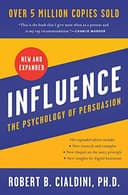
Robert Cialdini, the social psychologist whose landmark 1984 book 'Influence: The Psychology of Persuasion' codified the six universal principles of influence, identified scarcity as one of the most reliably powerful. His central insight was that scarcity operates through two distinct channels: quantity limitations ('only a few left') and time limitations ('offer ends Friday'). Both create urgency, but research suggests they do so for slightly different psychological reasons. Quantity scarcity triggers social competition, if there are only two spots, someone else might take them. Time scarcity triggers loss aversion, the well-documented tendency for people to feel the pain of a loss roughly twice as intensely as the pleasure of an equivalent gain, a finding central to Daniel Kahneman and Amos Tversky's Prospect Theory.
What makes scarcity particularly relevant to patient re-engagement is that it directly counters the most dangerous force working against you: inertia. Lapsed patients rarely consciously decide not to return, they simply don't have a compelling reason to act right now. Open-ended invitations like 'book when you're ready' are psychologically toothless because they place no cost on delay. Scarcity reframes the decision. It introduces a deadline, a competitor (other patients who might take that slot), and the spectre of loss, all of which are neurologically far more motivating than vague future possibility. The patient who was comfortable procrastinating suddenly has a reason to act today.
Critically, Cialdini was careful to distinguish between genuine and manufactured scarcity. Fabricated scarcity, pretending slots are scarce when they're not, can backfire catastrophically when patients see through it, eroding the trust that is the bedrock of any therapeutic relationship. The good news for allied health practices is that genuine scarcity is almost always present. Practitioners have finite hours. Thursday afternoon really does fill up. Your most experienced physio genuinely only has two openings this week. You don't need to manufacture urgency, you need to surface and communicate the real constraints that already exist.
The Research
One of the most elegant demonstrations of scarcity's power comes from a study conducted by Stephen Worchel, Jerry Lee, and Akanbi Adewole, published in the Journal of Personality and Social Psychology in 1975. Participants were asked to rate the quality of chocolate chip cookies from a jar. In one condition, the jar contained ten cookies; in another, it contained only two. The cookies were identical, same batch, same recipe. Yet participants consistently rated the cookies from the nearly-empty jar as more desirable, more attractive, and of higher quality than those from the full jar. The mere perception of scarcity changed how people experienced the product itself.
Cialdini references this and similar work to make a broader point: scarcity doesn't just motivate action, it actually alters perceived value. This is the key insight for healthcare practitioners. When you communicate that appointment availability is limited, you're not simply nudging a patient to act faster, you're genuinely increasing the perceived value of the appointment itself in their mind. The slot they might have casually considered booking 'someday' becomes something worth prioritising today. The psychological mechanism is the same whether we're talking about cookies or a clinical appointment.
How to Apply This in Your Practice
The first step in applying scarcity to patient re-engagement is auditing where genuine scarcity already exists in your practice. Most clinic owners are sitting on real scarcity they've never thought to communicate. Your lead practitioner might only work three days a week. Your hydrotherapy pool might only accommodate six patients per session. Certain time slots, early morning, late afternoon, Thursday slots for school-drop-off parents, are consistently high demand. Start by mapping these real constraints. This is your scarcity inventory, and it forms the authentic foundation for everything that follows.
Once you've identified genuine constraints, build them into your re-engagement messaging rather than treating them as operational details. Instead of sending a lapsed patient a message that reads 'Hi Sarah, we haven't seen you in a while, would you like to book an appointment?', try something like: 'Hi Sarah, I noticed it's been a few months since your last visit with James. He has two appointments available this Thursday afternoon, we wanted to reach out to you before opening these to our waitlist. Would either 2pm or 3:30pm work for you?' Notice the specific structural elements: a named practitioner (personalised scarcity), a specific time frame (this Thursday, not 'soon'), a quantity (two appointments), and a social proof element (the waitlist). Each of these amplifies the psychological effect without exaggerating or fabricating anything.
For SMS or email re-engagement sequences, which platforms like Routiq are designed to automate, scarcity messaging works best when it is time-sequenced and genuinely resolves. Send the first message noting limited availability. If the patient doesn't respond within 24 to 48 hours, a follow-up that says 'One of the two Thursday slots has been taken, the 3:30pm is still available if you'd like it' is both truthful (in most cases, other bookings will have come in) and behaviourally powerful. It demonstrates that the scarcity was real. If the patient ultimately misses both slots, your next message acknowledging 'those Thursday spots did fill up, but we've just had a cancellation for next Tuesday' continues the narrative of genuine demand rather than reading as a hollow marketing sequence.
One important ethical guardrail: never hold slots artificially empty to manufacture scarcity, and never tell a patient an appointment is taken when it isn't. In allied health, trust is your most valuable clinical and commercial asset. The good news is you genuinely don't need to. Real scarcity, honestly communicated with behavioural intentionality, is more than sufficient to shift patient behaviour. The practise of surfacing real constraints, rather than hiding them behind a breezy 'book anytime', is both more ethical and more effective than any manufactured urgency could ever be.
Get one behavioral science principle per week
Applied to patient retention. Backed by research. No fluff.
Seeing It in Action
Consider a fictional but entirely realistic scenario at a busy physiotherapy clinic in Brisbane. Marcus, 43, had been seeing his physio, Claire, for chronic lower back pain. After eight sessions, he felt significantly better and quietly dropped off, not because the treatment wasn't working, but because life got busy and the discomfort became manageable. Seven months passed. The clinic sent him two generic 'we miss you' emails during that time. He opened both, felt briefly guilty, and closed them without acting.
The clinic then implemented a scarcity-based re-engagement workflow through Routiq. Marcus received an SMS that read: 'Hi Marcus, Claire has had a cancellation and has one spot left on Wednesday at 5:30pm. Given your history with lower back management, we thought of you first. Would you like us to hold it for you? It's available until tomorrow morning.' The message was accurate, Claire did have a cancellation, and the slot was genuinely in demand. Marcus, who had been vaguely meaning to book for weeks, responded within 40 minutes. The specificity of the slot, the flattery of being thought of first, and the quiet pressure of a tomorrow-morning deadline cut through seven months of inertia in under an hour.
Marcus attended that Wednesday appointment, and Claire recommended a maintenance plan of monthly check-ins. He's been an active patient for the past six months since. The practice didn't win Marcus back by working harder on their relationship marketing, they won him back by understanding that good intentions don't produce action, but the prospect of loss does. One well-constructed message, grounded in real availability and real behavioural science, achieved what two warm-but-vague emails could not.
Your Action Plan
- 1Audit your genuine scarcity, map which practitioners, time slots, and service types are consistently high demand or limited in availability. This becomes the honest foundation for all scarcity-based messaging.
- 2Rewrite your re-engagement message templates to include specific availability details: name the practitioner, name the day, name the number of slots remaining, and include a clear expiry on the offer (e.g., 'available until tomorrow morning').
- 3Build a two-touch scarcity sequence in your patient engagement platform, the first message surfaces the limited availability, and the follow-up (sent 24-48 hours later) truthfully updates the patient on whether slots have been taken, reinforcing that the scarcity was genuine.
- 4Train your reception and admin team to communicate availability using scarcity language during phone calls and manual outreach, phrases like 'we've had a cancellation that I wanted to offer you first' and 'this slot tends to go quickly' are honest, effective, and easy to implement immediately.
- 5Review your outcomes monthly, track re-engagement response rates for scarcity-framed messages versus open-ended invitations and use this data to refine your messaging, identify your highest-demand slots, and build a continuous improvement loop into your retention strategy.
Key Takeaway
When you tell a lapsed patient 'book anytime', you give them permission to book never, but when you tell them 'there are two slots left and they won't last', you give their brain a reason to act today.
Related Principles
Social Proof: Show Patients That Others Complete Treatment
Influence · Robert B. Cialdini
People look to what others are doing to determine correct behavior, especially in uncertain situations.
Commitment and Consistency: Get Verbal Commitments to Increase Follow-Through
Influence · Robert B. Cialdini
Once people make a commitment (especially publicly or in writing), they feel internal pressure to behave consistently with it.
The Decoy Effect (Asymmetric Dominance): Structure Pricing to Guide Patient Commitment
Predictably Irrational · Dan Ariely
When choosing between two options, adding a third "decoy" option that is clearly inferior to one of them makes the superior option far more attractive.
The Power of FREE: Offer a Free Check-In to Eliminate Objections
Predictably Irrational · Dan Ariely
"Free" is not just a price, it is an emotional trigger that makes people disproportionately excited. The zero price effect causes people to overvalue free ite