
Priming Through Association
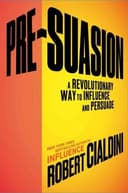

What if the single most important message you send to a lapsed patient isn't the rebooking request itself, but the message you send 48 hours before it? Research into pre-suasion, the science of what happens in the moments before a request is made, suggests that the mental state a person is in when they receive your ask matters just as much as the ask itself. For allied health practices losing thousands of dollars each month to patient drop-off, this changes everything about how you approach re-engagement.
The Science Behind Priming Through Association
Priming through association is the phenomenon whereby exposure to a stimulus, a word, an image, a story, a sound, unconsciously activates related concepts in the mind, making those concepts more mentally accessible and therefore more influential in shaping decisions. It is not persuasion in the traditional sense. You are not arguing a case or offering a discount. You are quietly arranging the mental furniture of the room before your patient walks into it.
The scientific foundation for this principle was built over decades of cognitive psychology research, but it was Robert Cialdini who synthesised it most powerfully in his 2016 book Pre-Suasion. Cialdini's central argument is that what captures attention in the moment before a request determines how that request is received. He calls this 'privileged moments', windows of time where the mind has been tuned to a particular frequency, making certain ideas feel more relevant, more true, and more motivating. The mechanism is largely unconscious: people do not know their thinking has been shaped; they simply experience the shaped thought as their own.
The psychology behind priming draws on what researchers call 'spreading activation', a model of memory in which concepts are stored as nodes in a network, and activating one node sends ripples of activation through connected nodes. If you prime a patient with a story about someone recovering from lower back pain and returning to weekend sport, you are lighting up the entire network of associations connected to recovery, possibility, movement, and relief. When your rebooking message arrives shortly after, it lands inside that illuminated network, and it feels intuitively right in a way that a cold rebooking message simply never could.
For allied health practices, this matters because patient re-engagement typically fails at the moment of friction, when the message arrives and the patient has no warm mental context for it. They are thinking about work, dinner, their kids. Your message about booking a follow-up appointment is competing with everything else in their cognitive environment. Priming does not eliminate that competition; it gives your message a head start by ensuring the patient's mind has already been quietly turned toward health, recovery, and the value of your care before your ask ever arrives.
The Research
One of the most compelling demonstrations of priming in Cialdini's Pre-Suasion involves a study on charitable donations where researchers tested whether the image displayed on a fundraising website could alter how much people donated. In one condition, the background featured a photograph of a woman running, an image associated with action and effort. In another, it featured coins. Visitors who saw the woman running donated significantly more time (volunteering hours) and rated helping others as more personally important, while those who saw coins were more likely to donate money and placed greater emphasis on financial reward. The same request, made on the same website, produced meaningfully different outcomes based purely on what the visitor had been visually exposed to in the seconds before they encountered it.
Cialdini also cites research involving the placement of a large versus small 'community' cue on a petition website, and wine retailer studies where background music influenced purchasing decisions, French music leading to more French wine sales, German music to German wine, with customers showing no conscious awareness of the influence. Across these varied experiments, the consistent finding is that context created immediately before a decision shapes the decision itself, often more powerfully than the logical merits of the choice being presented.
How to Apply This in Your Practice
The strategic logic for allied health re-engagement is straightforward: do not send a rebooking message into a cold environment. Instead, engineer a two-step sequence where the first communication primes the patient's mental state, and the second communication makes the ask. The first message is not trying to book anything. Its sole purpose is to activate health-related associations, particularly associations tied to progress, recovery, and the specific value your practice delivers. Think of it as warming the soil before you plant the seed.
In practice, this might look like a short SMS or email sent two to three days before your rebooking message. The content could be a brief patient success story ('One of our patients came in with chronic heel pain she'd had for two years. After six sessions of targeted treatment, she completed her first fun run last month, we couldn't be prouder.'). It could be a short video from the patient's usual practitioner discussing a common condition and what recovery looks like. It could be a before/after case study, a seasonal health tip specific to a condition the patient has been treated for, or even a thoughtful article about the cumulative benefits of ongoing physiotherapy. The content type matters less than its function: it must activate positive associations with health, with your practice, and with the idea of taking action.
When the rebooking message arrives 48 to 72 hours later, the copy itself can be relatively simple, because the heavy lifting has already been done. Something like: 'Hi [Name], it's been a while since we've seen you at [Practice Name]. Given how well you were progressing with your [condition], we'd love to help you keep that momentum going. We have appointments available this week, would you like to book in?' The patient who has just read a recovery story or watched their practitioner speak warmly about patient outcomes is in an entirely different cognitive state than a patient who receives that same message cold. The primed patient is already thinking about health, recovery, and the role your practice plays in their wellbeing. Your message arrives as confirmation of what they were already thinking, not as an interruption.
For implementation within a platform like Routiq, this translates into a structured re-engagement workflow: segment your lapsed patients (those who haven't booked in 60, 90, or 120 days), create a library of priming content specific to your practice's main treatment areas (back pain, sports injury, post-surgical rehab, chronic foot conditions), and automate the two-message sequence so that every re-engagement campaign begins with a priming touchpoint rather than a direct ask. Track response rates for both steps and iterate on which content types produce the strongest priming effect for your specific patient cohort.
Get one behavioral science principle per week
Applied to patient retention. Backed by research. No fluff.
Seeing It in Action
Consider a chiropractic clinic in Brisbane, let's call it Align Health, with a patient named Marcus, a 44-year-old project manager who completed a six-week treatment plan for thoracic spine pain eighteen months ago. He felt significantly better after treatment and always intended to come back for maintenance care, but life got in the way. He has received two standard rebooking SMS messages from the clinic in that time, both of which he read and ignored without any particular feeling of urgency.
Align Health's practice manager, working through their patient re-engagement system, places Marcus into a lapsed patient workflow. On a Tuesday morning, Marcus receives a short email with the subject line: 'How Michael got back to cycling after 18 months of back pain.' The email shares a two-paragraph story about another patient (with identifying details changed) who had similar thoracic issues, drifted away from care, and returned to find that some of his progress had unwound. After recommitting to a maintenance schedule, he was back on the bike within three months. The email ends simply: 'We share this because we see it often, and because we know how much work our patients put into getting better.' No call to action. No booking link. Just a story.
On Thursday morning, Marcus receives a brief SMS: 'Hi Marcus, it's Dr. Sarah from Align Health. It's been a while, I was thinking about how well you responded to your treatment plan. If you'd like to check in and make sure everything's holding up, I have a couple of spots this week. Happy to book you in.' Marcus, who spent Tuesday morning reading about Michael's cycling comeback, books within two hours. He later tells a colleague he had been meaning to go back for ages and the message just 'came at the right time.' He has no awareness that his sense of perfect timing was carefully constructed.
Your Action Plan
- 1Audit your current re-engagement process and identify whether your rebooking messages are being sent into a 'cold' mental environment, no prior touchpoint, no context-setting, no priming. If the rebooking message is your first contact, you are skipping the most important step.
- 2Build a priming content library specific to your practice's treatment areas. Create at least three to five short pieces, patient success stories, practitioner videos, recovery case studies, or condition-specific health insights, that activate positive associations with health outcomes and your clinic's care.
- 3Design a two-step re-engagement workflow: send a priming message (email or SMS) two to three days before your rebooking request. The priming message should have no overt call to action, its purpose is purely to warm the patient's mental state, not to ask for anything.
- 4Segment your lapsed patients by condition or treatment history, and match your priming content to their specific health context. A patient who came in for plantar fasciitis should receive priming content about foot health and mobility; a post-surgical rehab patient should see a story about recovery timelines. Specificity dramatically increases the relevance and therefore the potency of the prime.
- 5Measure and iterate. Track open rates and click-through rates on your priming messages separately from your rebooking messages, and compare rebooking conversion rates for patients who received the two-step sequence versus those who received only the direct ask. Use this data to refine your content and timing until your primed sequences consistently outperform cold outreach.
Key Takeaway
The most powerful thing you can do before asking a lapsed patient to rebook is to ensure their mind is already full of the right associations, because people don't respond to messages in a vacuum, they respond to messages through the lens of whatever they were just thinking about.
Related Principles
Privileged Moments: Time Outreach for Maximum Receptivity
Pre-Suasion · Robert B. Cialdini
There are identifiable windows in time when people are most receptive to a message. The same offer can produce drastically different results depending on when i
Attention Channeling: Direct Patient Focus Before the Ask
Pre-Suasion · Robert B. Cialdini
Whatever captures attention is perceived as more important. Simply drawing focus to an idea increases its perceived significance.
Triggers (Environmental Reminders): Link Rebooking to Everyday Physical Sensations
Contagious · Jonah Berger
Ideas spread when they are linked to frequent environmental triggers. The more often something is triggered, the more it stays top-of-mind.
Direct the Rider: Find the Bright Spots: Study What Successful Patients Do Differently
Switch · Chip Heath & Dan Heath
Instead of analyzing problems, find what's already working and replicate it. Study successes, not failures.