
Unexpectedness (Surprise and Curiosity Gaps)

Most allied health practitioners assume lapsed patients drift away because of cost, inconvenience, or simply feeling better. But what if the real reason is far more counterintuitive, and far more fixable? The science of surprise and curiosity gaps reveals that the moment a patient stops feeling mentally engaged with their health journey, they stop showing up, and the way you communicate with them can either reignite that engagement or quietly confirm their decision to stay away.
The Science Behind Unexpectedness (Surprise and Curiosity Gaps)
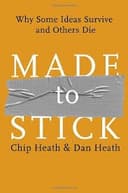
Unexpectedness is one of the six core principles explored by brothers Chip Heath and Dan Heath in their landmark 2007 book *Made to Stick: Why Some Ideas Survive and Others Die*. Their central question was deceptively simple: why do some ideas lodge themselves permanently in our minds while others evaporate the moment we hear them? Through extensive research into psychology, education, and communication, they identified surprise as one of the most reliable mechanisms for capturing and holding human attention. The reason is neurological as much as psychological, our brains are pattern-recognition machines, constantly running predictions about what will happen next. When something violates that prediction, the brain flags it as high priority and mobilises attention resources toward it.
The psychological mechanism at work here is closely tied to what researchers call the 'schema disruption' effect. A schema is essentially a mental template, a set of expectations we hold about how a situation will unfold. When a communication follows the expected script ('We miss you, book an appointment!'), the brain barely registers it. But when it violates the script with something genuinely unexpected, attention is seized involuntarily. This is not a trick or manipulation; it is how human cognition is wired to prioritise information worth processing. The Heath brothers argue that the most effective communicators don't just deliver facts, they first create the felt need to know those facts.
Building on this, the Heaths introduced the concept of the 'curiosity gap,' drawing heavily on the work of Carnegie Mellon behavioural economist George Loewenstein, who published influential research on the psychology of curiosity in 1994. Loewenstein's insight was that curiosity is not simply a love of knowledge, it is the discomfort of an information gap. When we become aware that we are missing a piece of information that feels important or relevant, we experience a low-grade psychological tension that compels us to seek resolution. This is why a subject line that reads 'The #1 reason patients don't come back has nothing to do with money' is neurologically harder to ignore than 'Come back and see us, we're here to help.'
For allied health practices, the implications are significant. Most re-engagement communications are written to be pleasant and low-pressure, which is understandable but behaviourally ineffective. Pleasantness does not disrupt patterns. Pleasantness does not open curiosity gaps. If you want a lapsed patient to actually open your email, read your SMS, or pause on your social media post, you need to give their brain a reason to stop its autopilot processing and pay genuine attention. Surprise and curiosity are two of the most reliable tools available to accomplish exactly that.
The Research
George Loewenstein's foundational work on curiosity, published in *Psychological Review* in 1994, provides the most direct research underpinning of the curiosity gap concept. Loewenstein reviewed decades of experimental literature and synthesised an 'information gap' theory of curiosity: curiosity arises specifically when people become aware of a gap between what they know and what they want to know. Crucially, he found that simply being told a gap exists, even without being told its content, is enough to generate the motivated state of curiosity. This has been replicated in subsequent experimental settings where participants who were shown a question (e.g., 'Do you know which common household item is most associated with long-term back pain?') reported significantly higher engagement and information-seeking behaviour than those who were simply given the answer directly.
The Heath brothers illustrate the practical power of this in *Made to Stick* through what they call the 'gap theory in action': effective teachers and communicators don't lead with answers, they lead with questions that make the absence of the answer feel uncomfortable. In the context of patient re-engagement, this means your outreach should be engineered to create a felt information gap, not to be mysterious for its own sake, but to make the patient genuinely curious about something that is directly relevant to their health outcome. The moment they feel that gap, they are already more engaged than they would have been with any amount of warm, encouraging language.
How to Apply This in Your Practice
The first step in applying this principle is auditing your current re-engagement communications for pattern-conformity. Read your existing outreach emails and SMS messages and ask: does this follow the completely expected script? If a patient could have predicted every sentence before reading it, you have a schema confirmation problem, not a communication strategy. Rewrite your subject lines and opening sentences to lead with something genuinely unexpected, a counterintuitive fact, a surprising statistic, or a question that opens a gap the reader immediately wants to close. For example, instead of 'Hi Sarah, we noticed you haven't booked recently, we'd love to see you,' try: 'Did you know the most common time patients re-injure is 3-6 months after stopping treatment? There's a reason for that, and it matters for you specifically.'
For email campaigns, structure your re-engagement sequence around progressive curiosity gaps. Your first email opens a gap ('The #1 reason physio patients plateau has nothing to do with how often they attend, it's something most practitioners never discuss'). Your second email, sent several days later, partially resolves the gap while opening a new one ('Last week we mentioned the hidden factor behind patient plateaus. Here's what the research actually shows, and what it means for your lower back specifically'). This sequential approach mirrors how effective storytelling works, keeping the patient in an ongoing state of engaged curiosity rather than treating re-engagement as a single transactional message.
For SMS outreach, the curiosity gap needs to be tighter given the medium's brevity, but it is no less powerful. A message like: 'Quick question, [Name], do you know what the most overlooked part of your recovery plan was? Your practitioner flagged something worth a 10-minute conversation. Reply YES and we'll explain.' This format does several things simultaneously: it signals that the message is personalised and clinically grounded, it opens an explicit information gap (what was flagged?), and it provides an ultra-low-friction response mechanism. The patient's curiosity about what their practitioner noticed is doing the motivational work that no amount of 'we miss you' language could accomplish.
Finally, consider applying unexpected framing to your reactivation offers themselves. Rather than announcing a standard 'welcome back' appointment, frame the offer around a revelation: 'We've updated our assessment for [condition type] patients, and what we're now measuring explains why so many people stall in their recovery. Your next session includes this new screen at no extra cost.' This transforms a routine booking prompt into something that feels genuinely new and worth engaging with. The behavioural science here is consistent: people are not lazy or disengaged by nature, they are rationally allocating their limited attention. Your job is to give their brain a legitimate signal that paying attention to your message is worth their cognitive investment.
Get one behavioral science principle per week
Applied to patient retention. Backed by research. No fluff.
Seeing It in Action
Marcus, a 41-year-old project manager, had completed six sessions of physiotherapy at a suburban Melbourne clinic for a recurring hamstring issue. He felt significantly better after his fourth session, quietly decided he didn't need the remaining appointments, and stopped booking, as around 40-50% of physio patients do before completing their recommended treatment plan. Over the following five months, the clinic sent him two standard 'we miss you' emails, both of which he opened briefly and closed without action. His brain had correctly identified them as low-information, high-predictability communications. They confirmed nothing was urgent, so he moved on.
In month six, the clinic switched to a curiosity-gap reactivation sequence using Routiq. Marcus received an email with the subject line: 'The most common mistake hamstring patients make between 4-6 months post-treatment (it's not what you'd expect).' He opened it within two hours, his open rate for the previous two messages had been effectively zero in terms of meaningful engagement. The email body opened with a specific, counterintuitive fact about hamstring re-injury patterns, then described a new functional screening the clinic had introduced for exactly his injury type, creating a second curiosity gap around what that screening might reveal in his specific case. It closed with a single low-friction call to action: a 15-minute reassessment booking link.
Marcus booked within 48 hours. At his reassessment, the practitioner identified a compensatory movement pattern that had developed since his discharge, precisely the kind of finding the email had alluded to. He subsequently booked four follow-up sessions. The clinic had not changed its prices, its location, or its clinical offering. The only variable was a communication strategy built around genuine surprise and a well-constructed curiosity gap. Marcus later told his practitioner he'd booked 'because the email made me feel like there was something I didn't know that I probably should.'
Your Action Plan
- 1Audit your existing re-engagement emails and SMS templates, identify every sentence a lapsed patient could have predicted before reading it, and mark those as high-priority rewrites.
- 2Research two or three genuinely surprising statistics or counterintuitive facts relevant to your most common patient presentations (e.g., re-injury rates, recovery timelines, the role of sleep in musculoskeletal healing) and build these into your opening lines.
- 3Restructure your re-engagement email sequence so each message opens a curiosity gap and the following message partially resolves it while introducing a new one, create a narrative thread, not a series of isolated promotional messages.
- 4Rewrite your SMS reactivation templates to include an explicit information gap tied to something clinically specific to the patient's history, paired with an ultra-low-friction response mechanism (a single word reply or a direct booking link).
- 5A/B test your curiosity-gap subject lines against your previous standard subject lines over a 60-day period, tracking open rates, click-through rates, and actual rebooking conversions to build an evidence base for what resonates with your specific patient population.
Key Takeaway
Your lapsed patients are not ignoring you because they don't care about their health, they're ignoring you because your communications give their brain no reason to stop, pay attention, and feel that something genuinely worth knowing is on the other side of the next sentence.
Related Principles
Simplicity (Find the Core): One Message, One Action, Nothing Else
Made to Stick · Chip Heath & Dan Heath
Strip a message down to its most essential, compact form. If you say three things, you say nothing.
Concreteness (Vivid, Specific Details): Replace Vague Health Talk with Vivid Outcomes
Made to Stick · Chip Heath & Dan Heath
Abstract ideas don't stick. Concrete, sensory language does. "Improve your health" is abstract. "Touch your toes without wincing" is concrete.
Status Quo Bias: Why Patients Stick with Routines (and How to Use It)
Nudge · Richard H. Thaler & Cass R. Sunstein
People prefer the current state of affairs and resist change, even when change would benefit them. Disrupting their routine requires effort they instinctively a
Feedback Loops: Show Patients Their Progress to Prevent Treatment Drop-Off
Nudge · Richard H. Thaler & Cass R. Sunstein
People make better decisions when they receive clear, timely feedback on the consequences of their choices.