
Simplicity (Find the Core)
Most re-engagement messages sent by allied health practices fail before the patient even finishes reading them. They bundle a rebooking nudge with a newsletter update, a new practitioner announcement, a seasonal promotion, and a reminder about HICAPS, and in doing so, they communicate precisely nothing. The science of how ideas stick tells us exactly why this happens, and exactly how to fix it.
The Science Behind Simplicity (Find the Core)
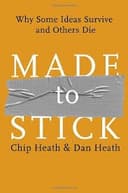
Simplicity, as defined by Chip Heath and Dan Heath in their landmark 2007 book *Made to Stick*, is not about dumbing things down. It is about finding the single most essential idea and communicating it with ruthless precision. The Heath brothers draw on decades of communication research to argue that the enemy of a sticky message is not complexity itself, it is the equal prioritisation of multiple competing ideas. When everything is important, nothing is. They describe the ideal as finding your message's 'core': the one thing that, if your audience remembered nothing else, would still move them to act.
The psychology underpinning this principle is well-established in cognitive science. The human brain processes information through two systems, one fast, intuitive, and effortless, and one slow, deliberate, and effortful. When a message is simple and singular, the fast system can process it immediately and trigger action. When a message contains multiple elements, even good, relevant ones, the brain is forced to switch to the slower system, weigh competing priorities, and make decisions about what matters most. Research in decision-making consistently shows that this cognitive load increases the likelihood of doing nothing at all. In the context of a lapsed patient who is already slightly disengaged, that moment of friction is often enough for them to close the message and move on.
This phenomenon is closely related to what psychologists call 'choice overload', a concept studied extensively by researchers including Sheena Iyengar at Columbia Business School. Her work demonstrated that presenting people with more options, even attractive ones, paradoxically reduces the likelihood they will choose any of them. The same principle applies not just to choices between products, but to choices between messages and calls to action within a single piece of communication. Every additional element you add to a re-engagement message is not a bonus, it is a tax on the patient's attention and motivation.
For allied health practice owners, this is a confronting insight, because the instinct is almost always to add more. If you are sending a message anyway, why not include the new Sunday hours? Why not mention the current promotion? Why not remind them about the referral programme? The answer is that each addition dilutes the primary signal. The message you think you are sending, 'come back and book', is being received as 'here is a lot of information, decide what is relevant to you.' Most lapsed patients will not do that work. They will archive the email, swipe away the SMS, and intend to come back to it later. They rarely do.
The Research
The most well-known experimental demonstration of this principle appears directly in *Made to Stick*, where the Heath brothers reference the Stanford research of psychologist Elizabeth Newton. In 1990, Newton conducted a study in which participants were divided into 'tappers' and 'listeners'. Tappers were asked to tap out the rhythm of a well-known song, 'Happy Birthday', for instance, on a table, while listeners tried to identify the song. Before the experiment, tappers were asked to estimate what percentage of listeners would correctly identify the song. They predicted approximately 50 per cent would succeed. The actual result? Only 2.5 per cent of listeners identified the song correctly. The tappers, who could hear the full melody in their heads as they tapped, consistently overestimated how much information they were transmitting.
This study became foundational in communication research because it illustrates what Newton called the 'curse of knowledge', the sender of a message is always working with far more context than the receiver. In an allied health context, you know exactly why a patient should come back, you know the clinical rationale, you know how much better they felt after treatment, and you know the rebooking link is right there in the message. The lapsed patient has none of that active context. They are receiving a faint tap with no melody behind it. The only solution is to make the single most important signal so clear and loud that nothing else competes with it.
How to Apply This in Your Practice
The first strategic decision when applying simplicity to patient re-engagement is to define, with complete clarity, the one action you want the lapsed patient to take. Not 'engage with the clinic' or 'remember us positively', a single, physical, completable action. In almost every case for allied health, that action is: book an appointment. Everything else, the clinical education, the promotions, the practitioner news, belongs in different communications at different times. Your re-engagement message has one job.
Once you have identified the core action, every word in your message should either support that action or be removed. A high-performing SMS re-engagement message might read exactly like this: 'Hi [First Name], it's been a while since we've seen you at [Clinic Name]. Your body deserves some attention, book your next appointment here: [link].' That is the entire message. No offers, no explanations, no clinic updates. Research on SMS open and conversion rates consistently shows that shorter messages with a single link outperform longer messages with multiple links or calls to action. The link itself becomes the visual anchor, the one thing the patient's eye is drawn to.
For email re-engagement, the principle of simplicity is even more critical because email affords more visual real estate, which creates more temptation to fill it. Resist this. Your subject line should contain the core idea: 'Time to look after yourself, [First Name].' Your body copy should be three sentences or fewer. Your call-to-action button should say one thing, 'Book Now', and it should appear once, not repeated at the top, middle, and bottom. If your email design team pushes back, point them to the behavioural science: every additional element is competing with the primary call to action for cognitive priority.
From a workflow perspective, this means your practice needs two separate communication streams: one for re-engagement (singular, action-focused, emotionally direct) and one for relationship maintenance (newsletters, health tips, practitioner updates). Many practice management systems and patient communication platforms, including tools like Routiq, allow you to segment these clearly. The lapsed patient, defined typically as someone who has not visited in 90 days or more, should receive the stripped-back re-engagement message, not the monthly newsletter. Conflating the two is where most practices lose the thread. Simplicity is not just a message design principle; it is a segmentation and sequencing discipline.
Get one behavioral science principle per week
Applied to patient retention. Backed by research. No fluff.
Seeing It in Action
Consider a fictional but highly realistic scenario: a physiotherapy clinic in Brisbane called Northside Physio. Their patient, Marcus, completed a six-week shoulder rehabilitation programme eight months ago and has not rebooked. The front desk team had been including Marcus in the general monthly email newsletter, updates about the new massage therapist, a blog post about desk ergonomics, a promotion on initial consultations for new patients, and a reminder that they now offer Pilates. Marcus had opened two of these emails but clicked nothing. He was not disengaged from the clinic emotionally; he simply never found a clear reason to act in any given moment.
The clinic adopts a simplified re-engagement approach. Marcus receives a single SMS: 'Hi Marcus, it's been a while since your shoulder rehab wrapped up. How's it holding up? If you'd like a check-in, book here: [link].' No newsletter. No promotions. No other information. The message is about him, it references his specific history, and it contains one link. Marcus reads it during his lunch break, clicks the link, and books a follow-up appointment within 90 seconds.
The outcome is not magic, it is the direct result of removing friction. Marcus did not have to decide which part of the message was relevant to him, he did not have to scroll past content aimed at other patients, and he did not have to locate a booking link buried beneath three paragraphs of clinic news. The core message found him, made one clear request, and gave him one clear path to say yes. Northside Physio subsequently restructured all their lapsed patient communications around this single-action principle and, within three months, reported a meaningful increase in re-engagement conversion from their dormant patient list.
Your Action Plan
- 1Audit every re-engagement message your practice currently sends, SMS, email, and voicemail, and count the number of distinct calls to action in each. If you find more than one, that message needs to be rebuilt from scratch.
- 2Define your single re-engagement goal: a completed appointment booking. Write it down explicitly so that every person involved in creating communications understands the only metric that matters for this message type.
- 3Draft a re-engagement SMS template of no more than two sentences that references the patient's lapse, speaks to their wellbeing, and includes one booking link. Remove anything that does not directly serve the booking action.
- 4Create a separate communication stream in your practice management or patient engagement platform for lapsed patients (typically 90+ days since last visit), so they receive only the stripped-back re-engagement message, not newsletters, promotions, or clinic updates.
- 5Measure open-to-booking conversion rates for your simplified messages against your previous multi-element messages over a 60-day period, and use the results to make the single-action format your permanent standard for re-engagement.
Key Takeaway
A re-engagement message that tries to say three things says nothing, strip it to one action, one link, and one clear reason that is about the patient, and you give a lapsed person the frictionless path back they were already looking for.
Related Principles
Unexpectedness (Surprise and Curiosity Gaps): Open with a Surprise to Keep Patients Reading
Made to Stick · Chip Heath & Dan Heath
Surprise gets attention. Curiosity gaps, opening a question without immediately answering it, keep attention.
Concreteness (Vivid, Specific Details): Replace Vague Health Talk with Vivid Outcomes
Made to Stick · Chip Heath & Dan Heath
Abstract ideas don't stick. Concrete, sensory language does. "Improve your health" is abstract. "Touch your toes without wincing" is concrete.
Status Quo Bias: Why Patients Stick with Routines (and How to Use It)
Nudge · Richard H. Thaler & Cass R. Sunstein
People prefer the current state of affairs and resist change, even when change would benefit them. Disrupting their routine requires effort they instinctively a
Feedback Loops: Show Patients Their Progress to Prevent Treatment Drop-Off
Nudge · Richard H. Thaler & Cass R. Sunstein
People make better decisions when they receive clear, timely feedback on the consequences of their choices.