
Emotional Appeal (Make People Care)

A lapsed patient receives a text that says 'It's been 6 months since your last appointment, book now to maintain your progress.' They glance at it, feel vaguely guilty, and keep scrolling. Now picture a different message: 'Your son's footy finals are in 8 weeks. Let's make sure your knee holds up on the sideline.' One of these messages gets ignored. The other gets a reply within the hour. The only difference is whether the patient feels something.
The Science Behind Emotional Appeal (Make People Care)
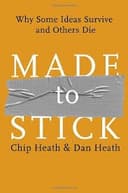
Emotional Appeal, sometimes framed as 'making people care', is the behavioural science principle that recognises a fundamental truth about human decision-making: we do not act on information, we act on feeling. In their landmark 2007 book *Made to Stick*, Chip Heath and Dan Heath argue that ideas (and messages) survive not because they are the most accurate or well-reasoned, but because they connect to something the audience already cares about emotionally. The practical implication for any health practice is profound, if your re-engagement messages are built around clinical logic, they are almost certainly underperforming.
The psychology behind this goes deeper than intuition. Neuroscientist Antonio Damasio's research with patients who had damage to the emotional centres of their brain revealed something startling: these individuals retained their full rational capacity, yet became almost incapable of making decisions. Without the ability to feel, they could analyse options endlessly but could not choose. Damasio's somatic marker hypothesis suggests that emotions essentially act as a shortcut system, they tag certain options as good or bad before conscious reasoning even begins. This means that when a patient receives a clinical, information-heavy message, there is no emotional tag firing. No urgency. No motivation to act.
The Heath brothers build on this with what they call the 'curse of knowledge', the tendency for experts (like your practitioners) to communicate in the language of their expertise rather than the language of their patients' lives. When a physiotherapist sends a message about 'maintaining lumbar stability gains' or 'preventing soft tissue regression,' they are speaking fluently in a language their patients have never learned. The patient, meanwhile, is thinking about whether they can get through a full day at work without their back seizing up, or whether they will be able to carry their grandchild at Christmas. The gap between these two frames of reference is where re-engagement fails.
Research in health psychology consistently supports this framing. Studies examining patient motivation show that abstract health outcomes, 'improving your long-term mobility', generate far weaker behavioural responses than concrete, personally relevant outcomes tied to specific life events or relationships. This is sometimes described as 'identifiable victim effect' thinking applied in reverse: people respond more strongly to vivid, singular, personal stakes than to generalised risk or benefit. For allied health practices, this means the most powerful re-engagement message is not the one that best describes what you do, it is the one that most accurately reflects what the patient stands to lose or gain in their own life.
The Research
One of the most compelling demonstrations of emotional appeal over rational appeal comes from research by Deborah Small, George Loewenstein, and Paul Slovic, published in 2007 in the journal *Organizational Behavior and Human Decision Processes*. The researchers asked participants to donate to a charitable cause and tested two versions of an appeal: one that presented statistical data about millions of people suffering from food shortages in Africa, and another that told the story of a single seven-year-old girl named Rokia, describing her life and her struggle in vivid, personal detail. The identifiable individual appeal (Rokia's story) generated nearly twice as much in donations as the statistical appeal, and when the researchers combined both the story and the statistics in a single message, donations actually dropped compared to the story alone. The data, it turned out, diluted the emotional response rather than reinforcing it.
This finding has direct implications for how allied health practices communicate with lapsed patients. Every time you lead with clinical data, appointment gaps, treatment benchmarks, or health metrics, you are essentially running the 'statistics' condition. You are presenting information that is real and relevant, but emotionally inert. The moment you shift to something personal and specific, a name, a life event, a relationship, you are running the 'Rokia' condition. The response rate difference is not marginal. It is the difference between a message that gets actioned and one that gets ignored.
How to Apply This in Your Practice
The first step in applying emotional appeal to patient re-engagement is building a habit of capturing personal context during every appointment. This does not require a lengthy intake process, it simply means training your front desk and practitioners to note one or two personally meaningful details in the patient record. Is the patient training for a fun run? Do they have a holiday booked? Are they a tradesperson whose livelihood depends on their body working properly? Are they a parent trying to keep up with young children? These details, stored as simple notes in your practice management software, become the raw material for emotionally resonant outreach.
When it comes time to re-engage a lapsed patient, typically someone who has not booked in the past 8 to 16 weeks, your message should lead with their world, not your clinic. Compare these two SMS approaches. Version A: 'Hi Sarah, we noticed it has been a while since your last appointment. We would love to help you stay on track, book online at [link].' Version B: 'Hi Sarah, with your coast walk coming up in 6 weeks, now is a great time to make sure your plantar fascia is ready for the distance. Want us to check in before then?' Version B is not just warmer, it is behaviourally superior. It activates a specific emotional stake (the walk she is excited about), it implies that something could go wrong without action (loss aversion), and it makes rebooking feel like preparation rather than correction.
For practices that want to operationalise this at scale, segmenting your lapsed patient list by personal context is the most effective approach. Group patients by life stage (working professionals, retirees, parents of young children, athletes) and craft emotionally resonant template messages for each segment. You will not always have a specific personal detail on file, but even segment-level emotional relevance outperforms generic clinical messaging. A message that says 'As someone who is on their feet all day, we know how much your comfort matters at work' is still far more engaging than 'Your last appointment was X weeks ago.'
Finally, the channel and tone of your message matters for emotional resonance. A personalised SMS or short voice message from the practitioner themselves carries significantly more emotional weight than a bulk email from 'The Team at [Clinic Name].' The Heath brothers describe this as concreteness and human scale, the more your message feels like it comes from a real person who knows the patient, the more emotionally activated the patient will be. If a practitioner sends a voice note saying 'Hey James, I was thinking about your shoulder, you mentioned you are coaching cricket this season. How is it holding up?', the re-engagement rate on that message will be dramatically higher than any automated campaign. Authenticity amplifies emotional appeal.
Get one behavioral science principle per week
Applied to patient retention. Backed by research. No fluff.
Seeing It in Action
Consider the experience of a physiotherapy clinic in regional Victoria, let us call it Glenbrook Physio. Their practice manager, Claire, noticed that their automated re-engagement emails were achieving an open rate of around 18% and a rebooking rate of under 4%. The messages were professional and informative, but they were built around clinical language: appointment reminders, treatment milestones, and health maintenance messaging. Claire decided to trial a different approach with a segment of 40 lapsed patients, using personal context captured in patient notes.
One of those patients was a 58-year-old man named Gary, who had completed a course of treatment for chronic hip pain about four months earlier. In his notes, a practitioner had recorded that Gary was planning to walk the Camino de Santiago with his wife the following year, something he had mentioned during treatment as a long-held dream. Instead of a standard re-engagement email, Claire sent Gary a personalised SMS: 'Hi Gary, the Camino is roughly 10 months away. A maintenance check-in now could make a big difference to how your hip holds up over 800km. Want to book a 30-minute session this month?' Gary booked within two hours, and referred his wife, who also became a patient.
Across the 40-patient trial, Glenbrook Physio achieved a rebooking rate of 22%, more than five times their previous benchmark, simply by connecting the re-engagement message to something each patient personally cared about. The clinical service had not changed. The offer had not changed. What changed was whether the patient felt that the message was about them, or about the clinic's appointment book. Emotional relevance collapsed the barrier to action in a way that no discount or reminder sequence had ever managed.
Your Action Plan
- 1Audit your patient intake and notes system, identify where you can reliably capture one or two personal context details per patient (upcoming events, hobbies, work demands, family milestones, personal goals). Make this a standard part of your patient interaction workflow.
- 2Build an emotional context field into your practice management records, a simple free-text note field labelled something like 'What matters to this patient', and brief your practitioners and front desk team on how to use it during natural conversation.
- 3Segment your lapsed patient list (those with no booking in the past 8-16 weeks) into life-stage or lifestyle groups, and write three to five emotionally resonant message templates for each segment, ensuring each template leads with the patient's world, not your clinic's services.
- 4Where personal context exists in a patient's record, override the template with a truly personalised message, SMS or practitioner voice note preferred, that references the specific detail (the event, the goal, the relationship) directly and ties it to a clear, low-friction call to action.
- 5Measure your emotional-appeal messages separately from your standard re-engagement campaigns, tracking open rates, reply rates, and rebooking rates, then use the results to progressively refine your templates and make the business case for investing further in personalised, context-driven outreach.
Key Takeaway
Patients do not rebook because you remind them they are overdue, they rebook because you remind them of something they care about losing.
Related Principles
Simplicity (Find the Core): One Message, One Action, Nothing Else
Made to Stick · Chip Heath & Dan Heath
Strip a message down to its most essential, compact form. If you say three things, you say nothing.
Unexpectedness (Surprise and Curiosity Gaps): Open with a Surprise to Keep Patients Reading
Made to Stick · Chip Heath & Dan Heath
Surprise gets attention. Curiosity gaps, opening a question without immediately answering it, keep attention.
Status Quo Bias: Why Patients Stick with Routines (and How to Use It)
Nudge · Richard H. Thaler & Cass R. Sunstein
People prefer the current state of affairs and resist change, even when change would benefit them. Disrupting their routine requires effort they instinctively a
Feedback Loops: Show Patients Their Progress to Prevent Treatment Drop-Off
Nudge · Richard H. Thaler & Cass R. Sunstein
People make better decisions when they receive clear, timely feedback on the consequences of their choices.