
Simplification and Friction Reduction
A lapsed patient receives your re-engagement message, feels a flicker of genuine motivation to book, then sees the words 'call us during business hours', and that flicker dies. Not because they don't want to come back, but because the path back is just hard enough to let inertia win. In allied health, the difference between a returning patient and a permanently lapsed one is often not intention, but friction.
The Science Behind Simplification and Friction Reduction
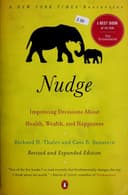
Simplification and friction reduction is grounded in one of the most robust findings in behavioural economics: human beings are not rational optimisers who carefully weigh costs and benefits before acting. We are cognitive misers. We conserve mental energy, take shortcuts, and, critically, abandon goals the moment the path toward them feels even slightly burdensome. Richard Thaler and Cass Sunstein, in their landmark 2008 book *Nudge*, formalised this insight into a practical framework for policy and design. Their central argument is that the architecture of a choice, how options are presented, how many steps are required, what the default outcome is, shapes behaviour as powerfully as any financial incentive or educational campaign.
The psychology behind friction reduction draws on several interlocking mechanisms. First, there is what psychologists call 'present bias': we heavily discount future rewards and overweight immediate costs. Every extra step in a booking process is an immediate cost, a small one, but enough to tip the scales toward doing nothing. Second, there is the concept of 'cognitive load', which refers to the finite mental bandwidth we have available at any given moment. When a process requires a person to remember a phone number, navigate a phone tree, mentally rehearse what to say, and negotiate appointment times, each micro-task depletes that bandwidth. By the time the process is complete, if it ever is, the motivational energy that sparked the initial intention has often evaporated entirely.
Thaler and Sunstein introduced the concept of 'choice architecture' to describe the deliberate design of environments that make beneficial actions easier. A well-designed nudge does not remove options or coerce behaviour; it simply restructures the path of least resistance so it aligns with what the person already wants to do. For lapsed patients, this is a crucial distinction. Most of them are not hostile to returning, they are simply stuck. Research in health behaviour consistently shows that intention-behaviour gaps are enormous: people intend to follow through on health actions far more often than they actually do. The gap is not a values problem. It is a friction problem.
When friction is removed systematically, the results can be dramatic. Studies examining digital health interventions have found that reducing the number of steps to complete a health-related action, from scheduling vaccinations to completing rehabilitation exercises, can meaningfully increase follow-through rates. The principle is consistent across populations and contexts: complexity kills compliance, and simplicity scales. For allied health practices, where the re-engagement window is narrow and patient motivation is inherently variable, this is not a minor UX consideration. It is a core clinical and commercial strategy.
The Research
One of the most compelling demonstrations of friction reduction comes from research on retirement savings enrolment, cited prominently by Thaler and Sunstein in *Nudge*. Economists Brigitte Madrian and Dennis Shea studied what happened when a large US corporation changed the default enrolment setting for its 401(k) retirement plan. Previously, employees had to actively opt in, a process requiring paperwork and deliberate action. Under the new system, employees were automatically enrolled and had to actively opt out if they did not want to participate. The result was striking: participation rates jumped from approximately 49% to over 86% among new employees. The financial incentives were identical in both conditions. The only thing that changed was the number of steps required to achieve the outcome. Opting in required effort; the default required none.
While retirement savings may seem distant from physiotherapy re-engagement, the underlying mechanism is identical. When returning to your practice requires a patient to initiate a phone call, wait on hold, speak to a receptionist, and negotiate availability, you have created an opt-in system, one that demands effort at precisely the moment when motivation is most fragile. Thaler and Sunstein's framework predicts, and research confirms, that simply inverting this architecture, making it easier to say yes than to say nothing, can produce outsized improvements in follow-through without changing a single thing about the quality of your care.
How to Apply This in Your Practice
The first and most important application of friction reduction in patient re-engagement is the elimination of the phone call as the primary re-booking mechanism. A re-engagement SMS that ends with 'call us on (03) 9XXX XXXX during business hours to book' contains at least five friction points: the patient must be available during business hours, must have phone signal, must be willing to speak aloud (not always possible or preferred), must remember their availability, and must wait if lines are busy. Each of these is a potential drop-off point. Replace this with a single sentence and a direct booking link: 'We'd love to see you again, book your next appointment in one tap: [link].' The cognitive load is reduced to near zero. The patient's motivation, however brief, is enough to carry them through.
Your re-engagement messages should be engineered around what behavioural scientists call 'minimum viable action', the smallest possible step that moves the patient meaningfully forward. In practice, this means your SMS or email should contain one call to action, not several. Do not include your address, your phone number, a description of your services, and a booking link all in the same message. Each additional element competes for attention and dilutes the clarity of the single action you want the patient to take. A message like: 'Hi [Name], it's been a while since your last visit with us at [Practice]. Your back doesn't take holidays, let's check in. Book here: [link]' is short, personal, and frictionless. There is exactly one thing the patient can do.
Beyond the message itself, the booking experience on the other side of that link must be equally streamlined. If your online booking system requires a patient to create an account, remember a password, select from a confusing list of appointment types, and then scroll through three weeks of calendar to find availability, you have reintroduced all the friction you removed from the SMS. Audit your patient-facing booking flow as if you are a mildly distracted person trying to complete it on a mobile phone in thirty seconds. If you cannot do it comfortably, your patients cannot either. Invest in a booking platform that pre-populates patient details, surfaces available times prominently, and confirms the booking with a single tap.
Finally, consider the timing of your re-engagement messages as a friction variable in its own right. Sending a re-engagement SMS at 9am on a Tuesday, when a patient is likely commuting or beginning their workday, means your message competes with dozens of other demands on their attention. Research in digital health communication suggests that messages sent in the early evening, when people are more relaxed and have time to act, generate meaningfully higher response rates. Reducing friction is not only about removing steps; it is about choosing the moment when the remaining steps feel smallest.
Get one behavioral science principle per week
Applied to patient retention. Backed by research. No fluff.
Seeing It in Action
Consider a fictional patient, Marcus, a 44-year-old project manager who completed a six-week course of physiotherapy at Bayside Allied Health for a recurring lower back complaint. His treating physio recommended a follow-up appointment eight weeks later, but Marcus never booked it. Life intervened, a work deadline, a family holiday, the usual. Three months passed. Bayside's old re-engagement process involved a receptionist calling lapsed patients during business hours, leaving a voicemail if unanswered, and waiting for a callback. Marcus received two voicemails, felt mildly guilty about not calling back, and did nothing. The intention was there. The path was not.
After implementing a friction-reduced re-engagement workflow through Routiq, Bayside sent Marcus a single SMS at 6:15pm on a Wednesday: 'Hi Marcus, it's been a while since we've seen you at Bayside. Your lower back can change a lot in a few months, let's check in before small issues become bigger ones. Book in 30 seconds here: [direct booking link].' Marcus was sitting on his couch. He tapped the link, saw two available times that suited him, selected one, and received an instant confirmation. Total time elapsed: forty-seven seconds. No phone call. No negotiation. No voicemail anxiety.
Marcus attended his appointment the following Thursday. His physio identified early signs of the postural compensation pattern that had caused his original injury, and he commenced a maintenance programme. From Bayside's perspective, one friction-reduced SMS had recovered a lapsed patient, generated immediate revenue, and initiated an ongoing care relationship. The behavioural science did not change what Marcus wanted, he had always, on some level, intended to come back. It simply removed every excuse not to.
Your Action Plan
- 1Audit your current re-engagement process end-to-end and count every step a lapsed patient must complete to book, if it exceeds three steps, redesign it immediately with friction reduction as the primary objective.
- 2Replace any re-engagement message that directs patients to 'call during business hours' with a message containing a single, direct, mobile-optimised booking link that requires no login or account creation.
- 3Simplify your re-engagement message copy to one clear call to action, remove phone numbers, addresses, service lists, and multiple options that dilute attention and increase cognitive load.
- 4Test your own online booking flow on a mobile device as if you are a new user, if it takes more than 60 seconds or requires more than three taps to confirm an appointment, work with your booking platform to streamline it.
- 5Schedule re-engagement messages to send during low-friction windows (early evening, weekends) when patients are more likely to have the time and mental bandwidth to act on a single, simple prompt.
Key Takeaway
Every step you add between a lapsed patient's intention and their booked appointment is a step where inertia wins, so your only job is to make coming back easier than staying away.
Related Principles
Default Effects: How Auto-Scheduling Boosts Rebooking Rates
Nudge · Richard H. Thaler & Cass R. Sunstein
People overwhelmingly stick with whatever option is presented as the default. When no active choice is required, inertia wins.
Status Quo Bias: Why Patients Stick with Routines (and How to Use It)
Nudge · Richard H. Thaler & Cass R. Sunstein
People prefer the current state of affairs and resist change, even when change would benefit them. Disrupting their routine requires effort they instinctively a
Reducing Action Barriers (Simplicity): Make Rebooking Effortless with One-Tap Links
Hooked · Nir Eyal
The easier an action is to perform, the more likely it is to happen. Fogg's principle: Behavior = Motivation x Ability x Prompt.
Make It Easy (Two-Minute Rule and Friction Reduction): Lower the Barrier to Just One Session
Atomic Habits · James Clear
Scale down the desired behavior to something that takes two minutes or less. Reduce friction to near zero.