
Make It Easy (Two-Minute Rule and Friction Reduction)
Your lapsed patient didn't stop caring about their health, they stopped believing the next step was worth the effort. That distinction is everything. Research consistently shows that the single biggest predictor of whether someone will restart a health behaviour isn't motivation or intention, it's perceived friction. The moment booking a follow-up feels harder than ignoring the problem, your patient is already gone.
The Science Behind Make It Easy (Two-Minute Rule and Friction Reduction)
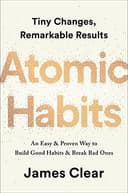
The 'Make It Easy' principle, popularised by James Clear in his 2018 bestseller Atomic Habits, is rooted in a deceptively simple insight: human behaviour is exquisitely sensitive to effort. We don't just weigh up the benefits of an action against its costs, we dramatically overweight the cost of getting started. Clear's formulation draws on decades of behavioural economics and habit research to argue that the most reliable way to increase the frequency of a behaviour isn't to increase motivation, but to decrease the activation energy required to begin.
The psychological mechanism here is well-established. BJ Fogg, founder of the Behaviour Design Lab at Stanford University, has spent over two decades studying what makes behaviours stick. His research consistently demonstrates that motivation is an unreliable, fluctuating resource, whereas environmental design, making the desired behaviour physically and cognitively easier, produces durable change. When the path of least resistance leads toward the behaviour you want, people follow it almost automatically. When it leads away, even highly motivated people fail. This is why gym memberships spike in January and attendance collapses by February: the motivation was always there; the friction was never addressed.
Clear's Two-Minute Rule operationalises this insight with elegant simplicity: scale any desired behaviour down to a version that takes two minutes or less. The goal isn't to accomplish everything in two minutes, it's to use those two minutes as an entry point that bypasses the brain's default resistance to starting. Once a person has begun, psychological momentum takes over. Research in behavioural science refers to this as the 'foot-in-the-door' effect, first formally studied by Freedman and Fraser in 1966, who found that people who agreed to a small initial request were significantly more likely to comply with a larger subsequent request. The act of starting reshapes identity and expectation.
For allied health practitioners, this principle has a specific and urgent application. Every lapsed patient on your books made a decision, consciously or not, that the effort of re-engaging outweighed the anticipated benefit. They're not weighing up twelve sessions of physiotherapy against their back pain; they're weighing up the mental load of making a phone call, explaining their history, committing to a schedule, and justifying the expense. That cognitive stack is enormous. Your job, behaviourally speaking, is to collapse that stack down to a single, tiny, low-stakes action.
The Research
One of the most frequently cited demonstrations of friction reduction in behaviour change comes from research on default options and organ donation, studied extensively by Eric Johnson and Daniel Goldstein and published in a landmark 2003 paper in Science. Examining European countries with nearly identical cultural and demographic profiles, Johnson and Goldstein found that countries where citizens were automatically enrolled as organ donors (opt-out systems) had donation consent rates above 90%, while neighbouring countries with opt-in systems, where citizens had to take an active step to register, had rates as low as 4-27%. The behaviour change required was identical in both cases; only the friction around the default action differed. This study is now considered one of the definitive empirical demonstrations that ease of action, not depth of conviction, drives real-world behaviour at scale.
Clear references this body of research extensively in Atomic Habits to make the case that environment design, not willpower, is the primary lever of behaviour change. For your practice, the implication is direct: if re-engaging requires your lapsed patient to initiate contact, navigate a booking system, explain their condition, and commit to a care plan, you have built an opt-in system with enormous friction. The patients who return despite that friction are exceptional. The patients you're losing, the majority, are behaving entirely rationally.
How to Apply This in Your Practice
The first strategic shift your practice needs to make is reframing what you're asking lapsed patients to do. You are not asking them to recommit to their health. You are not asking them to book a course of treatment. You are asking them to do one small, low-stakes thing, show up once, for a short appointment, with zero obligation attached. The language of your outreach should reflect this precisely. An SMS or email that reads: 'We'd love to check in on how you're tracking, would a free 20-minute progress check work for you this week or next?' is behaviourally engineered to minimise resistance. It specifies a short time commitment, frames it as a check-in rather than a treatment, and offers a binary choice that requires minimal cognitive effort to respond to.
The tactical execution matters just as much as the message. Once a lapsed patient receives your outreach, every subsequent step must be frictionless. If they respond positively, they should not be directed to a website, asked to fill in a new intake form, or placed on hold. Ideally, your workflow delivers a direct booking link in the same message, or better still, a staff member responds within minutes to lock in a time. Research on response latency in sales and service contexts suggests that speed of follow-up has a dramatic effect on conversion; the same principle applies here. You are catching a patient at a moment of openness, and every minute of delay allows friction, doubt, competing priorities, inertia, to creep back in.
Consider the structure of the appointment itself as a friction-reduction tool. A 'check-in' or 'progress review' session is psychologically distinct from a 'treatment session' in the patient's mind. It feels lower stakes, less committing, and more informational. This framing is not manipulative, it's accurate. You are genuinely checking in, assessing where they are, and letting the clinical picture guide next steps. But the framing also allows the patient to walk through your door without feeling like they've already agreed to something large. Once they're in the room, the therapeutic relationship reactivates, their progress becomes visible and meaningful, and the next booking becomes a natural conversation rather than a hard sell.
For practices using automated patient communication platforms, this principle should shape your entire re-engagement sequence. Segment your lapsed patient list by time since last visit, those lapsed 3-6 months require different messaging than those lapsed 12+ months, and design friction-minimised pathways for each. For recently lapsed patients, a single warm, personal-sounding SMS with a direct booking link is often sufficient. For longer-lapsed patients, a sequence that begins with a no-commitment check-in offer, followed by a gentle educational touchpoint, and then a time-limited incentive (such as a complimentary review appointment) can progressively lower the barrier over two to three contacts. At every step, the ask should be the smallest possible version of 're-engage with us'.
Get one behavioral science principle per week
Applied to patient retention. Backed by research. No fluff.
Seeing It in Action
Marcus is a 44-year-old project manager who attended Coastal Physio in Brisbane for six sessions following a rotator cuff strain eighteen months ago. He discharged well, was given a home exercise programme, and fully intended to return for a maintenance review at the three-month mark. Life intervened, a work deadline, then school holidays, then the psychological weight of re-explaining his history to someone who might not remember him, and he never called. His shoulder aches occasionally, particularly after long days at his desk, but not enough to feel like an emergency. He exists on Coastal Physio's lapsed patient list, thinking about them periodically, doing nothing.
Coastal Physio's practice manager runs a re-engagement campaign through their patient communication platform. Marcus receives an SMS on a Tuesday morning: 'Hi Marcus, it's the team at Coastal Physio. It's been a while since we saw you, we'd love to hear how your shoulder has been tracking. We're offering a free 20-minute check-in this month, no strings attached. Want to grab a time? [booking link]'. The message is warm, specific to his injury, requires nothing of him except clicking a link, and explicitly removes the fear of commitment. Marcus clicks the link during his lunch break and books a Thursday afternoon slot, the whole process takes him ninety seconds.
At the appointment, his physiotherapist spends fifteen minutes reassessing his shoulder, identifies some tightness that's developed from his desk posture, and has a relaxed conversation about what a sustainable maintenance plan might look like. Marcus leaves having booked two follow-up sessions. He didn't need more motivation, he had that all along. He needed someone to make re-engaging easier than continuing to do nothing. The Two-Minute Rule didn't just get Marcus back in the door; it restarted a habit loop that, for the practice, represents several hundred dollars in recovered revenue and, for Marcus, represents a material improvement in his quality of life.
Your Action Plan
- 1Audit your current re-engagement process from the patient's perspective, count every step, click, and decision required to book an appointment, and identify where friction is highest.
- 2Rewrite your re-engagement message templates to offer a single, small, low-stakes action (a free check-in or progress review) rather than a prompt to book a full treatment course.
- 3Embed a direct, one-click booking link into every outreach message so that a motivated patient can go from reading your SMS to confirmed appointment in under two minutes.
- 4Train your front-of-house team to respond to re-engagement enquiries within 30 minutes during business hours, treating speed of response as a clinical-quality variable, not an administrative nicety.
- 5Design the check-in appointment itself to feel low-commitment and informational, so that the natural next step, booking follow-up care, emerges from the clinical conversation rather than feeling like a sales moment.
Key Takeaway
Your lapsed patients don't need more reasons to come back, they need you to make coming back so easy that staying away becomes the harder choice.
Related Principles
Make It Obvious (Cue Design): Reintroduce Cues to Restart the Appointment Habit
Atomic Habits · James Clear
Habits are triggered by cues. If the cue is invisible, the habit dies. Lapsed patients have lost the environmental and calendar cues that prompted their visits.
Make It Attractive (Temptation Bundling): Bundle Rewards to Make Rebooking Irresistible
Atomic Habits · James Clear
Pair a behavior you need to do with one you want to do. Link the less appealing action with something enjoyable.
Default Effects: How Auto-Scheduling Boosts Rebooking Rates
Nudge · Richard H. Thaler & Cass R. Sunstein
People overwhelmingly stick with whatever option is presented as the default. When no active choice is required, inertia wins.
Simplification and Friction Reduction: Remove Booking Friction to Recover Lapsed Patients
Nudge · Richard H. Thaler & Cass R. Sunstein
The more steps required to complete an action, the less likely people are to follow through. Complexity kills compliance.