
Reducing Action Barriers (Simplicity)
A lapsed patient picks up your re-engagement SMS, reads it, thinks 'yes, I should book', and then puts their phone down and never does. They weren't uninterested. They were just faced with one too many steps between intention and action, and friction won. In allied health, the difference between a patient who returns and one who drifts away permanently is rarely about motivation, it's almost always about how hard you've made it to say yes.
The Science Behind Reducing Action Barriers (Simplicity)
Reducing action barriers is grounded in one of behavioural science's most practical and well-validated frameworks: BJ Fogg's Behaviour Model, formally expressed as B = MAP, where Behaviour occurs when Motivation, Ability, and a Prompt converge at the same moment. Fogg, a Stanford researcher and founder of the Behaviour Design Lab, spent decades studying why people fail to act on intentions they genuinely hold. His central finding was counterintuitive to most marketers and clinicians alike, motivation is far less controllable and reliable than ability. In other words, making something easier to do is almost always more effective than trying to inspire someone to want it more.
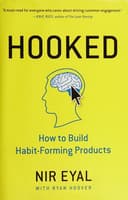
Nir Eyal built on this foundation in 'Hooked', his landmark 2014 analysis of habit-forming products. Eyal identified 'action' as the second phase of his Hook Model, and he drew directly from Fogg's work to argue that any product or service asking a person to act must minimise the effort required to near zero. He catalogued six elements of simplicity that affect a user's perceived ability to complete an action: time, money, physical effort, brain cycles (cognitive load), social deviance, and non-routine. The more of these you demand, the more likely you are to lose the person before they convert. Crucially, this applies regardless of how motivated they are, even a highly motivated patient will abandon a rebooking attempt if the process feels cognitively taxing or time-consuming.
The psychology underneath this principle connects to what researchers call 'friction' and its relationship to decision fatigue and ego depletion. Every micro-decision a person must make, which number to call, what to say, which appointment slot to pick from scratch, draws on finite cognitive resources. Research in behavioural economics consistently shows that as the number of required decisions increases, the probability of completing any action decreases, a phenomenon sometimes called 'choice overload.' A lapsed patient already faces an implicit psychological barrier (the mild shame of not having come back sooner, uncertainty about whether their problem still warrants care); adding procedural barriers on top of emotional ones is a compounding deterrent.
For allied health practices, this translates into a direct clinical and commercial imperative. Studies in health behaviour consistently show that patient dropout is rarely driven by dissatisfaction with care, it is overwhelmingly driven by perceived inconvenience and inertia. Research suggests that reducing the number of steps required to complete a health-related action can increase follow-through rates significantly, sometimes by double digits. When you send a re-engagement message that requires a patient to call during business hours, navigate a phone menu, wait on hold, and negotiate availability from a blank slate, you have constructed at least five distinct friction points. Remove those friction points, replace them with a single tap, a pre-filled time, and a one-word confirmation, and you shift the balance of Fogg's equation decisively toward action.
The Research
One of the most cited real-world demonstrations of friction reduction comes from the field of retirement savings behaviour, studied extensively by behavioural economists Shlomo Benartzi and Richard Thaler as part of the Save More Tomorrow (SMarT) programme. When employees were required to actively opt into retirement savings plans, participation rates hovered around 49%. When employers switched to an automatic enrolment default, where workers were enrolled unless they actively opted out, participation rates jumped to over 86% in some organisations. The behaviour being asked for was identical; the only variable was how much effort the individual had to expend to complete it. Opting in required action; opting out required action; but the default path determined which behaviour happened at scale.
This principle translates with striking directness to patient rebooking. The 'default' for a lapsed patient who receives no outreach is continued absence. The 'default' for a lapsed patient who receives a frictionless one-tap booking link with a pre-suggested time is a confirmed appointment. You are not changing their motivation, you are changing which direction requires zero effort. Benartzi and Thaler's work won Thaler the Nobel Prize in Economics in 2017, and the mechanism at its core, reduce the effort required by the desired behaviour, is exactly what Fogg formalised and Eyal operationalised for digital products.
How to Apply This in Your Practice
The first and most important step in applying friction reduction to patient re-engagement is auditing your current rebooking pathway from the patient's perspective. Write down every step a lapsed patient must complete from the moment they receive your message to the moment their appointment is confirmed. Most practices are genuinely shocked to find six to ten distinct steps. Your goal is to get that number to two or three at most. The ideal pathway looks like this: patient receives SMS → patient taps one link → patient selects from two pre-suggested times → appointment confirmed automatically. Every step you eliminate is a friction point you've removed from Fogg's 'Ability' variable, which makes the behaviour exponentially more likely to occur.
For SMS-based re-engagement, which consistently outperforms email for immediate response in healthcare contexts, the copy itself must embody simplicity. Avoid vague calls to action like 'give us a call to book.' Instead, use message templates that embed the action directly. For example: 'Hi [First Name], it's been a while since we've seen you at [Practice Name]. Your lower back tends to flare up without regular care, we've held a spot for you this Thursday at 10am or Friday at 2pm. Reply YES for Thursday or FRIDAY to grab the other time. [Practitioner Name].' This message does most of the cognitive work for the patient: it reminds them why they should come, it proposes specific times so they don't have to negotiate from scratch, and it requires a single word to confirm. The 'Reply YES' mechanic is particularly powerful because it collapses the entire booking workflow into one motor action.
For practices using online booking platforms, the friction-reduction strategy shifts to link architecture. Rather than sending a patient to your generic booking homepage and asking them to find the right practitioner, the right appointment type, and available times, send a deep-linked URL that pre-populates their preferred practitioner and narrows the calendar to relevant appointment types. Many practice management systems, including Cliniko, Nookal, and others common in Australian allied health, support URL parameters that allow this level of pre-population. The difference between a generic link and a pre-configured deep link can be the difference between a 12% conversion rate and a 35% conversion rate, because you've removed the cognitive load of multiple sequential choices.
Finally, consider the timing dimension of friction. Fogg's model requires that the Prompt (your message) arrive precisely when Motivation and Ability align. For lapsed patients, this means sending re-engagement communications at times when they are likely to be both available and receptive, research in health communication suggests Tuesday through Thursday, mid-morning, tends to outperform Monday mornings or Friday afternoons for appointment-related actions. Automated platforms like Routiq can handle this timing logic at scale, ensuring your message doesn't arrive when a patient is rushing out the door or deep in a work meeting, both of which create their own friction layers by demanding the patient remember to act later, a task at which human memory is notoriously unreliable.
Get one behavioral science principle per week
Applied to patient retention. Backed by research. No fluff.
Seeing It in Action
Sarah is a 41-year-old office manager who completed six sessions of physiotherapy at Bayside Allied Health in Melbourne for a recurring shoulder injury eight months ago. Her discharge notes recommended a monthly maintenance appointment, but life got busy, and she never rebooked. She isn't unhappy with the practice, she simply let inertia take over. Bayside's previous re-engagement process involved a receptionist calling during business hours, reaching voicemail, and leaving a message that required Sarah to call back, navigate the phone system, and arrange a time from scratch. Sarah received three of these calls over six months and genuinely intended to call back each time. She never did.
When Bayside integrated Routiq's automated re-engagement workflows, Sarah's follow-up looked entirely different. At the eight-month mark, she received a personalised SMS from her practitioner: 'Hi Sarah, it's James from Bayside Physio. Your shoulder maintenance is overdue, I know how quickly it can sneak up on you. I've held two spots this week: Wednesday at 11am or Thursday at 4pm. Reply WED or THU to lock one in, or tap here to see all available times: [link].' The message arrived at 10:15am on a Tuesday. Sarah read it between meetings, replied 'THU' within four minutes, and received an automatic confirmation with a calendar invite.
The outcome: Sarah attended her appointment, reported that her shoulder had indeed been tightening up, and rebooked a standing monthly session before she left the clinic. From Bayside's perspective, a patient they had failed to re-engage through three phone calls over six months was recovered through a single SMS that required her to expend approximately three seconds of effort. The behaviour didn't change because Sarah's motivation changed, she had always been motivated enough. The behaviour changed because the path from intention to action was finally shorter than the path of least resistance.
Your Action Plan
- 1Map your current rebooking journey end-to-end by walking through every step a lapsed patient must take from receiving your outreach to having a confirmed appointment, then challenge your team to eliminate at least half those steps before your next re-engagement campaign launches.
- 2Build SMS templates that embed the booking decision inside the message itself, using pre-suggested appointment times and single-word reply mechanics ('Reply YES', 'Reply WED') so the patient's only required action is typing one word.
- 3Configure deep-linked booking URLs that pre-populate your patient's preferred practitioner and appointment type, removing the navigation burden of a generic booking homepage and cutting the online booking process to two or three taps maximum.
- 4Set your re-engagement automations to send at high-receptivity times, Tuesday to Thursday, mid-morning, so that your Prompt arrives precisely when a patient's available cognitive bandwidth makes action feel easy rather than like one more thing on their list.
- 5Review your confirmation and reminder workflow to ensure that once a patient says yes, every subsequent touchpoint (confirmation SMS, calendar invite, pre-appointment reminder) requires zero action from them, reinforcing the experience that returning to your practice is effortless.
Key Takeaway
Your lapsed patients almost always want to come back, your job isn't to convince them, it's to make saying yes so frictionless that inertia works in your favour instead of against you.
Related Principles
External and Internal Triggers: Rebuild the Trigger System for Lapsed Patients
Hooked · Nir Eyal
Habits start with external triggers (notifications, emails) but graduate to internal triggers (emotions, routines) once established. A lapsed patient has lost b
Variable Rewards: Keep Patients Engaged with Unpredictable Value
Hooked · Nir Eyal
Unpredictable rewards are more engaging than predictable ones (the slot machine effect). The brain's dopamine system responds most strongly to anticipation and
Default Effects: How Auto-Scheduling Boosts Rebooking Rates
Nudge · Richard H. Thaler & Cass R. Sunstein
People overwhelmingly stick with whatever option is presented as the default. When no active choice is required, inertia wins.
Simplification and Friction Reduction: Remove Booking Friction to Recover Lapsed Patients
Nudge · Richard H. Thaler & Cass R. Sunstein
The more steps required to complete an action, the less likely people are to follow through. Complexity kills compliance.