
The Golden Circle and Emotional Decision-Making

Most allied health practices write re-engagement messages that read like invoices, appointment available, click to book, here's our phone number. Yet neuroscience tells us that the part of the brain responsible for booking that appointment cannot even process language. If your re-engagement strategy leads with logistics, you are quite literally speaking to the wrong brain.
The Science Behind The Golden Circle and Emotional Decision-Making
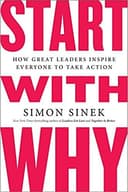
Simon Sinek's Golden Circle, introduced in his 2009 book 'Start with Why,' describes three concentric layers of human communication: Why (purpose and belief), How (the process or approach), and What (the product or service). Most organisations communicate from the outside in, they lead with What they do, then How they do it, and occasionally mention Why. Sinek's central argument, grounded in neuroscience rather than marketing theory, is that the most compelling communicators reverse this order entirely. They start with Why.
The neurological basis for this is well-established. The outer layer of the Golden Circle, the What, corresponds to the neocortex, the newest and most rational part of the human brain. This region handles analytical thought, language processing, and logical evaluation. The inner layers, the Why and the How, correspond to the limbic system, a much older brain structure responsible for emotions, gut feelings, trust, and crucially, decision-making. The limbic brain has no capacity for language, which is why we often struggle to articulate why we trust someone or why we feel loyal to a particular practitioner. We simply 'just feel it.'
This distinction has profound implications for how allied health practices communicate with lapsed patients. When you send a message that leads with 'We have appointments available on Tuesday and Thursday,' you are appealing exclusively to the neocortex, asking a patient to engage in rational scheduling analysis before they have felt any emotional reason to do so. Research in consumer neuroscience and behavioural economics consistently supports Sinek's framework: emotional engagement precedes and enables rational decision-making, not the other way around. Studies using neuroimaging have demonstrated that when evaluating brands and services, people primarily use emotional processing rather than rational information to form preferences, and they use rational facts only to justify decisions already made at an emotional level.
For a physiotherapy, chiropractic, osteopathic, podiatry, or massage practice, the 'Why' is never really about the treatment itself. It is about what that treatment allows the patient to do, chase their grandchildren around the backyard, run their first 10km, stand at work without wincing by 2pm, sleep through the night without waking in pain. These are the limbic triggers. These are the reasons a lapsed patient chose to book in the first place. Your re-engagement messaging fails not because the offer is wrong, but because it skips straight to the neocortex without ever warming up the part of the brain that actually makes decisions.
The Research
One of the most compelling demonstrations of emotionally-led decision-making comes from neurologist Antonio Damasio's research with patients who had suffered damage to the ventromedial prefrontal cortex, the region of the brain connecting the limbic system (emotional processing) to rational thought. Damasio documented in his book 'Descartes' Error' (1994) that these patients, despite retaining full cognitive and analytical function, became almost entirely incapable of making decisions. They could evaluate options rationally and articulate pros and cons with clarity, but without the emotional signal to tip the scales, they were paralysed. One patient, referred to as 'Elliot,' took hours to decide where to eat lunch because he could produce an endless rational analysis of every option without ever feeling a preference. Damasio's work established what he called the 'somatic marker hypothesis', the idea that emotions are not the enemy of good decisions but are in fact the biological mechanism through which decisions are made. Without emotional input, rational analysis alone produces paralysis, not action. For allied health practitioners, this is the scientific basis for why a perfectly logical re-engagement email, clear, accurate, well-formatted, can still produce zero bookings.
How to Apply This in Your Practice
The first step in applying the Golden Circle to patient re-engagement is auditing your current outreach messages. Print out your last SMS or email re-engagement campaign and ask yourself: does the very first sentence speak to the limbic brain or the neocortex? If your opening line contains the words 'appointment,' 'available,' 'book,' 'call us,' or 'treatment plan,' you have started with What. Restructure every message so that the emotional Why occupies the first one to two sentences before any logistical information appears.
In practice, this means your re-engagement message should open with something that reconnects the patient to their original motivation for seeking care, and ideally, their frustration with what happens when care lapses. Consider the difference between these two opening lines: 'Hi Sarah, we noticed it has been six months since your last appointment and we have availability this week' versus 'Hi Sarah, we know how quickly that lower back discomfort can creep back in when life gets busy, we are here when you are ready to get back to feeling like yourself.' The second message activates the limbic system by referencing a felt experience and an aspirational emotional state. The logistics, availability, booking, contact details, follow only after that emotional connection is established.
Segmentation makes the Why significantly more powerful. A lapsed patient who originally presented with a running injury has a completely different emotional landscape to one managing chronic workplace neck pain. If your practice management system captures presenting complaints or patient goals, use that data to personalise the Why in each message. A runner responds to 'getting back on the trails,' while a desk worker responds to 'making it through a full day without the afternoon headache.' Routiq Labs enables this kind of behavioural segmentation, so your automated re-engagement sequences can speak to each patient's specific emotional context rather than broadcasting a generic scheduling prompt.
Finally, structure your full re-engagement sequence using a Why-How-What arc across multiple touchpoints. Your first message (sent perhaps at the 60-day lapse mark) should be almost entirely Why, emotional, warm, focused on the patient's life and goals. The second message (90 days) can introduce the How, your specific approach, your practitioner's expertise, what makes your care different. The third touchpoint (120 days) is where you can lean into the What, specific appointment times, a re-assessment offer, a clear call to action. By this point, you have built an emotional foundation that makes the rational details land rather than bounce off.
Get one behavioral science principle per week
Applied to patient retention. Backed by research. No fluff.
Seeing It in Action
James, 44, first attended a chiropractic clinic in Melbourne eighteen months ago following a shoulder injury that was limiting his ability to swim, his primary stress release and the sport he had done since university. After eight sessions he had improved significantly and life got busy, so he quietly stopped booking. The clinic's automated system sent him a re-engagement SMS at the 90-day mark that read: 'Hi James, you haven't visited us in a while. Book your next appointment at [link].' James read it, thought 'I should really do that,' and did nothing. The limbic brain received no input; the neocortex briefly engaged and then moved on.
The clinic later revised their re-engagement workflow using a Why-first framework. James received a new sequence beginning with: 'Hi James, shoulder injuries have a sneaky habit of tightening back up once the regular treatment stops, especially when you are training. We would love to make sure your shoulder is still moving well so it does not hold you back in the water.' This message did not mention booking, pricing, or availability. It referenced James's identity as a swimmer, acknowledged a real fear (regression), and expressed genuine care. Two days later, a follow-up message offered a brief re-assessment at a reduced rate. James booked within the hour. The clinic reported that the revised sequence achieved a re-engagement rate more than double their previous generic outreach, not because the offer changed, but because the emotional sequence that preceded it finally spoke to the part of James's brain that was actually in charge of the decision.
Your Action Plan
- 1Audit your existing re-engagement messages and identify the first sentence of each, if it contains scheduling, pricing, or treatment language before any emotional content, rewrite the opening to lead with the patient's life goal or the consequence of unaddressed symptoms.
- 2Build a library of Why statements mapped to your most common presenting complaints (e.g., back pain → 'getting through the workday without that 3pm wall,' running injury → 'getting back to your training schedule') so that personalised emotional openers can be deployed automatically based on patient history.
- 3Structure your re-engagement sequences in a Why-How-What arc, emotional resonance first, your clinical approach second, and logistical details (times, pricing, booking link) only in the third or later touchpoint.
- 4Train your front desk and any team members who write patient communications to run a simple limbic-brain test before sending: 'Does this message make the patient feel something about their own life before it asks them to do anything?' If not, revise it.
- 5Use your practice management data or a platform like Routiq Labs to segment lapsed patients by presenting complaint or stated goal, enabling your automated sequences to deploy the emotionally relevant Why for each individual patient rather than a one-size-fits-all scheduling prompt.
Key Takeaway
Your lapsed patients do not need a better reason to book, they need to feel something worth booking for, and that emotional truth must arrive before any rational detail ever does.
Related Principles
Start with Why (Purpose-Driven Communication): Lead with Purpose, Not Appointment Details
Start with Why · Simon Sinek
Most organizations communicate from the outside in (what > how > why). Inspiring organizations communicate from the inside out (why > how > what).
Building a Loyal Community Around Shared Beliefs: Build a Patient Community Around Shared Health Values
Start with Why · Simon Sinek
Customers (patients) who share the organization's "Why" become loyal advocates, not just transactional users.
Status Quo Bias: Why Patients Stick with Routines (and How to Use It)
Nudge · Richard H. Thaler & Cass R. Sunstein
People prefer the current state of affairs and resist change, even when change would benefit them. Disrupting their routine requires effort they instinctively a
Feedback Loops: Show Patients Their Progress to Prevent Treatment Drop-Off
Nudge · Richard H. Thaler & Cass R. Sunstein
People make better decisions when they receive clear, timely feedback on the consequences of their choices.