
Start with Why (Purpose-Driven Communication)

Most physiotherapy clinics send re-engagement messages that read like a dentist's recall notice, transactional, forgettable, and almost designed to be ignored. Yet the clinics achieving the highest patient return rates aren't sending better booking reminders; they're communicating from an entirely different starting point. The difference, it turns out, comes down to a single, deceptively simple shift in how you answer the question: why does your practice exist?
The Science Behind Start with Why (Purpose-Driven Communication)
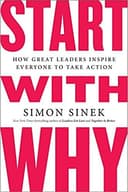
Simon Sinek introduced the concept of the Golden Circle in his 2009 book 'Start with Why,' and it reframed how we understand persuasion, leadership, and communication. The model is built around three concentric rings: the outermost ring is 'What' (the products or services an organisation provides), the middle ring is 'How' (the process or differentiating value proposition), and the innermost ring is 'Why' (the purpose, cause, or belief that drives everything). Most businesses, including most allied health practices, communicate from the outside in, they lead with what they do ('We offer physiotherapy and remedial massage') and occasionally explain how ('using evidence-based techniques'). Rarely, if ever, do they articulate why.
The psychological mechanism underlying this model is rooted in neuroscience. Sinek draws on the structure of the human brain to explain why 'why-first' communication is so much more compelling. The neocortex, the outer layer responsible for rational thought, language, and analytical processing, corresponds to the 'What' layer of the Golden Circle. The limbic system, however, sits at the brain's emotional core and governs feelings, trust, loyalty, and decision-making. Critically, the limbic system has no capacity for language. This is why people so often say they made a decision based on a 'gut feeling' they can't quite explain. When you communicate purpose first, you speak directly to the limbic system, bypassing the rational gatekeeping that makes people scrutinise, delay, and ultimately disengage.
For allied health practitioners, this distinction carries enormous practical weight. A patient who drifted away from their treatment plan three months ago isn't sitting at home rationally weighing up the cost-benefit analysis of rebooking. They're operating on feelings, perhaps a vague sense that they're 'doing okay for now,' or mild guilt about not following through. A message that leads with 'Book your next appointment online' speaks to their rational mind and gets filed alongside every other administrative nudge. A message that leads with your genuine belief, that people deserve to live free from preventable pain, and that you're reaching out because their progress matters to you, lands somewhere far deeper and far more motivating.
This isn't about crafting slick marketing language or manufacturing emotion where none exists. Sinek's research into highly inspiring organisations, from Apple to the Wright Brothers to Martin Luther King Jr., consistently showed that purpose-driven communication only works when the 'why' is authentic. Patients are remarkably good at detecting inauthenticity, especially when they've already had a therapeutic relationship with you. The goal is to excavate and then articulate the genuine reason your practice exists, the actual belief that got you into healthcare in the first place, and let that belief lead every touchpoint, including re-engagement outreach.
The Research
One of the most compelling real-world demonstrations Sinek cites in 'Start with Why' is the contrast between two early aviation pioneers: Samuel Langley and Orville and Wilbur Wright. Langley, a well-funded Smithsonian-backed researcher with a talented team and significant resources, was racing to build the world's first successful aeroplane in the early 1900s. The Wright Brothers, by contrast, were running a bicycle shop in Dayton, Ohio, with no university degrees, no government funding, and a fraction of Langley's budget. The critical difference was not capability or resources, it was motivation. Langley was driven by fame and fortune (the 'what' and 'how'). The Wright Brothers were driven by a genuine belief that powered flight would change the world (the 'why'). When Langley's early attempts failed, he quit. When the Wright Brothers failed, repeatedly, they persisted, because their purpose was bigger than any single setback. On 17 December 1903, they achieved the first successful powered flight. Langley read about it in the newspaper and retired from aviation entirely. This case illustrates the behavioural science principle at the heart of Sinek's work: purpose doesn't just make communication more compelling, it sustains engagement, loyalty, and follow-through in the face of friction. For patients, that friction might be cost, inconvenience, or simply inertia. A practice that communicates its 'why' gives patients something worth overcoming that friction for.
How to Apply This in Your Practice
The first step in applying 'Start with Why' to patient re-engagement is doing the internal work of articulating your practice's genuine purpose. This isn't a marketing exercise, it's a reflection exercise. Ask yourself: why did you become a physiotherapist, chiropractor, or osteopath? What do you believe about human health that most people don't act on? A useful format Sinek recommends is completing this sentence: 'We believe ___. That's why we ___.' For example: 'We believe that most people are living with pain they've simply learned to accept as normal. That's why we build long-term treatment plans, because short-term relief isn't enough.' Once you've articulated this clearly, it becomes the foundation for every re-engagement message you send.
When it comes to the actual outreach, the structural shift is straightforward but counterintuitive: lead with the 'why,' follow with the 'how,' and only mention the 'what' at the end. A standard re-engagement SMS might read: 'Hi [Name], it's been a while since your last visit. Book online at [link].' A purpose-driven version reads: 'Hi [Name], at [Practice Name] we believe the progress you make in treatment shouldn't be lost the moment life gets busy. We noticed you haven't been in since [date], and your plan was showing real results. We'd love to help you keep that momentum, would you like to book a check-in this week?' Notice what changed: the message opens with a belief (why), connects it to the patient's specific situation (how), and only then mentions the appointment (what). The patient isn't being reminded to consume a service, they're being invited back into a shared purpose.
For practices using an automated re-engagement platform, this principle can be embedded into message templates at every stage of the lapsed patient journey. A patient who's been inactive for 30 days might receive a purpose-led message focused on the specific treatment goal they were working toward ('We remember you came to us because lower back pain was affecting your sleep, let's make sure that stays in the past'). A patient inactive for 90 days might receive a message that leads with a broader belief statement about preventive care. The key is that neither message should open with an administrative ask. The 'book now' call to action belongs at the end, after the emotional connection has been established.
It's also worth applying this principle beyond digital outreach to every patient-facing communication in your practice, your website's homepage, your reception desk's verbal scripts, even the way your practitioners close off a session. If a patient hears a consistent 'why' across every touchpoint, the re-engagement message they receive weeks or months later will feel like a continuation of a relationship, not a cold commercial transaction. Consistency between your stated purpose and your actual behaviour is what transforms the Golden Circle from a communication tactic into a genuine culture, and it's that cultural authenticity that patients respond to at the limbic level Sinek describes.
Get one behavioral science principle per week
Applied to patient retention. Backed by research. No fluff.
Seeing It in Action
Consider the case of Marcus Hensley, a 44-year-old project manager who presented to a Melbourne chiropractic clinic with chronic neck pain stemming from long hours at a desk. Over eight sessions, his practitioner Priya helped him achieve a significant reduction in pain frequency and improved cervical range of motion. Marcus's treatment plan called for a maintenance phase, monthly visits to consolidate his progress, but after his last acute-care appointment, he simply didn't rebook. Life got busy, the pain had eased, and the urgency evaporated. He was, by any measure, a lapsed patient.
Seven weeks later, Marcus received an SMS from the clinic. It didn't say 'You're due for a follow-up.' It said: 'Hi Marcus, at [Clinic Name] we believe that recovering from pain is only half the journey, staying well is the other half. Priya noticed your neck mobility had improved significantly by your last visit, and she'd love to make sure that progress sticks. Would a 20-minute check-in work for you this month?' Marcus later told Priya at his next appointment that he'd almost ignored the message until he read that second sentence. 'It reminded me of why I went in the first place,' he said. 'It wasn't about selling me something, it felt like someone actually remembered what we were trying to do together.'
Marcus rebooked within four hours of receiving the message. More importantly, he became a consistent maintenance patient over the following year, and referred two colleagues who were experiencing similar desk-related neck issues. The re-engagement message hadn't just recovered a lapsed appointment; it had reactivated a patient's belief in the value of ongoing care. That outcome is the difference between communicating from the outside in and communicating from the inside out.
Your Action Plan
- 1Write your practice's 'why' statement using Sinek's format, 'We believe [core belief about health]. That's why we [what you do differently].' Keep it to two sentences and test it by asking whether it could apply to any other clinic. If it could, go deeper.
- 2Audit your current re-engagement messages, email templates, and SMS scripts. Highlight the first sentence of each. If it mentions an appointment, a service, or a booking link, it's leading with 'what.' Rewrite those openings to lead with your practice's belief or the patient's specific goal.
- 3Segment your lapsed patients by treatment type and the goal they originally presented with (pain relief, injury recovery, performance, preventive care). Craft purpose-led re-engagement messages for each segment so the 'why' connects directly to what that patient was working toward.
- 4Train your reception and clinical team to open re-engagement calls and conversations with the 'why' before the 'what.' A script as simple as 'We reach out to patients who were making real progress because we don't want that progress to be lost' is more effective than 'You're overdue for an appointment.'
- 5Review your practice website, new patient welcome communications, and end-of-session summaries to ensure your 'why' is communicated consistently. When patients have heard your purpose from the beginning, a re-engagement message that echoes it months later feels like genuine care rather than a marketing prompt.
Key Takeaway
Patients don't drift back to a practice because they were reminded it exists, they return because a message reached the part of their brain that makes decisions based on belief, purpose, and trust, and your re-engagement will only get there if you lead with why you care, not what you're selling.
Related Principles
The Golden Circle and Emotional Decision-Making: Hook Emotions First, Then Offer the Logistics
Start with Why · Simon Sinek
The "Why" maps to the limbic brain (emotions, decisions, loyalty). The "What" maps to the neocortex (rational analysis). People make decisions emotionally and j
Building a Loyal Community Around Shared Beliefs: Build a Patient Community Around Shared Health Values
Start with Why · Simon Sinek
Customers (patients) who share the organization's "Why" become loyal advocates, not just transactional users.
Status Quo Bias: Why Patients Stick with Routines (and How to Use It)
Nudge · Richard H. Thaler & Cass R. Sunstein
People prefer the current state of affairs and resist change, even when change would benefit them. Disrupting their routine requires effort they instinctively a
Feedback Loops: Show Patients Their Progress to Prevent Treatment Drop-Off
Nudge · Richard H. Thaler & Cass R. Sunstein
People make better decisions when they receive clear, timely feedback on the consequences of their choices.