
Building a Loyal Community Around Shared Beliefs

Most allied health practices lose 40-60% of their patients after the first course of treatment, not because the care was poor, but because the patient never truly understood why the practice existed beyond fixing their immediate problem. When patients see your clinic as a transaction rather than a tribe, re-engagement becomes an uphill battle of discounts and reminders that feel like spam. There is a better way, and it starts with a question most practice owners have never seriously asked themselves: not *what* do you do, or even *how* do you do it, but *why*?
The Science Behind Building a Loyal Community Around Shared Beliefs
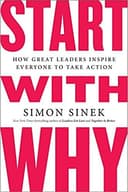
Simon Sinek's 'Start with Why,' published in 2009, introduced a deceptively simple but profoundly powerful framework for understanding why some organisations inspire fierce loyalty while others, offering identical services at identical prices, struggle to retain customers at all. Sinek observed that most organisations communicate from the outside in: they lead with *what* they do (physiotherapy, chiropractic adjustments, remedial massage), then sometimes explain *how* they do it (evidence-based protocols, hands-on care, one-on-one appointments), and rarely articulate *why* they do it at all. The organisations that inspire loyalty, he argued, reverse this order entirely. They start with belief.
The psychology underpinning this framework draws on a concept Sinek calls the 'Golden Circle,' which maps neatly onto the structure of the human brain. The outer ring, *what*, corresponds to the neocortex, the part of the brain responsible for rational analysis and language. The inner rings, *how* and *why*, correspond to the limbic system, the older, more primitive brain region responsible for feelings, trust, and decision-making. Critically, the limbic system has no capacity for language. This is why patients often cannot articulate why they keep returning to one clinic over another, they simply 'feel right' there. When your practice communicates its *why* clearly and consistently, you are speaking directly to the part of the brain that drives loyalty, not just the part that evaluates price lists.
The concept of identity-based loyalty is well supported in consumer psychology research. Studies in social identity theory, pioneered by Henri Tajfel and John Turner in the 1970s and 1980s, demonstrate that people derive a significant part of their self-concept from the groups and organisations they affiliate with. When a patient identifies with your clinic's beliefs ('I am someone who invests in preventative health'), switching away from your clinic does not just mean choosing a different provider; it means acting inconsistently with who they believe themselves to be. This is a far more powerful retention mechanism than any loyalty points scheme. Research in behavioural economics consistently shows that identity-congruent choices are stickier and more resistant to competitive pressure than choices made purely on convenience or cost.
For allied health practices specifically, this principle carries enormous practical weight. Physio, chiro, osteo, podiatry, and massage clinics all operate in crowded markets where the core service is broadly similar and easily substituted. Competing on features, 'We have the latest ultrasound equipment' or 'Our practitioners have 20 years of experience', keeps you trapped in the *what* and *how* layers where commoditisation lives. But when you articulate a belief, 'We believe that most Australians are living in preventable pain, and we exist to change that', you create a gravitational field that attracts patients who share that belief and gives them a reason to return that has nothing to do with whether they currently have an acute injury.
The Research
One of the most compelling real-world demonstrations Sinek draws on in 'Start with Why' is the story of Apple Computer, not as a technology company, but as a belief system. In the late 1990s, Apple held less than 6% of the personal computer market. Dell, Compaq, and IBM had superior distribution, comparable technology, and significantly larger marketing budgets. Yet when Apple launched its 'Think Different' campaign and began communicating its *why*, a belief in challenging the status quo and empowering creative individuals, something remarkable happened. Customers did not just buy computers; they bought membership in an identity. Apple's market share, brand loyalty scores, and customer lifetime value began climbing in ways that defied conventional competitive analysis. By 2008, the year before Sinek's book was published, Apple's customer loyalty rate was measured at approximately 90% among iPhone users, a figure that independent researchers at firms like Brand Keys repeatedly cited as the highest in the consumer electronics sector. The lesson is not about technology; it is about the fact that people do not buy what you do, they buy why you do it. For a physiotherapy or chiropractic clinic, this means that the belief system you articulate publicly is not a branding exercise, it is your most durable competitive advantage.
How to Apply This in Your Practice
The first step in applying this principle to patient re-engagement is doing the internal work of genuinely articulating your clinic's *why*, and this must go deeper than 'we care about our patients' (every clinic claims this) or 'we want people to be healthy' (too generic to create tribe membership). A compelling *why* for an allied health practice sounds more like: 'We believe that chronic pain is not inevitable, it is largely the result of a healthcare system that only responds to crisis. We exist to flip that model on its head.' Or: 'We believe that your body is capable of far more than you've been told, and we see our job as removing the barriers between you and that potential.' Your *why* should be specific enough that some prospective patients hear it and think 'that's not for me', because if everyone agrees with it, it is not a belief, it is a platitude.
Once you have clarified your *why*, the re-engagement communications you send to lapsed patients should be structured around belief-sharing, not service-selling. Instead of the standard 'It's been six months since your last visit, book now and receive 10% off,' consider a message like: 'At [Clinic Name], we've always believed that the best time to see a physio is before pain forces you to. We know you share that belief, it's why you came to us in the first place. Life gets busy, and proactive health often gets pushed aside. We wanted to reach out to say: we're still here, holding that belief with you. When you're ready to get back on track, so are we.' This message does three things simultaneously: it restates the clinic's *why*, it attributes that same *why* to the patient (activating their identity), and it removes the transactional pressure that makes re-engagement messages feel like spam.
From a workflow perspective, Routiq's platform allows you to segment lapsed patients and trigger belief-based sequences at behavioural thresholds, for example, patients who have not booked in 90 days, 180 days, or 12 months. Each sequence should escalate in warmth and specificity, not in discount size. A 90-day lapse might warrant a single values-aligned check-in message. A 12-month lapse might warrant a more personal outreach referencing the specific treatment they received and reframing it within your clinic's mission: 'Last year we worked together on your lower back. We've been thinking about how the work we do together isn't just about getting you out of pain, it's about building the kind of body that doesn't keep landing you in it. We'd love to continue that journey with you.' The key is that every touchpoint reinforces the belief system rather than the promotional calendar.
Finally, consider how your *why* can be communicated through channels beyond direct re-engagement messages. Your email newsletter, social media content, and even your on-hold phone message are all opportunities to consistently articulate your belief. When lapsed patients encounter your *why* repeatedly through ambient content, a social post about preventative health, a newsletter article about why reactive healthcare is costing Australians their quality of life, they are being gently reminded not just that your clinic exists, but of the shared identity they had when they were active patients. This ambient reinforcement means that when a lapsed patient finally does experience a new symptom or a flare-up, your clinic is the one they think of first, not because of a discount code, but because you are the place that matches who they believe themselves to be.
Get one behavioral science principle per week
Applied to patient retention. Backed by research. No fluff.
Seeing It in Action
Consider the fictional case of Marcus, a 44-year-old project manager who first visited Coastal Movement Physiotherapy eighteen months ago with acute lumbar pain. He completed six sessions, made a full recovery, and then, predictably, disappeared from the booking system. The clinic's *why*, clearly stated on their website and in every patient communication, was this: 'We believe that most Australians reach their fifties in far less capable bodies than they were born with, not because of bad luck, but because of a healthcare system that waits for breakdown. We exist to be the alternative.' Marcus had nodded along to this when the receptionist explained it at intake, but it had not yet become part of how he thought about himself.
Eighteen months later, Coastal Movement's Routiq-powered re-engagement sequence sent Marcus a message, not an offer, but a belief check-in. It read: 'Marcus, we've been thinking about the patients we saw last year who came in with lumbar pain, got back on their feet, and then went quiet on us. We get it, when the pain goes, the urgency goes with it. But we also know that you came to us because you don't want to keep waiting for the next crisis to force your hand. That belief doesn't have an expiry date. If you'd like to get ahead of the next chapter before it writes itself, we'd genuinely love to see you back.' There was no discount. No urgency countdown. Just a mirror held up to his identity.
Marcus booked within three days. He later told the treating physiotherapist that the message 'sounded like someone actually understood why I came in the first place.' Over the following twelve months, he rebooked consistently for quarterly maintenance sessions and referred two colleagues. His rebooking had nothing to do with price sensitivity and everything to do with the fact that the clinic's belief had become part of how he narrated his own approach to health. That is the power of starting with *why*, it transforms a recovered patient into a lifelong member of something larger than a treatment episode.
Your Action Plan
- 1Write your clinic's 'Why' statement in two sentences, articulate a specific belief about health, patients, or the healthcare system that your ideal patient would read and immediately feel understood by. Test it: if anyone could agree with it without hesitation, it is not specific enough.
- 2Audit every patient-facing communication (appointment reminders, discharge letters, re-engagement messages, social posts) and identify how many lead with *what* you do versus *why* you exist. Rewrite any that begin with a service description to begin with a belief statement instead.
- 3Segment your lapsed patient database by time since last visit (90 days, 6 months, 12+ months) and build belief-based re-engagement sequences in Routiq for each cohort, escalating in warmth and personal reference, not in discount size.
- 4Incorporate your *why* into the new patient intake experience, whether via a welcome message, a short video from the principal practitioner, or a one-page 'What we believe' document, so that patients encode your belief system from their very first visit, making future re-engagement far easier.
- 5Create a content calendar of three to four belief-reinforcing communications per month (email, SMS, or social) that speak to your *why* without any promotional call to action, this ambient content keeps lapsed patients inside your belief system even during the gaps between appointments.
Key Takeaway
Patients who see your clinic as a transaction will leave when the transaction is complete, but patients who see your clinic as a reflection of their own beliefs about health will return not because you reminded them, but because staying away would mean betraying who they are.
Related Principles
Start with Why (Purpose-Driven Communication): Lead with Purpose, Not Appointment Details
Start with Why · Simon Sinek
Most organizations communicate from the outside in (what > how > why). Inspiring organizations communicate from the inside out (why > how > what).
The Golden Circle and Emotional Decision-Making: Hook Emotions First, Then Offer the Logistics
Start with Why · Simon Sinek
The "Why" maps to the limbic brain (emotions, decisions, loyalty). The "What" maps to the neocortex (rational analysis). People make decisions emotionally and j
Social Proof: Show Patients That Others Complete Treatment
Influence · Robert B. Cialdini
People look to what others are doing to determine correct behavior, especially in uncertain situations.
Commitment and Consistency: Get Verbal Commitments to Increase Follow-Through
Influence · Robert B. Cialdini
Once people make a commitment (especially publicly or in writing), they feel internal pressure to behave consistently with it.