
Planning Prompts (Implementation Intentions)
Most allied health practices lose patients not because those patients decided to stop coming, but because they never decided anything at all. They drifted. They meant to rebook, kept meaning to, and then three months passed. The difference between a patient who returns and one who disappears often comes down to a single, deceptively simple thing: whether they were ever asked to make a specific plan.
The Science Behind Planning Prompts (Implementation Intentions)
Planning prompts, formally known in behavioural science as 'implementation intentions,' are a technique rooted in the gap between intention and action. Most people genuinely intend to do the right thing, eat better, exercise more, follow up with their physio, but intention alone is a notoriously poor predictor of behaviour. Psychologist Peter Gollwitzer, who pioneered much of the foundational research on implementation intentions in the 1990s, demonstrated that when people form a specific plan by answering 'when, where, and how will I do this?', they are dramatically more likely to follow through. The mental act of forming a concrete plan essentially pre-loads the decision, so that when the relevant moment arrives, the behaviour happens almost automatically rather than requiring fresh deliberation.
The underlying psychology is elegant. Human beings are cognitively lazy, not as a flaw, but as an efficiency. Our brains are wired to conserve mental energy, which means that any decision left open and abstract tends to stay that way indefinitely. When a patient leaves your clinic with a general sense that they 'should probably come back in a few weeks,' that intention competes with every other demand on their attention and almost always loses. But when that same patient has mentally committed to 'Tuesday at 10am, I'll book online before I leave the car park,' the decision is essentially already made. The future context (a Tuesday morning, the car park) becomes a trigger for the pre-planned action.
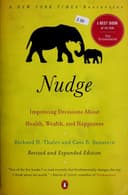
Thaler and Sunstein, in their landmark book Nudge, highlighted planning prompts as one of the most powerful and underused tools in the behavioural science toolkit. What makes them particularly compelling is how little effort they require to deploy. You do not need to change your pricing, redesign your waiting room, or run an advertising campaign. You simply need to shift the framing of your re-engagement communications from vague encouragement ('it would be great to see you again') to structured choice ('your osteopath has recommended a follow-up in the first two weeks of March, does Tuesday at 9am or Thursday at 4pm suit you better?'). That small linguistic shift does an enormous amount of cognitive work on the patient's behalf.
It is worth emphasising that planning prompts work because they reduce friction at the most critical moment, the moment of scheduling. Every additional step a lapsed patient must take (look up the number, find a gap in their calendar, decide what time might work, navigate an unfamiliar booking system) is another opportunity for the intention to stall. A well-crafted planning prompt collapses all of those micro-decisions into a single, low-effort choice between two concrete options. Behavioural science consistently shows that when the path of least resistance leads toward the desired behaviour, follow-through rates climb substantially.
The Research
The study cited in Nudge that most vividly illustrates the power of planning prompts comes from a vaccination campaign conducted at Yale University. Researchers wanted to understand why students who genuinely intended to get a tetanus shot so rarely followed through. In the control condition, students received a compelling, well-produced pamphlet about the risks of tetanus and the importance of vaccination, clear information, strong motivation, good intentions. Only 3% of those students actually went and got the shot. In the experimental condition, students received the same pamphlet but with one critical addition: a campus map showing the location of the health centre, combined with a prompt asking them to write down the specific date and time they planned to go. That single intervention, asking students to form a concrete plan rather than merely hold an intention, lifted the vaccination rate to 28%. That is nearly a ninefold increase in follow-through, produced not by more persuasion or better information, but by the simple act of prompting a specific plan.
What makes this finding so directly relevant to allied health is that your lapsed patients are not, for the most part, patients who decided not to come back. They are patients who intended to return, got busy, and never converted that intention into a scheduled appointment. The Yale study suggests that if those students had simply been asked 'when exactly are you going to go?' the vast majority of them would have followed through. The same logic applies to a patient who left your clinic six weeks ago with every intention of rebooking.
How to Apply This in Your Practice
The first step in applying planning prompts to patient re-engagement is to stop sending passive re-engagement messages and start sending structured choice messages. There is a meaningful difference between 'We haven't seen you in a while, we'd love to have you back' and 'Hi Sarah, your physio Mark has suggested a follow-up session in the first week of April to keep your progress on track. Would Tuesday the 1st at 11am or Thursday the 3rd at 3:30pm work better for you?' The second message does the planning work for the patient. It has already identified the timeframe (first week of April), provided two concrete options, and framed the rebooking as a clinician-recommended next step rather than a marketing prompt. The patient's only cognitive task is to choose between two things.
From a workflow perspective, the most effective implementation starts at the clinical level. When a practitioner concludes a session with a lapsed or at-risk patient, they should articulate, out loud, specifically, when the next appointment should occur and what the clinical rationale is. 'I'd like to see you again in three to four weeks, ideally in the first half of March, to reassess how your shoulder is responding.' That recommendation then becomes the anchor for any follow-up communications. Your front desk or automated system isn't guessing at a timeframe; it is delivering the practitioner's clinical recommendation in a structured, actionable format.
Automated messaging platforms (including tools like Routiq) can be configured to send planning-prompt-style messages at precisely the right moment, typically 48 to 72 hours before a patient's recommended return window opens. The message should include two or three specific appointment options drawn from real availability, not just a generic 'click here to book.' If your system allows for two-way SMS or email responses, even better: the patient can reply with a single number or word, and the booking is confirmed without them needing to visit a booking portal, navigate a calendar, or make a phone call. Every layer of friction you remove increases the likelihood that the intention becomes an appointment.
Finally, it is worth considering the language of clinical authority in your planning prompts. Patients are significantly more likely to act when the recommendation is framed as coming from their specific practitioner ('Your chiropractor, Dr. Nguyen, has recommended...') rather than from the practice generically ('We recommend...'). This is consistent with broader behavioural science research on trust and credibility, people follow specific, credible recommendations from people they know. Combine that credibility with a concrete plan, and you have a re-engagement message that works with human psychology rather than against it.
Get one behavioral science principle per week
Applied to patient retention. Backed by research. No fluff.
Seeing It in Action
James is a 44-year-old project manager who came to Bayside Physiotherapy eight weeks ago following a flare-up of his chronic lower back pain. He attended four sessions over six weeks, showed strong progress, and his physio, Claire, recommended a maintenance review in approximately six to eight weeks. James left his final appointment genuinely intending to rebook. Then work got hectic, he started feeling better, and the thought of scheduling an appointment slipped steadily down his mental priority list. By week nine, he had not rebooked and was no longer actively thinking about it.
At the seven-week mark, Bayside's patient communication system, integrated with Claire's clinical notes, triggered an automated SMS to James. It read: 'Hi James, Claire has recommended a maintenance review for your back in the next week or two. We have availability on Wednesday the 14th at 12:30pm or Friday the 16th at 8am, which of those suits you? Reply 1 for Wednesday or 2 for Friday and we'll confirm it straight away.' James read the message during his lunch break, replied '1' within two minutes, and received an instant confirmation. He did not have to think about when to go, whether he could afford the time, or navigate a booking system. The plan was essentially made for him; he only had to say yes.
James attended the Wednesday appointment, Claire identified early signs of tension returning in his lumbar region, and they agreed on a quarterly maintenance schedule going forward. From the practice's perspective, a patient who had a 90% probability of becoming permanently lapsed was re-engaged with a single, well-timed, behaviourally informed message. The clinical outcome was better for James; the business outcome was better for Bayside. Neither required anything more than a smarter re-engagement prompt.
Your Action Plan
- 1Train your practitioners to end every appointment with a specific verbal recommendation about timing, not 'come back when you need to' but 'I'd like to see you in three to four weeks, ideally in the first two weeks of March', and capture that recommendation in the clinical notes so it can inform follow-up communications.
- 2Audit your current re-engagement messages (SMS, email, or phone scripts) and identify any that are vague or passive. Replace them with structured planning prompts that include the practitioner's name, a specific timeframe, and two concrete appointment options drawn from real availability.
- 3Set up automated triggers in your practice management or patient communication platform so that planning-prompt messages are sent 48 to 72 hours before a patient's recommended return window opens, not too early that it feels premature, and not so late that the window has already passed.
- 4Reduce response friction to an absolute minimum. If your system supports two-way messaging, allow patients to confirm an appointment with a single reply (e.g., '1' or '2'). The fewer steps between receiving the message and securing the booking, the higher your conversion rate will be.
- 5Review your re-engagement data monthly, comparing response and rebooking rates for planning-prompt messages versus previous generic outreach. Use this data to refine your message timing, language, and appointment options, treating your patient communication system as a continuous behavioural experiment rather than a set-and-forget tool.
Key Takeaway
Patients don't fail to return because they don't care about their health, they fail to return because no one ever asked them to make a specific plan, and a single well-timed question ('Does Tuesday at 10am or Thursday at 3pm work for you?') can do more to fill your appointment book than any amount of generic follow-up marketing.
Related Principles
Default Effects: How Auto-Scheduling Boosts Rebooking Rates
Nudge · Richard H. Thaler & Cass R. Sunstein
People overwhelmingly stick with whatever option is presented as the default. When no active choice is required, inertia wins.
Status Quo Bias: Why Patients Stick with Routines (and How to Use It)
Nudge · Richard H. Thaler & Cass R. Sunstein
People prefer the current state of affairs and resist change, even when change would benefit them. Disrupting their routine requires effort they instinctively a
Reducing Action Barriers (Simplicity): Make Rebooking Effortless with One-Tap Links
Hooked · Nir Eyal
The easier an action is to perform, the more likely it is to happen. Fogg's principle: Behavior = Motivation x Ability x Prompt.
Make It Easy (Two-Minute Rule and Friction Reduction): Lower the Barrier to Just One Session
Atomic Habits · James Clear
Scale down the desired behavior to something that takes two minutes or less. Reduce friction to near zero.