
Credibility (Internal Credibility)

A lapsed patient receives two messages: one cites a clinical study showing 73% of people with lower back pain experience recurrence within a year, and the other simply asks, 'Can you still tie your shoelaces as easily as you could six months ago?' Research into how ideas spread reveals that the second message is almost always more persuasive, and understanding why could transform how your practice re-engages the patients who've quietly drifted away.
The Science Behind Credibility (Internal Credibility)
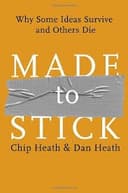
Internal credibility is one of the six principles outlined by Chip Heath and Dan Heath in their landmark 2007 book *Made to Stick: Why Some Ideas Survive and Others Die*. While most communicators instinctively reach for external credibility, expert endorsements, published studies, professional credentials, the Heaths argue that the most persuasive form of credibility is the kind a person can generate entirely on their own. They call this the 'Sinatra Test' in some contexts, but the internal credibility concept is more precise: if you can give someone the raw materials to reach a conclusion themselves, that conclusion becomes far more durable than any claim you could make on your own behalf.
The psychology behind this principle draws on decades of attitude change research. When people arrive at a belief through their own reasoning or direct experience, that belief becomes integrated into their identity in a way that externally supplied information simply cannot replicate. This is partly explained by cognitive dissonance theory, once we've done the mental work of verifying something, we're motivated to act consistently with what we've discovered. It also connects to what researchers call the 'generation effect': information we produce or discover ourselves is encoded more deeply in memory than information we passively receive. A patient who notices, through their own body, that something has changed is already partway down the path to booking an appointment.
The Heaths describe this as giving people a 'try before you buy' experience with an idea. Rather than asking someone to take your word for it, you invite them to become their own investigator. In a healthcare context, this is particularly powerful because patients are already somewhat sceptical of practitioner-driven messaging, they understand that a clinic has a commercial interest in their returning. The moment you hand the verification process back to the patient, you sidestep that scepticism entirely. The evidence isn't coming from you anymore; it's coming from their own body, their own kitchen floor, their own morning routine.
This principle also aligns with research on persuasion and self-efficacy. When people feel capable of assessing something themselves, they feel more autonomous, and autonomy is a core psychological need that drives engagement. Patients who feel they've made an informed, self-directed decision to return to your practice are also more likely to follow through with their treatment plan once they're back, because they came back on their own terms, not because they were sold to.
The Research
One of the most memorable demonstrations of internal credibility featured in *Made to Stick* involves Subway's long-running 'Jared' campaign. But a more directly relevant experimental illustration comes from research on what the Heaths describe as 'testable credentials.' In one example they discuss, a Texas-based hot sauce company claimed it was the 'hottest sauce in the state.' Rather than citing a food science study or displaying a Scoville rating, the company simply printed 'Try it if you dare' on the label, an implicit invitation for customers to verify the claim themselves. Sales and customer engagement increased not because the company added more evidence, but because it transferred the burden of proof to the consumer. The act of issuing that challenge made the claim feel more honest, more confident, and ultimately more credible than any third-party endorsement could.
The Heaths ground this observation in a broader principle: statistics and expert citations create a kind of cognitive distance, whereas self-verifiable claims collapse that distance entirely. When the evidence lives in a person's own body or immediate environment, the persuasion loop closes instantly. For allied health practices, this is not merely a marketing insight, it is a clinical communication strategy with real implications for patient outcomes, because a patient who genuinely perceives their own functional decline is a patient who is motivated to do something about it.
How to Apply This in Your Practice
The most effective re-engagement messages your practice can send to lapsed patients are not the ones that explain what you offer, they're the ones that help patients notice what they've lost. The strategic starting point is to identify the specific, observable functional markers that are relevant to your patient cohort. For a physiotherapy practice treating lower back and hip issues, this might be forward bend reach or the ease of putting on socks. For a podiatry clinic, it might be how long a patient can stand on one leg without wobbling. For a chiropractic or osteopathic practice, it might be the ease of shoulder rotation or neck turning. These aren't diagnostic tests, they're invitations for patients to gather their own evidence.
In practice, this means your re-engagement SMS or email should be structured around a simple, low-effort self-test that takes less than thirty seconds to complete. The message copy might read: 'Quick check-in from [Clinic Name]. Try this right now, stand up, place your feet hip-width apart, and slowly bend forward. How far can you reach? If you could touch your toes six months ago and can't now, your body may be signalling something worth looking at. We have availability this week if you'd like us to take a proper look.' Notice that the message makes no claim about the patient's condition and offers no external authority, it simply creates the conditions for the patient to generate their own concern. That concern is then immediately channelled into a low-friction next step.
For implementation, segment your lapsed patient database by treatment area so you can tailor the self-test to be genuinely relevant. A patient who came to you for plantar fasciitis should receive a different self-test than someone who was managing tension headaches. Your practice management software or a platform like Routiq can help you filter patients by presenting complaint and last appointment date, allowing you to personalise at scale without manual effort. Set a re-engagement window, patients who haven't attended in 60 to 180 days are typically the highest-value target, as they're lapsed but not yet fully disengaged from the idea of care.
Consider building a short sequence rather than a single message. The first touchpoint delivers the self-test. If there's no response after four to five days, a follow-up message can acknowledge that the patient may have tried it and felt fine, and that's genuinely good news, while also noting that periodic check-ins are worthwhile even when things feel manageable. This framing respects patient autonomy (they did the test, they're capable of judging) while gently leaving the door open. Patients who respond positively to autonomy-supportive communication are research-consistently more likely to follow through on health behaviours, making this sequence not just ethically sound but strategically effective.
Get one behavioral science principle per week
Applied to patient retention. Backed by research. No fluff.
Seeing It in Action
Sarah, 41, had been a regular patient at Coastal Physio in Wollongong for about 18 months, attending fortnightly sessions to manage a recurring lower back complaint related to long hours at a standing desk. After her symptoms improved significantly, she stopped booking, not because she was dissatisfied, but because she felt better and life got busy. Eight months passed with no contact between Sarah and the clinic.
The practice used Routiq to identify Sarah as a lapsed patient and sent her a personalised SMS: 'Hi Sarah, it's been a while since we've seen you at Coastal Physio. Quick self-check: stand up and slowly try to touch your toes. If it's harder than it used to be, or if you're noticing any pulling through your lower back, it's often worth a reassessment before things escalate. We have a few gaps this week, reply YES if you'd like us to hold one for you.' Sarah received the message at her desk on a Tuesday afternoon. She stood up, tried the bend, and immediately noticed that she could barely reach her mid-shins, a stark contrast to the near-floor reach she'd had at her last appointment. She replied YES within two minutes.
At her reassessment appointment, Sarah's physio noted measurable reductions in her lumbar flexibility and some early signs of the same postural compensation patterns that had originally brought her in. She recommenced a structured six-session plan. More importantly, Sarah later told the receptionist that what prompted her return wasn't worrying about her back in the abstract, it was the specific, physical moment of standing at her desk and not being able to reach her shins. 'That made it real,' she said. The clinic's message hadn't told her she needed help. It had simply given her the conditions to discover it for herself.
Your Action Plan
- 1Map your most common presenting complaints to specific, observable self-tests, forward bend for lower back, single-leg balance for ankle and knee patients, shoulder rotation for upper back and neck cases, heel raise for podiatry patients, so every re-engagement message contains a genuinely relevant test.
- 2Segment your lapsed patient database by presenting complaint and time since last visit (60-180 days is the optimal re-engagement window) using your practice management system or a platform like Routiq, so messages are personalised rather than generic.
- 3Write re-engagement message templates that lead with the self-test and withhold any direct claim about what the result means, let the patient draw their own conclusion, then offer a clear, low-friction next step (e.g., 'Reply YES to hold a spot this week').
- 4Build a two-message sequence: the first delivers the self-test, the second (sent 4-5 days later if no response) acknowledges that the patient may have felt fine, and validates that outcome, while keeping the door open for future check-ins.
- 5Review response rates by self-test type after 60 days and refine your templates based on which tests generate the highest reply and booking conversion rates, creating a continuously improving re-engagement system grounded in real patient behaviour data.
Key Takeaway
The most persuasive thing you can ever tell a lapsed patient is nothing, give them a thirty-second self-test instead, and let their own body make the case for returning to your care.
Related Principles
Simplicity (Find the Core): One Message, One Action, Nothing Else
Made to Stick · Chip Heath & Dan Heath
Strip a message down to its most essential, compact form. If you say three things, you say nothing.
Unexpectedness (Surprise and Curiosity Gaps): Open with a Surprise to Keep Patients Reading
Made to Stick · Chip Heath & Dan Heath
Surprise gets attention. Curiosity gaps, opening a question without immediately answering it, keep attention.
Status Quo Bias: Why Patients Stick with Routines (and How to Use It)
Nudge · Richard H. Thaler & Cass R. Sunstein
People prefer the current state of affairs and resist change, even when change would benefit them. Disrupting their routine requires effort they instinctively a
Feedback Loops: Show Patients Their Progress to Prevent Treatment Drop-Off
Nudge · Richard H. Thaler & Cass R. Sunstein
People make better decisions when they receive clear, timely feedback on the consequences of their choices.