
Make It Easy (Friction Reduction)

A patient finishes their final covered session, feels 80% better, and fully intends to book a follow-up. Three weeks later, they still haven't. It wasn't because they forgot how much your treatment helped, or because they found someone else, it's because booking felt like just enough effort that they kept putting it off. That tiny gap between intention and action is costing your practice thousands of dollars a year, and the fix is simpler than you think.
The Science Behind Make It Easy (Friction Reduction)
Friction reduction is one of the most robustly supported principles in behavioural science, and its central claim is deceptively straightforward: the easier a behaviour is to perform, the more likely people are to do it. This might sound obvious, but the implications are radical. It means that the difference between a patient rebooking and not rebooking is often not about motivation, desire, or even loyalty, it's about whether the path to action contains one too many steps. Behavioural scientists call these obstacles 'friction', and research consistently shows that even trivially small barriers can dramatically suppress behaviour.
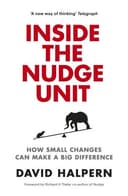
The intellectual foundation for this principle stretches back decades. Psychologists have long recognised that human decision-making is governed by two systems: a fast, intuitive system that operates on minimal cognitive effort, and a slower, deliberate system that requires conscious engagement. Nobel laureate Daniel Kahneman popularised this distinction, but the practical implications were crystallised by the UK's Behavioural Insights Team, the so-called 'Nudge Unit', in their systematic programme of government experiments. David Halpern, the team's founding chief executive, documented in his 2015 book how reducing administrative friction in everything from tax compliance to organ donation produced outsized behavioural change, often outperforming expensive awareness campaigns by a wide margin.
The underlying psychology is rooted in what researchers call 'present bias' and 'cognitive load'. When a task feels effortful, even slightly, the brain perceives it as a cost to be paid right now, while the benefit (a healthier back, a resolved knee injury) feels abstract and distant. The result is procrastination. Studies examining online form completion show that each additional field reduces completion rates measurably; research on digital scheduling suggests that requiring users to navigate more than two or three steps to confirm an appointment substantially increases abandonment. The patient doesn't decide not to book, they simply defer, and deferral becomes the default.
For allied health practices, this matters enormously because the rebooking window is narrow. Research on patient behaviour suggests that the period immediately following a treatment episode, when the outcome is salient and positive feelings about the practice are highest, is when re-engagement is most achievable. Every hour of delay and every friction point in the rebooking process chips away at the probability of conversion. The good news is that friction is an engineered problem, which means it is an engineered solution. Your practice built the rebooking process; your practice can rebuild it to remove obstacles systematically.
The Research
One of the most compelling real-world demonstrations cited by the UK Behavioural Insights Team involved tax debt collection. The team worked with HM Revenue and Customs to test whether simplifying letters sent to people who owed tax, removing jargon, adding a clear single call to action, and reducing the steps required to make a payment, would affect repayment rates. The redesigned letters, which made the path to compliance as frictionless as possible, produced repayment rates significantly higher than the control group, ultimately helping to recover tens of millions of pounds in previously uncollected debt. The content of what was owed hadn't changed; the ease of responding had.
Halpern's Nudge Unit documented a related principle in pension enrolment: when workers had to actively opt in to a pension scheme by filling out forms, participation rates were low. When the default was changed so that workers were automatically enrolled and had to actively opt out, participation rates climbed dramatically, in some programmes exceeding 90%. The lesson isn't just about defaults; it's that the activation energy required to take an action is a primary determinant of whether that action occurs. In your practice's context, this translates directly: a patient who receives a rebooking message and must search for your website, navigate a booking portal, create an account, and select from an unfamiliar calendar is facing the friction equivalent of an opt-in pension form. Most won't complete it, not because they don't want to, but because you've accidentally made inaction the path of least resistance.
How to Apply This in Your Practice
The first step in applying friction reduction to patient re-engagement is conducting an honest audit of your current rebooking experience from the patient's perspective. Pick up your phone, pretend you've just received your standard recall SMS, and count every tap, every page load, every field you have to fill in before you receive a booking confirmation. Research from the Behavioural Insights Team and allied digital behaviour studies consistently suggests that if the journey from message to confirmed appointment takes more than three interactions, you are introducing meaningful drop-off risk at each additional step. Most practice management systems, used out of the box, require far more than three steps. Identifying exactly where the friction lives is the prerequisite to removing it.
Once you've mapped the friction points, prioritise ruthlessly. The highest-impact changes are typically: one-tap or one-click scheduling links embedded directly in your SMS or email recall message; pre-filled appointment details based on the patient's history (same practitioner, same appointment type, nearest available equivalent time slot); and removing the requirement to log in or create an account for returning patients. Your recall message should do the cognitive work for the patient, not ask them to do it themselves. Instead of 'Hi [Name], it's been a while, click here to book your next appointment,' try something like: 'Hi Sarah, it's been 8 weeks since your last session with James. We've held a 45-minute physio appointment for you on Thursday 15th at 10am, tap here to confirm in one click, or reply to choose a different time.' That message removes search effort, removes decision effort, and removes navigation effort in one go.
The pre-filling principle extends beyond the booking link itself. If your practice management software allows it, use what you already know about the patient to eliminate redundant data entry. Returning patients should never be asked to re-enter their date of birth, their health fund details, or their presenting complaint if it hasn't changed. Every field that a returning patient must re-complete is a small act of friction that communicates, unintentionally, that your practice doesn't really know them, and that they must earn the right to be seen again. Systems like Cliniko, Nookal, and similar platforms have varying degrees of pre-fill capability; it's worth investing time in configuring them to maximise this for recall workflows.
Finally, consider the confirmation experience itself. A booking that ends with a clear, immediate, reassuring confirmation, including the date, time, practitioner name, and a calendar-add link, closes the loop behaviourally. Patients who receive ambiguous confirmations ('We'll be in touch to finalise your booking') face a residual uncertainty that keeps the task mentally 'open', which itself creates avoidance. A closed, confirmed, calendared appointment is cognitively complete. The patient can stop thinking about it. That sense of completion is itself a reward, and it dramatically reduces the likelihood of a last-minute cancellation because the patient never truly committed in the first place.
Get one behavioral science principle per week
Applied to patient retention. Backed by research. No fluff.
Seeing It in Action
Mitchell had been seeing a chiropractor at a busy suburban clinic in Brisbane for four months following a lower back injury sustained at work. After six sessions, his pain had resolved significantly, and his treating practitioner had recommended monthly maintenance visits to prevent recurrence. Mitchell left his final session with every intention of booking ahead, but life intervened, a busy period at work, a family holiday, and the general friction of remembering to do it meant that two months passed without a booking. When the clinic's standard recall SMS arrived, 'Hi Mitchell, we haven't seen you in a while. Please call us on (07) XXXX XXXX or visit our website to make an appointment', Mitchell read it while waiting for a coffee, thought 'I should do that,' and put his phone back in his pocket. He never called.
The following month, the clinic had switched to a friction-reduced recall workflow through their patient engagement platform. Mitchell received a different kind of message: 'Hi Mitchell, it's been 10 weeks since your session with Dr. Chen. Your back can benefit from a maintenance check-in, we've found you a spot on Tuesday 18th June at 5:30pm. Tap to confirm: [link].' The link opened a single page pre-loaded with his appointment details. One tap. Confirmed. A calendar invite landed in his phone immediately. The entire interaction took eleven seconds.
Mitchell attended the appointment. At the end of that session, the practitioner pre-booked him for six weeks' time before he left the room, another friction-reduction tactic that removed the need for any future recall process at all. Over the following year, Mitchell attended five maintenance appointments he almost certainly would not have booked independently. For the clinic, that represented retained revenue and a patient whose long-term health outcome was measurably better. The behavioural science hadn't changed Mitchell's motivation, it had simply stopped the process from accidentally working against it.
Your Action Plan
- 1Conduct a friction audit, using only your phone, follow your own recall process from the moment a patient receives your message to the moment a booking is confirmed, and document every tap, login, field, and page load required.
- 2Reduce your rebooking journey to three interactions or fewer by embedding a direct, pre-loaded scheduling link in your recall SMS or email that bypasses your homepage and lands the patient on a pre-filled confirmation screen.
- 3Rewrite your recall message templates to include a specific suggested appointment time, the patient's regular practitioner, and a single clear action, 'tap to confirm', rather than asking the patient to initiate the search themselves.
- 4Configure your practice management software to pre-fill returning patient details (appointment type, health fund, contact information) so that rebooking requires zero re-entry of information they've already provided.
- 5Train your front desk and treating practitioners to pre-book the next appointment before the patient leaves the clinic, removing the recall process entirely for a significant proportion of your patient base, the lowest-friction rebooking is one the patient never has to think about at all.
Key Takeaway
Your lapsed patients aren't choosing not to come back, they're being stopped by a process that accidentally makes inaction easier than action, and every unnecessary step you remove is a patient relationship you save.
Related Principles
Make It Attractive (Salience and Presentation): Make Re-Engagement Feel Personal, Not Broadcast
Inside the Nudge Unit · David Halpern
People respond to how something is presented, not just what it is. Visual design, personalization, and framing all affect engagement.
Make It Social (Peer Norms): Show Patients What Others Like Them Are Doing
Inside the Nudge Unit · David Halpern
People are strongly influenced by what others around them are doing. Descriptive norms ("most people do X") are more powerful than instructions.
Default Effects: How Auto-Scheduling Boosts Rebooking Rates
Nudge · Richard H. Thaler & Cass R. Sunstein
People overwhelmingly stick with whatever option is presented as the default. When no active choice is required, inertia wins.
Simplification and Friction Reduction: Remove Booking Friction to Recover Lapsed Patients
Nudge · Richard H. Thaler & Cass R. Sunstein
The more steps required to complete an action, the less likely people are to follow through. Complexity kills compliance.