
Optimal Distinctiveness
Most allied health practitioners focus on what they offer patients, treatment quality, appointment availability, clinical outcomes. But here's what they consistently overlook: patients don't just want good care, they want to feel like they belong to the kind of people who get good care. That single psychological distinction explains why some re-engagement messages get ignored while others bring patients back through the door within 48 hours.
The Science Behind Optimal Distinctiveness
Optimal Distinctiveness is a social psychological theory developed by Marilyn Brewer at Ohio State University in 1991. Her central insight was deceptively simple but profound: human beings are simultaneously driven by two competing motivations, the need to belong to a group, and the need to feel like a distinct individual within that group. We don't want to be entirely absorbed into a collective, losing our sense of self. But we also don't want to stand alone, entirely separate from others. We seek the sweet spot, a group that gives us identity and belonging, while still making us feel somewhat special, chosen, or set apart from the general population.
Brewer's research demonstrated that these two needs operate like a psychological thermostat. When we feel too similar to everyone around us, when we blend in too much, our need for uniqueness kicks in and we start finding ways to differentiate ourselves. Conversely, when we feel too isolated or different, our need for belonging takes over and we seek connection with a group. The most powerful group memberships, Brewer argued, are those that satisfy both drives at once: you belong, and you're special for belonging. Think of professions, elite clubs, or loyalty tiers, they create identity through selective inclusion.
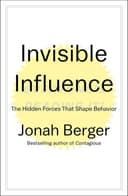
Jonah Berger built on this theory in his 2016 book 'Invisible Influence,' showing how optimal distinctiveness shapes everyday consumer behaviour. Berger's work highlighted that people gravitate toward products, brands, and communities that allow them to signal group membership while also expressing individuality. The key mechanism is what he describes as 'in-group signalling', when belonging to a particular group communicates something meaningful about who you are as a person. This is why niche subcultures are often more powerful than mass movements: the smaller and more selective the group, the stronger the identity signal it sends to both insiders and outsiders.
For allied health practices, this principle has immediate and practical consequences. Your lapsed patients don't just need a clinical reason to return, they need a social and psychological reason. They need to feel that returning places them in a valued category of person: someone who takes their health seriously, who makes intelligent long-term decisions, who belongs to a community of proactive health-conscious individuals. When your re-engagement messaging taps into this need, offering both belonging and distinction, it bypasses the rational cost-benefit calculation and speaks directly to identity. And identity-based motivation is far more durable than convenience-based motivation.
The Research
One of the most compelling experimental demonstrations of optimal distinctiveness comes from research examining consumer preferences for majority versus minority products. In studies Berger describes in 'Invisible Influence,' participants were shown information about products used by either large or small groups of people. When participants were made to feel uncomfortably similar to others, for instance, when they were told they shared many characteristics with a large crowd, they consistently shifted their preferences toward minority-group products, even when the majority product was objectively equivalent or superior. The need to reclaim distinctiveness actively altered their decision-making.
Critically, this effect only held when the group offering distinctiveness was one the person aspired to belong to. Random minority groups held no appeal. The sweet spot, the optimal distinctiveness zone, was a selective, aspirational group that felt meaningful and identity-affirming. This maps directly onto patient behaviour: simply telling a lapsed patient they're 'different from most people' isn't enough. You need to position them as part of a specific, respected, health-conscious in-group. The distinctiveness has to come packaged with belonging, and that belonging has to feel earned.
How to Apply This in Your Practice
The strategic foundation of applying optimal distinctiveness in your practice is this: stop sending re-engagement messages that treat lapsed patients as a problem to be solved, and start sending messages that treat them as members of a valued group being welcomed back. The psychological shift is subtle but the behavioural impact is significant. Your lapsed patient list isn't a list of people who left, it's a list of people who already self-selected into a health-conscious identity when they first came to you. Your job is to reactivate that identity, not convince them of something new.
In practice, this means your re-engagement copy needs to do two things simultaneously: affirm group membership and acknowledge individual distinction. A message that simply says 'We miss you, book now' does neither. A message that says 'You're part of a small group of our patients who've invested in ongoing care, and we'd love to support you in continuing that' does both. The patient feels seen as an individual (you've distinguished them from the general public) while also feeling connected to a community (other long-term, health-conscious patients like them). Consider specific language like: 'As one of our longer-term patients, you're part of a group of people who understand that health isn't something you fix once, it's something you maintain. We're reaching out because we genuinely want to help you keep the progress you've worked for.' This framing works because it's true, it's specific, and it activates identity rather than urgency.
From a workflow perspective, segment your patient database before sending any re-engagement communication. Identify patients who have attended three or more times and haven't booked in the last 90 to 180 days, these are your prime optimal distinctiveness targets, because they have a genuine history with your practice that makes the 'long-term patient' framing authentic and credible. Patients who attended only once or twice may not yet identify with the in-group strongly enough for this approach to land. Authenticity matters here: the psychological contract only works if the patient genuinely feels the group membership is earned, not manufactured.
For implementation via SMS or email, keep the messaging warm and specific rather than promotional. Avoid discounts as your lead hook, discounts signal that anyone can join, which undermines the distinctiveness element. Instead, consider offering something that feels exclusive: a priority booking window, a complimentary re-assessment call with their usual practitioner, or a personalised check-in note from their treating clinician. These gestures reinforce the message that this patient is a known, valued individual within a select community, not just another name on a bulk-send list. Routiq's behavioural sequencing tools allow you to automate this kind of tiered, identity-affirming outreach without it feeling mass-produced, which is essential for maintaining the psychological integrity of the approach.
Get one behavioral science principle per week
Applied to patient retention. Backed by research. No fluff.
Seeing It in Action
Sarah is a 41-year-old project manager and a patient at Coastal Physiotherapy in Melbourne. She attended eight sessions over fourteen months for a recurring lower back issue, made excellent progress, and then, as life got busy, simply stopped booking. Six months passed. The clinic's previous re-engagement attempts were generic: a 'We haven't seen you in a while!' SMS and a promotional email offering 10% off. Sarah read them, felt vaguely guilty, and closed her inbox. The discount actually made her feel less inclined to return, it felt impersonal, like a marketing blast, not a genuine reconnection.
The clinic switched its approach using optimal distinctiveness framing. Sarah received a personalised SMS from her physiotherapist, Michael, that read: 'Hi Sarah, I was looking back at your progress notes and wanted to reach out personally. You put in real work on your lower back and the results showed it. You're one of the patients I think about when life gets busy, the ones who actually understand the value of maintaining what they've built. I'd love to catch up for a re-assessment and see where you're at. No pressure, just a genuine check-in.' Below was a direct booking link.
Sarah booked within the hour. In her own words when she arrived: 'That message didn't feel like marketing. It felt like someone remembered me.' She rebooked for a maintenance programme of six-weekly sessions and has remained an active patient. The intervention cost the clinic four minutes of Michael's time and a single SMS. The behavioural science behind it, making Sarah feel like a distinguished member of a valued health-conscious community, did the rest.
Your Action Plan
- 1Segment your lapsed patient database to identify patients with three or more prior visits who haven't booked in 90-180 days, these patients have a genuine history that makes the 'long-term patient' identity framing authentic and credible.
- 2Audit your current re-engagement message templates and remove any language that feels generic, transactional, or discount-led, these undermine distinctiveness by signalling that belonging costs nothing and means nothing.
- 3Rewrite your re-engagement copy to simultaneously affirm group membership ('You're one of our long-term patients, a group of people who've invested seriously in their health') and individual recognition ('I remember the progress you made and I'd love to help you maintain it').
- 4Train your front-of-house and clinical team to understand that re-engagement outreach is identity work, not marketing, the tone should always feel like a personal reconnection from within a trusted community, not a promotional broadcast from a business.
- 5Avoid leading with discounts or urgency tactics in your re-engagement sequences; instead, offer something that feels exclusive and relationship-based, a priority booking window, a direct message from their treating practitioner, or a complimentary re-assessment, to reinforce the value of their in-group status.
Key Takeaway
Patients don't return because they need treatment, they return because they've been reminded that they're the kind of person who values their health, and that your practice is where people like them belong.
Related Principles
The Power of Invisible Social Influence: Display Patient Numbers to Shape Behavior
Invisible Influence · Jonah Berger
People deny being influenced by others, but research shows conformity happens even when people are completely unaware of it.
Social Facilitation (Being Seen): Make Treatment Progress Visible to Others
Invisible Influence · Jonah Berger
People perform better and are more likely to follow through when their behavior is visible to others.
Social Proof: Show Patients That Others Complete Treatment
Influence · Robert B. Cialdini
People look to what others are doing to determine correct behavior, especially in uncertain situations.
Commitment and Consistency: Get Verbal Commitments to Increase Follow-Through
Influence · Robert B. Cialdini
Once people make a commitment (especially publicly or in writing), they feel internal pressure to behave consistently with it.