
Commitment and Consistency

A patient walks out of their first physio appointment nodding enthusiastically, agrees to an eight-session plan, and then simply... vanishes after session three. Sound familiar? The frustrating truth is that the gap between intention and action is where most allied health practices haemorrhage revenue, and a principle hiding in plain sight, documented by one of the world's most cited social psychologists, gives you a remarkably simple tool to close it.
The Science Behind Commitment and Consistency
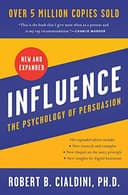
Commitment and Consistency is one of six core principles of influence identified by Dr Robert Cialdini in his landmark 1984 work, *Influence: The Psychology of Persuasion*. The principle holds that once a person makes a commitment, whether spoken, written, or public, they experience a powerful internal drive to behave in ways that are consistent with that commitment. This isn't mere politeness or social obligation. Cialdini argues it is a deeply wired psychological mechanism: humans derive a sense of identity and self-image from their prior choices, and acting inconsistently with those choices creates cognitive dissonance, an uncomfortable mental tension the brain is highly motivated to resolve.
The psychology runs deeper than most practitioners realise. When a patient verbally agrees to a treatment plan in your consulting room, they are not just scheduling appointments, they are making a small declarative statement about who they are: someone who takes their health seriously, someone who follows through. The moment that statement is made, their self-concept becomes subtly entangled with the commitment. Cialdini's research demonstrated that the more active, effortful, and public a commitment is, the stronger its binding effect on future behaviour. A patient who simply nods is less bound than one who says the words out loud; one who says the words is less bound than one who writes them down.
This principle has been validated repeatedly across social psychology research. Studies on 'foot-in-the-door' techniques, where a small initial commitment primes people to agree to larger subsequent requests, show that people who agreed to a minor initial ask were significantly more likely (in some studies, more than twice as likely) to comply with a larger follow-up request compared to those who were asked the large request cold. The mechanism is the same: the first commitment reshapes the person's self-image in a way that makes the second behaviour feel necessary for consistency. In a healthcare context, the 'small commitment' is the treatment plan agreement; the 'larger request' is returning for every session, including the ones motivation has begun to fade.
Crucially, Cialdini emphasises that consistency is not just an external performance for others, it is profoundly internal. People feel bad, genuinely uncomfortable, when they act against their stated commitments, even when no one else is watching. This means that when you follow up with a lapsed patient and gently reference their original commitment, you are not manipulating them with guilt, you are reminding them of something they genuinely value about themselves. Used ethically, with the patient's real health outcomes at heart, this is one of the most respectful and effective re-engagement tools available to an allied health practitioner.
The Research
One of the most well-known demonstrations of this principle comes from research Cialdini describes involving neighbourhood residents and safety signage. Homeowners were asked to place a large, unattractive 'Drive Carefully' sign in their front gardens, the vast majority refused. However, in a separate condition, residents were first asked to sign a small petition supporting safe driving or to display a tiny window sticker with the same message. Weeks later, when the same large sign request was made, those who had made the small initial commitment were roughly four times more likely to agree than those who had not. The only difference between the groups was the prior commitment, yet it was powerful enough to produce a fourfold increase in compliance with an objectively inconvenient request.
This study is directly transferable to your practice. The 'small sign in the window' is your patient verbally agreeing to their treatment plan at appointment one. The 'large sign in the front garden' is them returning for appointment six when life has gotten busy, the pain has partially subsided, and the couch is calling. The prior commitment, properly elicited and later referenced, makes the return dramatically more likely, not through coercion, but because you are activating the patient's own desire to be consistent with who they said they were.
How to Apply This in Your Practice
The application begins at the very first appointment, before the patient ever has a chance to lapse. At the close of the initial consultation, after you have outlined the treatment plan, add a single deliberate question: 'Based on everything we've discussed today, are you committed to completing this eight-session plan?' This sounds almost disarmingly simple, but the verbal act of saying 'yes', out loud, to a professional they respect, in a clinical environment, is the commitment anchor. You can reinforce it further by handing the patient a printed summary of their plan and asking them to sign or initial it, noting their agreement. Written commitments are demonstrably more binding than spoken ones, and the physical act of signing engages the sense of personal responsibility even further.
For re-engaging lapsed patients specifically, the commitment becomes your strategic re-entry point. Rather than leading with promotions, appointment availability, or generic 'we miss you' messaging, which patients correctly read as business-driven, you lead with the commitment they made to themselves. An SMS or email might read: 'Hi [Name], when you started your treatment with us, you committed to an eight-session plan to [specific goal, e.g., get back to running without knee pain]. You've completed five sessions, you're genuinely most of the way there. Let's finish what you started. Reply YES and we'll book you in this week.' Every element of this message is deliberate: it names the original goal (not just the sessions), it quantifies progress to make completion feel achievable, and it frames returning as consistency with a prior self-determined decision, not as doing your practice a favour.
The framing around the patient's *specific goal* is critical and often overlooked. When a patient committed to eight sessions, they weren't really committing to eight sessions, they were committing to the outcome those sessions were meant to produce: being able to pick up their grandchildren, return to weekend sport, manage their chronic back pain without relying on painkillers. When you re-engage them, connecting the commitment back to that outcome ('you said you wanted to get back to swimming') is far more activating than referencing the administrative details of a plan. It reminds them of the identity-level statement they made: 'I am someone who wants to be active and healthy.' Abandoning the plan now would mean abandoning that version of themselves.
From a workflow perspective, implementation requires a simple system. Flag any patient who drops off before completing their agreed plan, most practice management software can surface this with a basic report. Create a tiered follow-up sequence: a check-in message at 7 days post-missed appointment, a commitment-reference message at 14 days, and a personal phone call at 28 days if there has been no re-booking. Train your front desk and practitioners to document the specific commitment language used at session one, the goal stated, the number of sessions agreed, any personal motivations the patient shared, so that follow-up communications can be personalised rather than templated. The more specific the reference to their original commitment, the more powerful the consistency effect.
Get one behavioral science principle per week
Applied to patient retention. Backed by research. No fluff.
Seeing It in Action
Marcus, a 44-year-old logistics manager, presented to a Brisbane chiropractic clinic with recurring lower back pain that had been affecting his ability to play weekend footy with his son's under-12s team. After a thorough assessment, the chiropractor outlined a ten-session plan combining spinal adjustments, soft tissue work, and a home exercise programme. At the end of the appointment, the practitioner asked directly: 'Marcus, based on what we've mapped out today, are you committed to completing this plan so you can get back on the oval with your son?' Marcus said yes, signed a printed care plan summary, and left with his first three appointments booked.
Marcus completed sessions one through four, then went quiet. A family holiday, a busy work period, and the fact that his pain had reduced significantly combined to make rescheduling easy to defer. At the 14-day mark after his last missed appointment, the clinic's patient coordinator sent a personalised SMS: 'Hi Marcus, when you started care with us, you committed to a ten-session plan to get back playing footy with your son. You've done four sessions and you're making real progress, but six sessions remain, and stopping now risks the pain returning before the season ends. Let's lock in your next appointment. Reply YES and we'll confirm a time that works.' Marcus replied within the hour. He returned, completed the remaining six sessions, and subsequently referred two colleagues to the clinic.
What made this intervention succeed was not the reminder itself, it was what the reminder activated. Marcus had not forgotten about his back; he had simply let inertia win for a fortnight. The message did not offer a discount or express that the clinic missed him. It did something more powerful: it held up a mirror to a commitment he had made to his own identity as an active father. Choosing not to return would have meant being inconsistent with that image. The behavioural science did the persuasion, the practitioner simply had to set up the right conditions at session one and reference them at the right moment.
Your Action Plan
- 1At the close of every initial consultation, explicitly ask for a verbal commitment using the patient's own stated goal, 'Based on what we've discussed, are you committed to completing this [X]-session plan so you can [specific outcome]?', and document their response in their file.
- 2Provide every new patient with a printed or digital care plan summary that includes their goal, the number of sessions, and a space for them to sign or initial, written commitments are significantly more binding than verbal ones alone.
- 3Set up a lapsed patient report in your practice management software to automatically flag any patient who has an incomplete agreed plan and has not attended in 10 or more days, so no one slips through unnoticed.
- 4Craft re-engagement messages that explicitly reference the original commitment and the specific goal, not generic 'we miss you' language, and include a progress acknowledgement ('you've completed X of Y sessions') to make completion feel proximate and achievable.
- 5Train your entire team, practitioners and front desk alike, on the commitment elicitation language so it becomes a consistent part of your intake process, and review re-engagement message effectiveness quarterly by tracking the re-booking rate of lapsed patients who receive commitment-referenced outreach versus generic reminders.
Key Takeaway
The moment a patient says 'yes, I'm committed to this plan' in your consulting room, they hand you the single most powerful re-engagement tool you will ever have, all you have to do is remember they said it, and remind them when it matters most.
Related Principles
Social Proof: Show Patients That Others Complete Treatment
Influence · Robert B. Cialdini
People look to what others are doing to determine correct behavior, especially in uncertain situations.
Reciprocity: Give Value First to Earn the Rebook
Influence · Robert B. Cialdini
People feel obligated to return favors. When someone gives us something, we feel compelled to give something back.
The Unity Principle: Build Tribal Identity Around Your Clinic
Pre-Suasion · Robert B. Cialdini
People are most influenced by those they perceive as part of their in-group, people who share their identity, values, or experiences.
Belief and Community: Use Patient Stories to Build Belief in Coming Back
The Power of Habit · Charles Duhigg
Belief in the possibility of change is essential, and it is strengthened by community and social connection.