
Social Proof
Every week, dozens of patients quietly slip off your books, no complaint, no farewell, just silence. What if the single most powerful force keeping them away isn't pain levels, cost, or inconvenience, but simply the fact that they don't know other people like them kept coming back? Social proof, one of the most robustly documented principles in behavioural science, may be the missing ingredient in your patient re-engagement strategy.
The Science Behind Social Proof
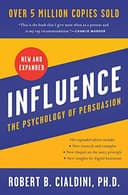
Social proof is the psychological phenomenon where people look to the behaviour of others to determine what the correct or appropriate action is for themselves, particularly when they feel uncertain. First systematically described by Robert Cialdini in his landmark 1984 book *Influence: The Psychology of Persuasion*, social proof is not merely a marketing tactic. It is a deeply wired cognitive shortcut that evolved because, in most situations, following the crowd is genuinely a reliable way to make good decisions. When we are unsure what to do, other people's choices function as a form of evidence.
Cialdini identified social proof as one of six core principles of influence, and it operates most powerfully under two conditions: uncertainty and similarity. When a patient lapses from care, they are almost always in a state of uncertainty, uncertain whether they really need to return, uncertain whether their condition will resolve on its own, uncertain whether continuing treatment is 'worth it.' This is precisely the psychological environment in which social proof exerts its strongest pull. The brain, seeking to reduce cognitive effort, essentially asks: 'What are people like me doing in this situation?'
The similarity dimension is critical and often overlooked by practitioners. Research consistently shows that we are most influenced by the behaviour of people we perceive as similar to ourselves, in age, condition, background, or circumstance. A 52-year-old with chronic lower back pain is far more moved by knowing that 'most patients with your condition completed their full course of treatment' than by a generic testimonial from an anonymous source. This is why vague social proof ('We have lots of happy patients!') underperforms targeted social proof ('Most of our patients recovering from rotator cuff injuries complete all recommended sessions').
The behavioural science literature extends well beyond Cialdini's original framing. Researchers in health psychology have applied social proof specifically to treatment adherence and found it meaningfully influences patient behaviour. Studies in related domains, such as medication compliance and screening attendance, show that informing patients about high completion rates among their peers can shift behaviour in measurable ways. The mechanism is not peer pressure in the negative sense; it is the reassurance that comes from knowing you are not alone, that returning is normal, and that people facing your exact situation made the choice to continue.
The Research
One of the most compelling real-world demonstrations of social proof's power comes from research conducted by Cialdini and colleagues in collaboration with a hotel chain, later published in peer-reviewed form. The researchers tested different messages encouraging guests to reuse their towels. The standard environmental message ('Help save the environment') was compared against a social proof message ('The majority of guests who stay in this room reuse their towels'). The result: the social proof message outperformed the standard environmental appeal by approximately 26%. When the message was made even more specific, noting that 'the majority of guests who stayed in this exact room reused their towels', compliance increased further still. The closer the social proof was to the individual's specific situation, the more persuasive it became.
This finding is directly transferable to allied health. The study illustrates that specificity amplifies social proof's effect, not just 'most patients return' but 'most patients with your condition, who were at the same stage of recovery as you, completed their treatment plan.' The more your lapsed patient can see themselves in the social proof you provide, the more likely that proof is to shift their behaviour from passive non-attendance to active re-booking.
How to Apply This in Your Practice
The first step is to build the data foundation that makes genuine social proof possible. Pull your practice management system records and calculate real completion rates for your most common presenting conditions, lower back pain, shoulder rehabilitation, plantar fasciitis, post-surgical recovery, and so on. If 78% of your patients presenting with lumbar disc issues completed their recommended treatment plan, that is a powerful and honest number. If 310 patients rebooked in the past 90 days, say so. Authentic, specific numbers drawn from your actual patient population are far more credible, and more ethically sound, than fabricated figures. Routiq's analytics layer can surface these numbers automatically, giving you condition-specific completion rates you can deploy with confidence.
When crafting re-engagement messages to lapsed patients, lead with similarity-based social proof before you lead with any clinical argument or promotional offer. A message that opens with 'We noticed it's been a while since your last visit, and we wanted you to know that 82% of patients recovering from the same knee issue you came in for completed their full treatment plan' lands very differently than 'We'd love to see you back.' The first message removes uncertainty by showing the patient what people like them do. Structure your SMS or email sequence so the social proof appears in the subject line or the very first sentence, not buried in paragraph three after the reader has already disengaged.
Layering different types of social proof across a multi-touch re-engagement sequence increases effectiveness. Your first message might use aggregate completion statistics ('Most patients with your condition finish their plan'). A follow-up three days later might use recency-based social proof ('347 patients rebooked with us last month, here's how to secure your spot'). A third message might incorporate testimonial-style social proof, with a brief, genuine quote from a patient who returned after a gap in care and experienced a positive outcome. Each format activates social proof through a slightly different cognitive pathway, statistical norms, community momentum, and personal narrative, making the cumulative effect more robust than any single message alone.
Importantly, avoid framing lapsing as the norm, even accidentally. Cialdini's research warns explicitly about the 'negative social proof' trap, messaging that inadvertently signals that the undesired behaviour is common ('So many patients don't finish their treatment plans…') can actually reinforce inaction. Every social proof message in your re-engagement workflow should frame completion and return as the expected, normal behaviour of patients like them. The psychological message you want to send, consistently and clearly, is: returning is what people in your situation do.
Get one behavioral science principle per week
Applied to patient retention. Backed by research. No fluff.
Seeing It in Action
James, a 44-year-old construction site manager, had attended six sessions of physiotherapy at Coastal Allied Health in Newcastle for a recurring shoulder impingement. His therapist had recommended a twelve-session plan, but after the sixth appointment James felt 'good enough' and quietly stopped booking. Three months later, the shoulder had stiffened again, but he hadn't returned, partly out of inertia and partly because he wasn't sure whether going back was really necessary or whether he was just being 'soft' about it.
Using Routiq's automated re-engagement workflow, Coastal Allied Health sent James a personalised SMS fourteen weeks after his last appointment. The message read: 'Hi James, it's been a while since your last session. We wanted to let you know that 81% of patients we've treated for shoulder impingement completed their full plan and reported significantly less recurrence at twelve months. Most patients who come back after a break find they pick up right where they left off. Would you like to book a follow-up?' The message did not lead with guilt, urgency, or a discount, it led with normalising data that spoke directly to his condition and his uncertainty.
James booked within 48 hours. He later told his practitioner that the message made him feel like returning was 'the sensible thing to do, not an admission that he hadn't healed properly.' He completed the remaining six sessions, and at his discharge review reported full range of motion and no recurrence in the following six months. For the practice, James represented not only recovered revenue but a patient who was now far more likely to refer others, because his outcome was excellent, and excellent outcomes follow completed treatment plans.
Your Action Plan
- 1Audit your patient data by condition, calculate genuine completion rates for your five most common presentations and identify your real monthly rebook volumes. These numbers are the raw material for credible social proof.
- 2Segment your lapsed patient list by presenting condition and time since last visit, so your social proof messages can be matched to each patient's specific situation rather than sent as a generic broadcast.
- 3Write condition-specific social proof message templates that lead with similarity-based statistics ('Most patients with [condition] complete their plan and report...') and avoid any framing that normalises dropping out of care.
- 4Build a multi-touch re-engagement sequence in Routiq that deploys different social proof formats across three to four touchpoints, aggregate statistics first, then recency-based community proof, then a patient outcome narrative, spaced three to five days apart.
- 5Monitor which social proof formats and condition-specific messages generate the highest rebook rates, refine your templates quarterly as your data grows, and ensure all statistics used in messaging reflect your actual patient population to maintain trust and ethical integrity.
Key Takeaway
When a lapsed patient is uncertain whether to return, showing them that people just like them consistently chose to complete their care is more persuasive than any discount, reminder, or clinical argument you can make, because the brain trusts the crowd before it trusts the clinic.
Related Principles
Commitment and Consistency: Get Verbal Commitments to Increase Follow-Through
Influence · Robert B. Cialdini
Once people make a commitment (especially publicly or in writing), they feel internal pressure to behave consistently with it.
Reciprocity: Give Value First to Earn the Rebook
Influence · Robert B. Cialdini
People feel obligated to return favors. When someone gives us something, we feel compelled to give something back.
The Unity Principle: Build Tribal Identity Around Your Clinic
Pre-Suasion · Robert B. Cialdini
People are most influenced by those they perceive as part of their in-group, people who share their identity, values, or experiences.
Belief and Community: Use Patient Stories to Build Belief in Coming Back
The Power of Habit · Charles Duhigg
Belief in the possibility of change is essential, and it is strengthened by community and social connection.