
The Power of FREE
A lapsed patient has not booked in for eight months. They still think about their lower back. They still feel that familiar ache when they sit too long at their desk. But every time they consider calling your clinic, a quiet voice whispers: 'Is it worth the cost? Am I ready to commit to a whole treatment plan again?' One single word in your re-engagement message has the proven power to silence that voice entirely, and it is not 'discount', 'special', or 'limited time'. It is 'free'.
The Science Behind The Power of FREE
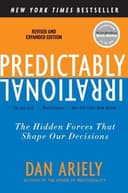
The Power of FREE is one of the most robust and counterintuitive findings in behavioural economics. Documented extensively by Duke University professor Dan Ariely in his 2008 book *Predictably Irrational*, the zero price effect describes a phenomenon that goes far beyond simple cost-benefit analysis. When the price of something drops to zero, people do not merely respond rationally to a good deal, they experience a disproportionate emotional surge that overrides logical thinking. Free does not just lower the barrier to entry; it psychologically eliminates it.
Ariely's insight was that every transaction carries two types of costs: financial cost and what psychologists call 'transaction utility', the psychological discomfort of parting with money, even a small amount. The moment a price hits zero, that psychological discomfort vanishes completely. A one-cent item still activates the brain's loss-aversion circuitry. A free item bypasses it entirely. This is why people will queue for twenty minutes to collect a free sample of something they would never ordinarily want. The word 'free' triggers a deeply wired emotional response that evolved long before modern commerce, it signals opportunity without risk, gain without sacrifice.
The zero price effect is compounded by another well-established psychological phenomenon: loss aversion, first described by Daniel Kahneman and Amos Tversky in their landmark 1979 Prospect Theory research. Humans feel the pain of potential loss roughly twice as intensely as the pleasure of equivalent gain. When a lapsed patient considers returning to your clinic, they are running an unconscious mental calculation that is heavily weighted toward risk, the risk of spending money on something they are unsure about, the risk of being judged for having stopped coming, the risk of committing to a treatment plan they cannot sustain. A free offer does not just reduce that risk; it eliminates the financial dimension of it entirely, dramatically rebalancing the psychological equation in favour of action.
What makes this principle particularly powerful for allied health practices is that your lapsed patients are not indifferent to their health, they are stuck in ambivalence. They care about their condition. They remember the relief your treatment brought. What they are struggling with is the activation energy required to re-enter the system. Behavioural scientists call this 'status quo bias', the tendency to remain in an existing state because any change requires mental effort and perceived risk. A free, no-strings-attached offer is one of the only tools powerful enough to overcome status quo bias, because it removes the two biggest perceived risks simultaneously: financial cost and commitment anxiety.
The Research
The most well-known experimental demonstration of the zero price effect comes directly from Dan Ariely's own research, described in *Predictably Irrational*. In one experiment, Ariely and his colleagues set up a chocolate truffle stand offering two options: a Lindt truffle for 15 cents and a Hershey's Kiss for 1 cent. When presented with this choice, approximately 73% of participants chose the Lindt truffle, a rational decision, since the quality difference justified the small price gap. The researchers then reduced both prices by just one cent: the Lindt truffle dropped to 14 cents, and the Hershey's Kiss became free. Economically, nothing changed, the relative difference between the two options was identical. Yet the results flipped dramatically: now approximately 69% of participants chose the free Hershey's Kiss, abandoning the objectively superior truffle.
This finding is remarkable because it demonstrates that 'free' does not simply shift preferences by a proportional amount, it fundamentally restructures how people evaluate options. The free Kiss was not better value than before; it was simply free. And that single fact was enough to make it feel irresistible to the majority of participants. For allied health practitioners, this is a profound insight: a free 15-minute check-in is not just a cheaper version of a paid appointment. In the mind of your lapsed patient, it occupies a completely different psychological category, one without risk, without obligation, and without the cognitive friction that has been keeping them from picking up the phone.
How to Apply This in Your Practice
The most effective application of the zero price effect in allied health re-engagement is what Routiq Labs calls the 'Free Progress Check' approach. Rather than offering a discount on a full consultation, which still carries a financial cost and therefore still activates loss aversion, you offer a genuinely free, time-limited, low-commitment interaction. The message copy matters enormously here. Compare these two approaches: 'We're offering 50% off your next appointment' versus 'It's been a while, we'd love to offer you a complimentary 15-minute progress check, no strings attached, completely free.' The first still asks the patient to spend money and make a decision. The second eliminates both objections in a single sentence.
When crafting your re-engagement message, lead with the word 'free' as early as possible, ideally in the first sentence or the subject line of your SMS or email. Ariely's research confirms that the emotional response to 'free' is triggered almost instantly, before the rational mind has time to engage its usual scepticism. A sample SMS might read: 'Hi [Name], it's been a while since we've seen you at [Clinic Name]. We'd like to offer you a FREE 15-minute check-in to see how you're tracking, no cost, no obligation, just a quick catch-up with your practitioner. Reply YES to book.' Every element of this message is doing behavioural work: 'free' eliminates financial anxiety, 'no obligation' eliminates commitment anxiety, and 'just a quick catch-up' reduces the perceived effort of the action.
The operational structure of the free check-in matters as much as the messaging. Keep it genuinely brief, 15 minutes is long enough to provide real value and rebuild rapport, but short enough that it does not feel like a major time commitment for the patient or a significant revenue sacrifice for your practice. During that appointment, your practitioner's goal is not to sell a treatment plan; it is to reconnect, reassess, and remind the patient why they valued your care in the first place. The behavioural science principle of reciprocity (documented extensively by Robert Cialdini) will then work in your favour: patients who receive something genuinely valuable for free are psychologically primed to want to give something back, in this case, by booking a follow-up paid appointment.
From a workflow perspective, identify lapsed patients who have not visited in 90 to 180 days as your primary target cohort. These patients are far enough away to be considered lapsed, but close enough that their relationship with your clinic, and their memory of the relief your treatment provided, remains relatively fresh. Automate your outreach through a platform like Routiq so that the free check-in offer is triggered at precisely the right moment in the patient's lapse window. Personalise the message with the patient's name, their treating practitioner's name, and if possible, a reference to their presenting condition ('We know lower back issues can sneak back up on you'). Personalisation combined with a free offer creates a powerful behavioural one-two punch that significantly outperforms generic discount campaigns.
Get one behavioral science principle per week
Applied to patient retention. Backed by research. No fluff.
Seeing It in Action
Consider the case of Marcus, a 44-year-old project manager who had been attending Coastal Physio in Brisbane for treatment of chronic shoulder impingement. He completed an initial six-session treatment plan, felt substantially better, and stopped booking, not because he was dissatisfied, but because life got busy and the urgency had faded. Seven months later, his shoulder was beginning to ache again, particularly after long days on his laptop. He thought about calling the clinic several times, but kept putting it off, telling himself he would wait and see if it settled on its own. The financial commitment of re-entering treatment felt significant, and he was not sure he had the bandwidth to commit to another multi-week plan.
Coastal Physio used Routiq to identify Marcus as a lapsed patient at the seven-month mark and automatically sent him a personalised SMS: 'Hi Marcus, it's Sarah from Coastal Physio. It's been a while, we hope your shoulder has been treating you well! We'd love to offer you a FREE 15-minute check-in with no obligation whatsoever, just to see how you're tracking. Reply YES to grab a time.' Marcus read the message on a Tuesday morning, right after a particularly uncomfortable team meeting where his shoulder had been nagging him. The word 'FREE' registered immediately. There was no financial risk. There was no commitment. He replied YES within four minutes.
At the check-in, Sarah reassessed Marcus's shoulder, identified early signs of the impingement returning, and provided two immediate exercises he could do at his desk. She did not push a treatment plan. She simply provided genuine value and reconnected with Marcus as a person. Before he left, Marcus asked her what she would recommend going forward, she outlined a four-session maintenance plan. He booked all four sessions before walking out the door. The free 15-minute appointment, which cost the clinic nothing but time, converted a seven-month lapsed patient back into an active one with a confirmed forward booking schedule. The zero price effect had done exactly what the research predicted: it eliminated the barrier entirely, and once Marcus was through the door, the value of the service did the rest.
Your Action Plan
- 1Segment your patient database to identify lapsed patients who have not booked in the past 90-180 days, this is your highest-value re-engagement cohort, as their relationship with your clinic is lapsed but not forgotten.
- 2Design a genuine 'Free 15-Minute Progress Check' offering, ensure it is truly free with no hidden conditions, as any perceived bait-and-switch will destroy trust and confirm the patient's worst assumptions about marketing.
- 3Craft your re-engagement message with 'FREE' or 'complimentary' prominently featured in the first sentence, paired with explicit reassurance that there is no obligation, address both the financial objection and the commitment anxiety in the same message.
- 4Automate outreach through your practice management system or a platform like Routiq so that the free check-in offer is triggered at the optimal point in each patient's lapse window, with personalisation fields for name, practitioner, and condition where possible.
- 5Train your clinical team on the behavioural objective of the free check-in, the goal is to reconnect and provide genuine value, not to sell; trust the principle of reciprocity to do the conversion work naturally once the patient is back in your practice environment.
Key Takeaway
In the mind of a lapsed patient, 'free' is not a price point, it is a psychological permission slip that eliminates both financial anxiety and commitment fear in a single word, making it the most powerful re-engagement tool your practice has access to.
Related Principles
The Decoy Effect (Asymmetric Dominance): Structure Pricing to Guide Patient Commitment
Predictably Irrational · Dan Ariely
When choosing between two options, adding a third "decoy" option that is clearly inferior to one of them makes the superior option far more attractive.
Social Norms vs. Market Norms: Lead with Care, Not Discounts
Predictably Irrational · Dan Ariely
When interactions operate under social norms (relationships, care, community), people behave generously. When market norms are introduced (prices, transactions)
Scarcity: Use Limited Availability to Drive Appointment Urgency
Influence · Robert B. Cialdini
People assign more value to opportunities that are limited in availability. Fear of missing out drives action.
Practical Value: Send Useful Content to Stay Relevant Between Visits
Contagious · Jonah Berger
People share information that is genuinely useful. Practical content travels farther than promotional content.