
Social Norms vs. Market Norms

A patient walks out of their final appointment feeling genuinely cared for, your practitioner remembered their daughter's soccer final, checked in on their sleep, and sent them off with a warm handshake. Six months later, that same patient receives an automated email offering a '20% discount for returning patients.' In that single moment, something shifts. The relationship they thought they had dissolves into a transaction, and they quietly delete the email and never come back. This is not a marketing failure. It is a behavioural science failure, and it is costing allied health practices thousands of dollars in lost revenue every year.
The Science Behind Social Norms vs. Market Norms
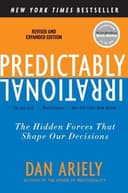
In his landmark 2008 book Predictably Irrational, behavioural economist Dan Ariely introduced a deceptively simple but profoundly important idea: human beings operate under two entirely different sets of rules, depending on the context of an interaction. The first set, social norms, governs relationships built on warmth, reciprocity, and mutual care. The second set, market norms, governs exchanges built on price, value, and transaction. The critical insight is not merely that these two systems exist, but that they are fundamentally incompatible. The moment you introduce a market norm into a relationship that was previously governed by social norms, the social norm collapses, and it is extraordinarily difficult to rebuild.
Ariely's research reveals that people operating under social norms are often more cooperative, more generous, and more loyal than those operating under market norms. When a neighbour helps you move house, you do not offer them a $50 note, doing so would be insulting, because it reframes a social act of goodwill as a commercial transaction. The same psychology operates in professional care relationships. When a patient sees their physiotherapist as someone who genuinely cares about their recovery, they are operating under a social norm framework. They feel loyalty, trust, and a sense of mutual investment in outcomes. But introduce explicit pricing, discounts, or promotional language into that relationship, and you have inadvertently flipped the switch to market norms, making the patient evaluate the interaction purely on commercial terms, just as they would when comparing insurance quotes.
This matters enormously for allied health practices because the therapeutic relationship is, by its very nature, a social norm environment. Patients share vulnerabilities, chronic pain, post-surgical anxiety, fear about their long-term mobility, and practitioners respond with expertise and genuine care. Research in health psychology consistently shows that therapeutic alliance (the quality of the emotional bond between practitioner and patient) is one of the strongest predictors of treatment adherence and return visit rates. When re-engagement communications disrupt this alliance by leading with commercial incentives, practices are not just sending a poorly worded email, they are psychologically repositioning themselves from trusted carer to service vendor.
The implications extend beyond individual messages. Ariely's work suggests that once market norms have been introduced into a relationship, it takes sustained social norm behaviour to restore the original dynamic, and sometimes the damage is permanent. For a practice that relies on long-term patient relationships, repeat visits, and word-of-mouth referrals, this is not an abstract concern. It is a direct threat to practice sustainability. Understanding this principle gives practice owners a clear framework: protect the social norm environment at every patient touchpoint, including, and especially, in re-engagement communications.
The Research
One of the most memorable experiments Ariely describes involves the American Civil Liberties Union (ACLU) and a simple test of how the framing of a request changes behaviour. But perhaps the most directly illustrative study from Predictably Irrational involves lawyers and pro bono work. Ariely describes asking lawyers whether they would offer their services to needy retirees at a heavily discounted rate of $30 per hour. Most said no. When researchers then asked a different group of lawyers whether they would offer their services to needy retirees for free, for nothing, the majority said yes. The introduction of a (low) price activated market norm thinking, causing lawyers to evaluate the arrangement commercially and find it inadequate. The request framed as pure social contribution, with no market norm attached, triggered generosity and cooperation. The price, counterintuitively, made people less willing to help, not more.
This finding has been replicated across multiple contexts and consistently demonstrates the same pattern: even small financial incentives can crowd out intrinsic motivation and social goodwill. For allied health practitioners, this means that offering a returning patient a discount, even a generous one, may actually reduce the likelihood of re-engagement compared to reaching out with a purely relational, care-focused message. The discount signals that the relationship is commercial; the care-focused message signals that it is human.
How to Apply This in Your Practice
The first step in applying this principle is conducting an honest audit of every re-engagement communication your practice currently sends. Print them out or pull them up on screen and ask a single question: does this message sound like something a friend who happened to be a health professional would send, or does it sound like something a retail store would send? Phrases like 'limited time offer,' 'book now and save,' or 'returning patient discount' are pure market norm language. They may feel familiar because they are borrowed from consumer marketing, but they are actively harmful in a therapeutic relationship context. Flag every instance of transactional language and treat it as a re-engagement leak.
Once you have identified the problem, the rewrite principle is straightforward: lead with genuine clinical curiosity, not commerce. A re-engagement message operating under social norms might read: 'Hi Sarah, it's been a while since we saw you, and [Practitioner Name] mentioned they've been wondering how your lower back has been holding up since you finished your program. Have things been tracking well? We'd love to hear how you're going.' Notice what is absent: there is no price, no offer, no call-to-action to 'book online.' The message demonstrates memory, care, and continuity, the three pillars of a social norm relationship. It treats Sarah as a person with a history, not a lapsed revenue source. If Sarah responds, the conversation can naturally lead to a booking without ever introducing market norm language at the outset.
For practices using SMS or email automation, this principle can be systematically built into your communication sequences. Segment your lapsed patients by the clinical reason for their last visit and write condition-specific re-engagement messages that reference their actual treatment journey. 'We know shoulder rehab can feel like two steps forward, one step back, how has yours been travelling?' is infinitely more powerful than a generic 'We haven't seen you in a while!' because it demonstrates that your practice remembers and cares. Where possible, personalise with the practitioner's name rather than the practice brand, people have relationships with people, not with logos. The message should feel like it came from a practitioner, not a marketing system.
Finally, if your practice does want to offer an incentive to returning patients, timing and framing matter enormously. Do not lead with the offer. Establish the social norm first, make contact, express genuine interest in the patient's wellbeing, and invite a conversation. Once that relational connection has been re-established (ideally through a reply or a booking), any subsequent mention of a fee adjustment or special arrangement lands within the context of a caring relationship rather than a commercial pitch. The sequence matters: relationship first, logistics second. This approach preserves the social norm environment while still allowing your practice to use practical incentives where they genuinely make sense.
Get one behavioral science principle per week
Applied to patient retention. Backed by research. No fluff.
Seeing It in Action
Consider the case of Marcus, a 54-year-old accountant who completed a six-session plantar fasciitis program at a podiatry practice in Brisbane. His treating podiatrist, Dr. Alinta Walsh, had built strong rapport with Marcus over those sessions, they'd talked about his love of weekend hiking and his goal of completing the Overland Track in Tasmania. Marcus finished his program feeling significantly better, with a clear home exercise plan. Eighteen months passed with no contact. The practice's automated system flagged Marcus as a lapsed patient and sent him a standard email: 'We notice you haven't visited us in a while. Book before the end of the month and receive 15% off your consultation fee.' Marcus read it, felt vaguely like he was being marketed to, and deleted it. He had no particular reason not to return, his heel had flared up again, but the email had not given him a reason to act either.
After reviewing their re-engagement approach through a behavioural science lens, the practice rewrote their communications. When Marcus's profile came up again in a quarterly review, a personalised message was sent from Dr. Walsh's name: 'Hi Marcus, I was thinking about you recently, did you ever make it to the Overland Track? I'd love to hear how your heel has been holding up, especially with all the elevation changes on those Tasmanian trails. Drop us a line if things have been giving you grief.' Marcus replied within two hours. He had not done the hike yet, his fascia had been flaring, and he booked an appointment the same week.
The intervention cost the practice nothing except the time to write a genuinely human message. There was no discount, no limited-time offer, and no promotional language. What re-engaged Marcus was the experience of being remembered as a person, not summoned as a revenue opportunity. Dr. Walsh's message operated entirely within social norm territory: it referenced shared history, expressed authentic interest, and invited a conversation rather than a transaction. This is the practical power of behavioural science applied to patient retention.
Your Action Plan
- 1Audit every automated re-engagement message in your current system and highlight any market norm language, discounts, offers, pricing references, or promotional calls-to-action, then flag these for rewriting before your next send.
- 2Rewrite your re-engagement templates using social norm framing: open with genuine clinical curiosity about the patient's condition, reference their specific treatment history where possible, and send from the practitioner's name rather than the practice brand.
- 3Segment your lapsed patient list by condition or treatment type and create condition-specific message variations, a patient who came in for post-natal pelvic floor rehab should receive a fundamentally different message to one who was managing a rotator cuff injury.
- 4Train your front-of-house team to follow up any patient response to re-engagement messages with a warm, conversational phone call before mentioning appointment availability, restore the relationship verbally before moving to scheduling logistics.
- 5If you choose to offer returning patient incentives, introduce them only after the relational connection has been re-established, as a logistical afterthought, not a headline, so the gesture reads as care rather than commerce.
Key Takeaway
In allied health, the moment you lead with a discount instead of genuine care, you have told your patient that your relationship was transactional all along, and behavioural science shows that is a message patients rarely forgive.
Related Principles
The Decoy Effect (Asymmetric Dominance): Structure Pricing to Guide Patient Commitment
Predictably Irrational · Dan Ariely
When choosing between two options, adding a third "decoy" option that is clearly inferior to one of them makes the superior option far more attractive.
The Power of FREE: Offer a Free Check-In to Eliminate Objections
Predictably Irrational · Dan Ariely
"Free" is not just a price, it is an emotional trigger that makes people disproportionately excited. The zero price effect causes people to overvalue free ite
Scarcity: Use Limited Availability to Drive Appointment Urgency
Influence · Robert B. Cialdini
People assign more value to opportunities that are limited in availability. Fear of missing out drives action.
Practical Value: Send Useful Content to Stay Relevant Between Visits
Contagious · Jonah Berger
People share information that is genuinely useful. Practical content travels farther than promotional content.