
Make It Obvious (Cue Design)
A patient walks out of their final scheduled appointment feeling better than they have in months, and then simply never comes back. No falling out, no bad experience, no conscious decision to stop. They just... forgot. This is not a loyalty problem or a satisfaction problem. It is a cue problem, and understanding it could be the single most valuable shift in how your practice thinks about patient retention.
The Science Behind Make It Obvious (Cue Design)
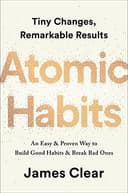
In his 2018 book *Atomic Habits*, James Clear synthesises decades of behavioural research into a practical framework for how habits actually form and break. At the heart of that framework is the habit loop: cue, craving, response, reward. The cue is the trigger that initiates the entire sequence. Without it, the loop never starts. This is not a metaphor, it is a neurological reality. Habitual behaviour is stored in the basal ganglia, a part of the brain that operates largely outside conscious awareness. Once a habit is formed, the brain is not waiting for you to *decide* to act; it is scanning the environment for the specific cue that says 'now is the time.' Remove the cue, and the behaviour disappears, not because of weak willpower, but because the trigger was never pulled.
The science behind cue-dependent behaviour stretches back well before Clear's popularisation of it. Psychologist Wendy Wood, whose research at Duke University and later USC spans more than two decades, has shown that approximately 43% of daily behaviours are performed habitually, meaning they are triggered by contextual cues rather than deliberate intention. Her work reveals that people do not skip the gym because they lack motivation; they skip it because they changed their commute route and the gym is no longer on the way. The cue vanished. The same mechanism governs your patients' attendance. When a patient is actively in a treatment plan, their visits are embedded in a web of environmental cues: a recurring calendar entry, a familiar parking spot, the habit of coming on Tuesday afternoons after work. These cues do the heavy lifting.
When a patient lapses, whether their acute pain resolves, their schedule shifts, or life simply gets busy, that entire cue structure dissolves. The calendar entry is gone. The Tuesday afternoon routine has been replaced by something else. Crucially, the patient has not made a conscious decision to stop caring for their health. Research on habit disruption consistently shows that behavioural discontinuity is most likely during 'life transitions', events like moving house, changing jobs, or recovering from illness, precisely because these events strip away the environmental architecture that sustained the habit. Your lapsed patient is not disengaged; they are uncued. That distinction matters enormously for how you respond.
This is where the concept of cue design becomes a clinical and commercial lever. Rather than waiting for patients to feel pain again (a reactive cue) or hoping they remember to book (an internal cue that rarely fires reliably), your practice can proactively reintroduce external cues into their environment. This is not manipulation, it is meeting patients where their brains actually operate. When a cue reappears in the right context, at the right time, associated with the right memory, the craving for the reward (feeling good, moving freely, being out of pain) can be reactivated. The habit loop can be restarted from the outside in.
The Research
One of the most compelling demonstrations of cue-dependent behaviour in a health context comes from research conducted by Bas Verplanken and Wendy Wood, published in the *Journal of Marketing Research* in 2006. Their work examined what happened to habitual behaviours when people relocated to a new home, a natural experiment in environmental disruption. They found that people who had recently moved were significantly more likely to change long-standing habits (including health-related ones) than people who had not moved, even when their attitudes and intentions remained the same. The disruption of the physical environment, the removal of spatial and temporal cues, was sufficient to break behaviours that had been sustained for years. Critically, the window immediately following a disruption was also a period of heightened receptivity to new cues, meaning people were more likely to adopt new habits when their old cue structure was gone.
The implication for allied health practices is direct: a patient whose treatment episode has ended has just experienced a cue disruption. Their regular visit rhythm has stopped, and the environmental anchors associated with attending your clinic have faded. But this also means they are in a state of relative openness, if you reintroduce a well-designed cue at the right moment, you are not fighting an established competing habit. You are filling a cue vacuum. The research suggests that the first eight to twelve weeks after lapsing represent the highest-value window for reengagement, before new routines are fully consolidated without your practice in them.
How to Apply This in Your Practice
The most powerful application of cue design for lapsed patients is temporal mirroring, sending communications that arrive at the exact day and time the patient used to attend. If your practice management software shows that a patient consistently attended on Thursday afternoons at 2:00 pm, an SMS sent on a Thursday at 1:45 pm carries a contextual weight that no Tuesday morning email ever could. The patient's brain, at that precise moment, may still carry a faint residue of the old cue. Your message lands in a neurologically primed moment. The copy should reflect this directly: *'Hey Sarah, it's Thursday at 2pm. You used to leave your Thursday sessions feeling great. Your lower back deserves that again. Book in: [link].'* That level of specificity is not gimmicky; it is behaviourally informed.
Beyond timing, cue design requires you to make the prompt as concrete and condition-specific as possible. Generic 'we miss you' messages function as weak cues because they carry no contextual specificity, the patient's brain has no established association to activate. Contrast that with a message that references their presenting complaint: *'It's been a while since we worked on your knee. Heading into the colder months, that kind of thing tends to flare up. We have availability this week, would you like to get ahead of it?'* This message reactivates the memory of discomfort, the memory of relief, and the specific identity of the therapeutic relationship. Each of those elements is a cue layer. The more layers, the stronger the pull.
At a workflow level, implementation requires segmenting your lapsed patient list by their previous appointment day, time, and presenting condition, data your practice management system almost certainly already holds. Build automated sequences that trigger at defined lapse intervals (six weeks, three months, six months) and personalise the send time to match each patient's historical attendance pattern. If your system cannot do this natively, a platform built for this purpose, one that understands allied health patient data specifically, can handle the logic for you. The goal is to make this feel less like a marketing email and more like a gentle, knowing nudge from someone who remembers them.
Finally, consider extending cue design beyond digital messages. A physical postcard sent to a patient's home address can serve as a powerful environmental cue precisely because it is unexpected and tangible, it exists in the patient's physical environment rather than their notification tray. Seasonal cues work particularly well here: a postcard in late May noting that winter is when lower back stiffness tends to worsen, paired with an easy booking option, can reactivate health-seeking behaviour that had gone dormant. The principle remains the same: introduce a cue that is specific, contextually relevant, and timed to a moment when the patient's need is likely to be active, even if they have not yet consciously registered it.
Get one behavioral science principle per week
Applied to patient retention. Backed by research. No fluff.
Seeing It in Action
Marcus is a 48-year-old secondary school teacher who attended a physiotherapy clinic in Brisbane for twelve sessions over four months, managing a recurring rotator cuff issue that was affecting his sleep and his ability to write on the whiteboard comfortably. He made strong progress, his sessions tapered, and his final appointment was a Wednesday at 5:30 pm, his usual slot after school. He left feeling capable and self-sufficient, was given a home exercise programme, and was told to 'come back if things flare up.' Six months passed. He did not rebook.
Using a behavioural reengagement workflow, the clinic identified Marcus as lapsed at the eight-week mark. Rather than sending a generic newsletter, the system queued a personalised SMS to be delivered on a Wednesday at 5:15 pm, mirroring his old appointment time. The message read: *'Hey Marcus, it's Wednesday at 5:15. You used to come in around now and your shoulder always thanked you for it. Winter's rough on old injuries. We have a Wednesday slot available this week if you'd like to check in. No pressure, just keeping the door open.'* The clinic's receptionist also added a brief personal note acknowledging the specific shoulder work they had done together.
Marcus received the message while sitting in the school car park, exactly where he used to check his phone before driving to the clinic. The temporal and contextual specificity was striking to him, he later told the practitioner it felt like the message 'read his mind.' He booked the following Wednesday. His shoulder had, in fact, been niggling for several weeks, but he had not prioritised it. The cue did not manufacture a need; it made an existing need visible at the precise moment he was neurologically primed to act on it. He went on to commit to a monthly maintenance plan.
Your Action Plan
- 1Audit your patient data to identify all patients who have lapsed beyond your defined threshold (typically 8-12 weeks), and extract their historical appointment day, time, and presenting condition from your practice management system.
- 2Segment your lapsed patient list by appointment day and time so that reengagement messages can be scheduled to arrive within 30 minutes of their former visit slot, this temporal mirroring is the core cue mechanism.
- 3Write condition-specific message templates for your most common presenting complaints (lower back pain, shoulder issues, knee rehabilitation, plantar fasciitis, etc.) so that every outbound message references something the patient personally experienced, not generic clinic language.
- 4Build a multi-touch sequence triggered at the 8-week, 12-week, and 6-month lapse points, using different channels (SMS, email, and optionally a physical mailer) to reintroduce cues across multiple environments without overwhelming the patient.
- 5Review reengagement rates quarterly and test variations in timing, message specificity, and channel, treating cue design as an iterative process rather than a set-and-forget campaign, refining based on which cue combinations produce the highest rebooking rates.
Key Takeaway
Your lapsed patients did not choose to stop coming, they lost the cues that made coming automatic, and your job is simply to give those cues back.
Related Principles
Make It Attractive (Temptation Bundling): Bundle Rewards to Make Rebooking Irresistible
Atomic Habits · James Clear
Pair a behavior you need to do with one you want to do. Link the less appealing action with something enjoyable.
Make It Easy (Two-Minute Rule and Friction Reduction): Lower the Barrier to Just One Session
Atomic Habits · James Clear
Scale down the desired behavior to something that takes two minutes or less. Reduce friction to near zero.
External and Internal Triggers: Rebuild the Trigger System for Lapsed Patients
Hooked · Nir Eyal
Habits start with external triggers (notifications, emails) but graduate to internal triggers (emotions, routines) once established. A lapsed patient has lost b
Variable Rewards: Keep Patients Engaged with Unpredictable Value
Hooked · Nir Eyal
Unpredictable rewards are more engaging than predictable ones (the slot machine effect). The brain's dopamine system responds most strongly to anticipation and