
Anchor to Existing Routines
Most lapsed patients don't stop caring about their health, they simply stop thinking about your clinic. The moment a patient walks out after their final discharge session, they re-enter a world of competing habits, routines, and priorities that have nothing to do with their recovery. The practices that win those patients back aren't the ones sending the most reminders; they're the ones clever enough to meet patients exactly where their daily life already is.
The Science Behind Anchor to Existing Routines
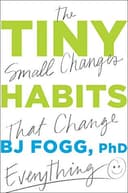
Routine anchoring, sometimes called 'habit stacking', is the behavioural science principle of attaching a new behaviour to an existing, well-established one. The formula, popularised by Stanford behaviour scientist BJ Fogg in his 2019 book *Tiny Habits*, is elegantly simple: 'After I [existing behaviour], I will [new behaviour].' The logic is that our brains are wired to conserve cognitive energy, so piggybacking a new action onto something we already do automatically dramatically reduces the mental friction required to perform it. The existing behaviour acts as a reliable cue, a trigger that fires without conscious effort, making the new behaviour far more likely to actually happen.
The psychology behind this principle is grounded in how habits are neurologically encoded. Neuroscientist Ann Graybiel's research at MIT demonstrated that habitual behaviours are stored in the basal ganglia as 'chunked' sequences, essentially, if A happens, B follows almost automatically. When you attach a new behaviour to an existing chunk, you're essentially borrowing the neurological momentum of the old habit. You're not asking the brain to create an entirely new circuit from scratch; you're extending a pathway that already has grooves worn into it. This is why 'exercise every day' fails so often, while 'after I make my morning coffee, I will do five minutes of mobility work' succeeds, the coffee ritual is already a deep, grooved habit that reliably fires every single day.
Fogg's research at Stanford's Behaviour Design Lab found that the single most reliable predictor of whether a tiny habit would stick was the quality of the anchor, how consistent, automatic, and emotionally neutral the existing behaviour was. The best anchors are daily, non-negotiable activities: making coffee, brushing teeth, getting into the car, or sitting down at a desk. These moments happen regardless of motivation levels, mood, or busyness, which makes them extraordinarily valuable as launching pads for health-related micro-behaviours. For allied health practitioners, this is a significant insight: patients' motivation to follow through on health behaviours fluctuates wildly, but their daily routines are far more stable.
Where this principle becomes especially powerful for patient retention is in the concept of 'mental presence'. Even when a patient is between appointments, or has lapsed entirely, a well-placed routine anchor keeps your clinic psychologically present in their daily life. Every time that anchor fires and the patient completes the micro-behaviour (a stretch, a posture check, a breathing exercise), they're reinforcing both a health habit and a mental association with your practice. Over weeks and months, this quiet, low-friction engagement creates a relationship with your clinic that persists long after the formal treatment plan has ended.
The Research
One of the most compelling real-world demonstrations of routine anchoring comes from Fogg's own Tiny Habits programme, which he began running as a structured five-day experiment with participants worldwide. Across thousands of participants, Fogg and his team tracked which habit-formation approaches led to lasting behaviour change. They found that participants who explicitly named an anchor, an existing routine to attach their new behaviour to, were significantly more likely to still be performing the habit 30 days later compared to those who set a general intention without a specific trigger. The critical finding was that the specificity of the anchor mattered enormously: vague anchors like 'in the morning' produced far weaker results than precise ones like 'after I pour my first coffee'. Precision reduced ambiguity, which reduced the cognitive load of deciding when to act.
This finding aligns with broader research on implementation intentions, studied extensively by psychologist Peter Gollwitzer. His meta-analyses across hundreds of studies found that forming a specific 'when-then' plan, essentially the same structure as Fogg's anchor formula, increased the likelihood of following through on a health behaviour by an average of two to three times compared to simply intending to do it. For allied health practices, this research has a clear implication: a message that says 'try to do your exercises this week' is behaviourally far weaker than one that says 'after you sit down with your morning coffee, do your three hip stretches, it takes less than two minutes'.
How to Apply This in Your Practice
The first step in applying routine anchoring to patient re-engagement is to audit the micro-behaviours your patients are already supposed to be doing between sessions, home exercise programmes, postural corrections, self-massage, breathing exercises, or footwear checks. These are the 'new behaviours' in Fogg's formula. Your job is to pair each one with a universally common anchor that doesn't require you to know each patient's personal schedule. Morning coffee or tea preparation, brushing teeth, sitting down at a desk to start work, and getting into the car are all excellent universal anchors because they occur at consistent times and are emotionally neutral, they're not skipped on bad days.
When crafting re-engagement messages for lapsed patients, build the anchor directly into the communication copy. Instead of sending a generic 'We haven't seen you in a while, book in today!' SMS or email, try something like: 'Hi [Name], it's been a few months since your last visit. Here's a 90-second check-in for you: after your next morning coffee, roll your shoulders back five times and notice whether your upper back feels tight. If it does, it might be worth a tune-up. Reply YES and we'll send you a booking link.' This message does three things at once, it provides a clear anchor ('after your next morning coffee'), a specific micro-behaviour ('roll your shoulders back five times'), and a low-friction call to action that doesn't require the patient to commit to anything large. The anchor keeps the health behaviour achievable; the self-assessment creates awareness of a potential need.
For patients who are actively in care but at risk of disengaging, you can build routine anchoring into your discharge planning conversations. Before a patient completes their episode of care, ask them directly: 'What's one thing you do every single morning without fail?' Then collaboratively build their home exercise or maintenance routine around that anchor. A podiatry patient who always makes a cup of tea after walking the dog could anchor their foot stretches to that moment. A chiro patient who always sits at their desk at 9am could anchor their thoracic extension exercise to the moment before they open their emails. When you co-create the anchor with the patient rather than assigning it to them, research on autonomy and self-determination theory suggests they are significantly more likely to follow through.
From a workflow perspective, you can systematise this approach within your patient communication platform. Segment lapsed patients by their original presenting condition and the micro-behaviour most relevant to them. Create a library of anchor-based message templates for each condition, lower back, shoulder, plantar fasciitis, neck pain, and so on, and schedule a sequence of two or three anchor-framed nudges at 30, 60, and 90 days post-discharge. Each message should introduce or reinforce one specific anchor-behaviour pairing, keep the health action under two minutes, and include a low-commitment pathway back to booking. Over time, this creates a systematic re-engagement infrastructure that operates on behavioural science principles rather than guesswork.
Get one behavioral science principle per week
Applied to patient retention. Backed by research. No fluff.
Seeing It in Action
Marcus is a 44-year-old project manager who completed a six-week course of treatment at a physio clinic in Brisbane for chronic lower back pain. He made excellent progress, was discharged with a home exercise programme, and genuinely intended to keep it up. But within three weeks, the exercises had quietly dropped off his radar, not because he stopped caring, but because 'do the exercises' sat on a vague mental to-do list that competed with work deadlines, family commitments, and the general noise of daily life. By the three-month mark, he was a lapsed patient with mild recurring tightness in his lower back and no particular reason to re-engage with the clinic.
The clinic's patient communication system flagged Marcus at the 90-day mark and automatically sent him a personalised anchor-based SMS: 'Hey Marcus, your lower back tends to tighten up when you're at your desk for long stretches. Try this: after you pour your first coffee tomorrow morning, do ten slow cat-cow stretches before you sit down, takes about 60 seconds. Let us know how it feels.' The message was specific, framed around an anchor he almost certainly used (morning coffee), and asked for nothing more than a 60-second action. Marcus did the stretch the next morning, felt an immediate sense of relief, and replied to the message saying his back had been playing up again. The clinic responded with a booking link and a note that a single tune-up session might be all he needed. He booked within 24 hours.
What made this re-engagement work wasn't a discount offer or an urgency tactic, it was behavioural design. By attaching a relevant health micro-behaviour to an existing daily anchor, the clinic re-entered Marcus's daily routine at essentially zero friction cost. The stretch itself created a moment of body awareness that made the latent problem conscious again, and that awareness created the motivation to act. Marcus has since returned twice more for maintenance sessions and refers to the clinic as 'the one that actually checks in on you properly'.
Your Action Plan
- 1Audit your most common home exercise and self-care recommendations by presenting condition (e.g., lower back stretches, shoulder mobility, foot exercises) and rewrite each one as an anchor-behaviour pair using the formula 'After I [universal anchor], I will [micro-behaviour under 2 minutes]'.
- 2Build anchor-based language into your discharge process, before a patient's final session ends, ask them to name one non-negotiable daily routine and collaboratively attach their maintenance behaviour to that specific moment.
- 3Create a library of condition-specific, anchor-framed SMS and email templates for lapsed patient re-engagement, ensuring each message names the anchor explicitly, describes the micro-behaviour precisely, and includes a low-commitment self-assessment or reply pathway.
- 4Configure your patient communication platform to automatically trigger anchor-based re-engagement messages at 30, 60, and 90 days post-discharge, segmented by presenting condition so the anchor-behaviour pairing is clinically relevant to each patient.
- 5Track re-engagement rates for anchor-framed messages versus your previous generic recall messages and use this data to refine your anchor choices, testing different universal triggers (morning coffee, brushing teeth, sitting at desk) to identify which produce the highest response rates in your patient population.
Key Takeaway
When you embed your clinic into a patient's existing daily routine, even as a 60-second micro-behaviour anchored to their morning coffee, you don't just support their health between appointments; you make your practice a permanent fixture in their life, long after the formal treatment plan has ended.
Related Principles
B=MAP (Behavior = Motivation x Ability x Prompt): Audit Your Rebooking Process for Three Missing Elements
Tiny Habits · BJ Fogg
For any behavior to occur, three elements must be present simultaneously: sufficient motivation, sufficient ability, and an effective prompt. If any one is miss
Start Tiny (The Minimum Viable Behavior): Reduce Rebooking to a Single 'Yes' Reply
Tiny Habits · BJ Fogg
Scale the target behavior down to its smallest possible version. Make it so easy that motivation is almost irrelevant.
External and Internal Triggers: Rebuild the Trigger System for Lapsed Patients
Hooked · Nir Eyal
Habits start with external triggers (notifications, emails) but graduate to internal triggers (emotions, routines) once established. A lapsed patient has lost b
Variable Rewards: Keep Patients Engaged with Unpredictable Value
Hooked · Nir Eyal
Unpredictable rewards are more engaging than predictable ones (the slot machine effect). The brain's dopamine system responds most strongly to anticipation and