
Variable Rewards

What if the reason your lapsed patients aren't coming back has nothing to do with their pain levels, your pricing, or even your competitors, but with how predictable your outreach feels? Research in behavioural neuroscience reveals that the human brain is wired to disengage from anything it can fully anticipate, and yet most allied health practices send the exact same 'time to rebook' SMS, month after month, wondering why open rates are falling and appointment books aren't filling.
The Science Behind Variable Rewards
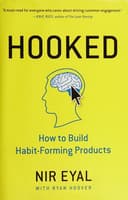
Variable reward is the behavioural science principle that explains why poker machines are more compelling than vending machines. A vending machine delivers a known outcome every time you press a button, you put in money, you get a drink. There's no suspense, no anticipation, and crucially, no dopamine spike. A poker machine, by contrast, delivers rewards unpredictably. Sometimes you win big, sometimes you win small, sometimes you win nothing at all. That unpredictability is not a bug in the design, it is the entire engine of engagement. Nir Eyal, in his 2014 book *Hooked: How to Build Habit-Forming Products*, identifies variable rewards as one of the four core elements of habit-forming loops, alongside triggers, investment, and action. The reward phase is where most businesses fail, because they default to consistency when they should be engineering surprise.
The neuroscience behind this is well-established. Research by Wolfram Schultz and colleagues in the 1990s demonstrated that dopamine neurons, long associated with pleasure, actually fire most intensely not when a reward is received, but when a reward is anticipated and its delivery is uncertain. In Schultz's primate studies, neurons that initially fired when a reward (fruit juice) was delivered began, after conditioning, to fire at the cue that predicted the reward. More significantly, when rewards were made unpredictable, dopamine activity increased further still. The brain, it turns out, is a prediction machine that becomes hyperactivated precisely when its predictions might be wrong.
This has profound implications for how patients respond to communications from your practice. When a patient receives the same SMS, 'Hi [Name], it's been a while since your last appointment, click here to rebook', three times in a row, their brain has already categorised it. It knows what the message is, what it's asking for, and it has already decided whether to act. The message requires no cognitive engagement, generates no anticipatory response, and earns no dopamine. It becomes invisible. This is not a technology problem or a timing problem. It is a variability problem.
Eyal distinguishes between three types of variable rewards: rewards of the tribe (social validation and connection), rewards of the hunt (resources and information), and rewards of the self (intrinsic satisfaction and personal mastery). For allied health practices, all three are available. A message that delivers unexpected social recognition ('You've completed 12 sessions, you're in the top 15% of our patients for consistency'), an educational resource the patient didn't know they needed, or a personalised video from their practitioner, each activates a different reward pathway. The key is that none of these should be predictable in their timing, format, or value, because predictability kills anticipation, and anticipation is what drives action.
The Research
The most foundational experimental evidence for variable rewards in human behaviour comes from the operant conditioning research of B.F. Skinner, whose work on reinforcement schedules in the mid-twentieth century demonstrated that variable ratio reinforcement, where rewards are delivered after an unpredictable number of responses, produces the highest and most persistent rates of behaviour. In his laboratory experiments, animals on variable ratio schedules pressed levers far more frequently and continued pressing long after rewards stopped, compared to animals receiving fixed, predictable rewards. Skinner's insight was that it wasn't the reward itself that drove behaviour, but the possibility of the reward.
More recently, Schultz's neuroimaging research extended this into human neuroscience, showing that the mesolimbic dopamine system, the brain's core reward circuit, shows greater activation during uncertain reward anticipation than during certain reward receipt. In studies using brain scanning, participants shown a 50% chance of receiving a reward showed greater nucleus accumbens activation than those guaranteed a reward of identical value. This finding reframed reward science: the brain doesn't simply want good things, it wants the chance of good things. For patient re-engagement, this means that a message which might contain something genuinely useful or surprising will be opened at a higher rate than one the patient already knows the purpose of before they've read it.
How to Apply This in Your Practice
The first step in applying variable rewards to patient re-engagement is to retire the single-format recall message. Instead of building one SMS or email template and sending it on a fixed schedule, build a library of at least five to seven distinct communication formats. These should vary in their medium (SMS, email, video message), their content (clinical, educational, celebratory, conversational), and their apparent purpose. A patient who never knows quite what they're going to receive from your practice will open every message with a small but genuine flicker of curiosity, and curiosity is the gateway to action.
Concretely, your message library might include: a personalised progress milestone ('Sarah, it's been six months since you first came in unable to walk up stairs without pain, we wanted to check in on how you're going'); a time-limited complimentary service offer ('We're offering free posture assessments this month for past patients, spaces are limited and we thought of you'); a short educational video from the treating practitioner demonstrating a new technique relevant to that patient's condition; a patient story or outcome piece that mirrors the patient's situation; and a simple, warm check-in with no call to action at all. That last format is particularly powerful, a message that asks nothing creates goodwill and, counterintuitively, increases the likelihood the patient will self-initiate a booking.
The sequencing of these formats should itself be variable rather than rotational. Avoid the temptation to set up a fixed drip sequence where message one is always educational, message two is always an offer, and message three is always a rebook prompt. Patients are pattern-recognition machines, and once they identify the pattern, the anticipatory response collapses. Instead, use a weighted randomisation approach in your practice management or CRM system: some message types appear more frequently than others (the rebook prompt is still important), but no patient should be able to predict what's coming next. Routiq's platform is designed to support exactly this kind of intelligent sequencing, drawing on patient history to ensure the right format reaches the right person at a moment of genuine relevance.
Finally, pay attention to the reward of the tribe, social belonging and recognition, which is chronically underused in allied health outreach. Patients have a deep psychological need to feel seen and acknowledged by the people who have helped them. A short video message from their physio or chiropractor, not a polished marketing video, but a genuine thirty-second clip saying 'I was thinking about you and wondering how your knee is tracking', delivers a reward of connection that no generic SMS can replicate. The unpredictability of receiving something that personal from a healthcare provider creates a memorable moment that dramatically increases both open rates and rebooking behaviour. The key is that patients should never know when one of these is coming.
Get one behavioral science principle per week
Applied to patient retention. Backed by research. No fluff.
Seeing It in Action
Marcus, a 44-year-old project manager, had been a regular patient at a chiropractic clinic in Brisbane for eighteen months, attending fortnightly for lower back management. After a busy period at work, he missed an appointment in March and then simply didn't rebook. The clinic's automated system sent him the standard recall SMS at the six-week mark: 'Hi Marcus, it's been a while since your last visit. Book online here.' He read it, thought 'I should do that,' and forgot about it within the hour. The same message arrived at twelve weeks. He didn't open it.
The clinic, having recently restructured its outreach approach around variable reward principles, sent Marcus something different at the sixteen-week mark: a short email with the subject line 'Something we put together for you' containing a sixty-second video from his treating chiropractor, Dr. Patel, demonstrating three desk-based mobility exercises specifically for the thoracic rotation issues Marcus had been working on. There was no rebook button. No urgency language. Just clinical value, delivered personally. Marcus watched the video twice, forwarded it to a colleague, and replied to the email to say he'd been meaning to get back in. He booked that afternoon.
What made the difference wasn't the content alone, it was the surprise of receiving something genuinely useful that he hadn't anticipated and couldn't have predicted. His brain's reward system engaged because the message defied his expectations. Over the following eight months, Marcus received a mix of educational content, a milestone message noting his two-year anniversary as a patient, and one further personalised video. He has since referred two colleagues to the clinic. The variable reward sequence didn't just re-engage a lapsed patient, it transformed a transactional relationship into a loyal one.
Your Action Plan
- 1Audit your current re-engagement communications and identify whether you are using a single repeated format, if so, document every message template and commit to expanding to a minimum of five distinct formats before your next outreach campaign.
- 2Build a variable reward message library that spans at least three categories: educational/clinical value (exercise videos, condition explainers), recognition/milestone messages (attendance streaks, progress reflections), and warm personal check-ins with no direct call to action.
- 3Record short, genuine video messages from your practitioners for your top five most common lapsed-patient profiles (e.g., post-acute back pain, post-natal recovery, sports injury) so you have personalised content ready to deploy unpredictably rather than on a fixed schedule.
- 4Configure your CRM or practice management platform to distribute message formats using weighted randomisation rather than a fixed sequence, ensuring no patient receives the same format twice in succession and that the rebook prompt never arrives at a predictable interval.
- 5Track open rates, reply rates, and rebooking conversions by message format over a 90-day period, then use that data to weight your highest-performing formats more heavily, but never eliminate the lower-frequency formats entirely, because their unpredictability is part of what makes the whole system work.
Key Takeaway
Your patients' brains are not ignoring your recall messages because they don't value your care, they're ignoring them because predictability has made those messages invisible, and the antidote is deliberate, strategic unpredictability that keeps every touchpoint feeling like it might be the one worth opening.
Related Principles
External and Internal Triggers: Rebuild the Trigger System for Lapsed Patients
Hooked · Nir Eyal
Habits start with external triggers (notifications, emails) but graduate to internal triggers (emotions, routines) once established. A lapsed patient has lost b
Reducing Action Barriers (Simplicity): Make Rebooking Effortless with One-Tap Links
Hooked · Nir Eyal
The easier an action is to perform, the more likely it is to happen. Fogg's principle: Behavior = Motivation x Ability x Prompt.
Make It Obvious (Cue Design): Reintroduce Cues to Restart the Appointment Habit
Atomic Habits · James Clear
Habits are triggered by cues. If the cue is invisible, the habit dies. Lapsed patients have lost the environmental and calendar cues that prompted their visits.
Make It Attractive (Temptation Bundling): Bundle Rewards to Make Rebooking Irresistible
Atomic Habits · James Clear
Pair a behavior you need to do with one you want to do. Link the less appealing action with something enjoyable.