
Celebration and Positive Emotion

Most allied health practices send a booking confirmation that reads like a tax receipt, date, time, location, done. Yet behavioral science tells us that the moment after a patient books is one of the most neurologically potent opportunities you will ever have to make that behaviour stick permanently. Miss it, and you're leaving patient retention to chance.
The Science Behind Celebration and Positive Emotion
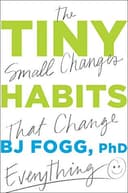
Celebration and positive emotion, as articulated by Stanford behavioral scientist BJ Fogg in his landmark 2019 book *Tiny Habits*, is built on a deceptively simple premise: the brain encodes behaviours as habits not through repetition alone, but through the emotional signal that follows them. Fogg calls this the 'shine', a genuine feeling of success that fires immediately after a behaviour occurs. When that emotional reward lands in the right moment, the brain's reward circuitry marks the behaviour as worth repeating. Repetition without positive emotion, Fogg argues, is just practice. Repetition with it is habit formation.
The neuroscience underneath this is well-established. When we experience positive emotion, the brain releases dopamine, a neurotransmitter that doesn't just feel good, but actively strengthens the synaptic connections associated with whatever we just did. Fogg draws on this research to explain why celebration must be immediate and genuine, not delayed or performative. A reward that arrives hours later (say, feeling better after a week of physio exercises) does almost nothing to wire in the preceding behaviour. The emotional signal must arrive within seconds of the action for the neural encoding to occur. This is why Fogg says, bluntly, that 'emotions create habits, not repetition.'
What makes Fogg's framework particularly powerful for healthcare contexts is that the behaviours we most want patients to repeat, booking appointments, completing exercise programs, returning for follow-ups, are exactly the kind of low-urgency, easy-to-defer actions that never develop into automatic habits without deliberate emotional reinforcement. Patients don't feel an immediate, visceral reward from booking a physio appointment the way they do from, say, eating a piece of chocolate. That emotional gap is what causes lapsed patient rates to climb. Your job, according to Fogg, is to engineer that positive emotion artificially but authentically, to create the 'shine' that the behaviour wouldn't naturally generate on its own.
Critically, Fogg distinguishes between celebration that feels real and celebration that feels hollow. Patients can sense the difference between a warm, human acknowledgement and a corporate auto-reply dressed up with an exclamation mark. The emotional reward only works when it lands as genuine. This means the language, timing, and specificity of your celebration moments all matter enormously, and they must be calibrated to the patient's actual journey, not just sprayed generically across your communications.
The Research
The most instructive experimental demonstration of this principle comes from Fogg's own Tiny Habits method, which he has tested with over 40,000 participants across multiple years of research at Stanford's Behavior Design Lab. In his structured program, participants were guided to attach a tiny target behaviour to an existing anchor habit, and then, critically, immediately celebrate upon completing it with a physical or verbal gesture of their choosing (a fist pump, saying 'yes!', or even a mental 'I'm awesome'). Fogg tracked habit formation rates and compared them against control approaches that used repetition and intention-setting alone. The results were striking: participants who celebrated immediately after performing a behaviour reported dramatically higher rates of the behaviour becoming automatic, and qualitatively described the new habits as feeling 'natural' and 'part of who I am' far sooner than those who did not celebrate. Fogg's conclusion was that the celebration, not the repetition, was the active ingredient in habit formation, a finding that inverts most people's intuitions about how habits are built.
How to Apply This in Your Practice
The rebooking journey in an allied health practice contains at least five distinct moments where positive emotion can be deliberately engineered, and most practices are leaving all five untouched. The first and most important is the confirmation message. Rather than sending 'Your appointment is confirmed for Tuesday 14th at 10am,' reframe the communication around the patient's identity and progress: 'Brilliant, you're booked in. Your body is going to thank you for this one.' This isn't empty cheerfulness; it's a calculated emotional signal timed to arrive immediately after the booking behaviour, encoding that behaviour as rewarding in the patient's brain.
The second major opportunity is the post-appointment touchpoint. Most practices send nothing after a session, or at best a generic 'hope to see you soon.' Instead, send a specific, progress-framed message within an hour of the appointment ending: 'Great session today, [Name]. You've completed three of your recommended five sessions, you're genuinely on track.' The specificity here is not cosmetic. Fogg's research shows that vague praise ('well done!') produces a much weaker emotional response than concrete, personalised acknowledgement that connects the behaviour to a meaningful outcome. Progress metrics, 'you're 60% through your recovery plan', borrow additionally from Endowment Effect psychology, making the patient feel they have something worth protecting.
For lapsed patients specifically, those who haven't visited in 90 days or more, the celebration principle must be applied even before the rebooking occurs. Your re-engagement message should celebrate the patient's past behaviour, not guilt them about their absence. Compare 'We noticed you haven't booked in a while' (which triggers shame, a negative emotion that inhibits action) with 'You made real progress during your last treatment block, your consistency was genuinely impressive. Ready to pick up where you left off?' The second message generates a flash of positive emotion associated with the idea of returning, making the booking action feel rewarding before it even happens.
To implement this systematically, map every patient communication touchpoint and ask one question: does this message create positive emotion immediately after the patient takes an action, or does it simply convey information? Audit your booking confirmation, appointment reminder, post-appointment follow-up, discharge summary, and re-engagement SMS or email. Rewrite each one through the lens of celebration. Use your practice management software or a CRM tool like Routiq to automate the timing, the emotional signal is only effective if it arrives within minutes of the behaviour, not the next morning when a staff member gets around to it.
Get one behavioral science principle per week
Applied to patient retention. Backed by research. No fluff.
Seeing It in Action
Sarah, a 38-year-old primary school teacher, had completed four sessions of osteopathic treatment for chronic lower back pain at a Melbourne clinic earlier in the year. After her fourth appointment, she felt significantly better, which, ironically, was exactly why she stopped coming back. Without an acute pain trigger, booking the next appointment kept slipping down her to-do list. By the time three months had passed, she had essentially lapsed, and the clinic's standard process involved no outreach at all.
The clinic implemented a Routiq-powered re-engagement sequence built around celebration triggers. Sarah received an SMS that read: 'Hi Sarah, you put in some great work during your treatment block earlier this year. Your practitioner Ben has a couple of spots opening up next week and thought of you specifically. Fancy picking up where you left off? Your lower back will be glad you did.' The message took thirty seconds to read and generated immediate positive emotion, it reminded Sarah of her past success, made her feel seen as an individual rather than a number, and framed the rebooking as a reward rather than a chore. She booked within forty minutes.
After her return appointment, an automated message arrived within the hour: 'Great to have you back, Sarah! Ben says today's session went really well, you've clearly maintained a lot of the progress from earlier. You're on track.' That single message, timed precisely to the moment after her behaviour, was the emotional encoding event that transformed a one-off return visit into a resumed course of treatment. Sarah completed three further sessions and has since maintained a quarterly maintenance schedule, not because the clinic nagged her, but because returning to the clinic now carries a genuine feeling of accomplishment and recognition that her brain has learned to anticipate.
Your Action Plan
- 1Audit every automated patient communication your practice currently sends, confirmation, reminder, post-appointment, and re-engagement messages, and identify which ones (if any) create immediate positive emotion after a patient action, rather than simply conveying logistical information.
- 2Rewrite your booking confirmation message to celebrate the decision just made, using warm, specific, human language: 'Brilliant, you're locked in. Your body is going to thank you for making time for this.'
- 3Build an automated post-appointment SMS or email that fires within 60 minutes of a session ending, referencing the patient's specific progress (session number, percentage through their plan, or a practitioner note) to create a concrete, personalised feeling of achievement.
- 4Redesign your lapsed patient re-engagement sequence to lead with celebration of past behaviour rather than acknowledgement of absence, reference what the patient accomplished previously, and frame the return as a continuation of their success story rather than a correction of a mistake.
- 5Set a 90-day review in your practice calendar to measure re-engagement rates before and after implementing celebration-based messaging, and use that data to refine the language, timing, and personalisation of each trigger point.
Key Takeaway
In allied health patient retention, information informs but emotion encodes, and the practice that learns to engineer genuine positive emotion at every step of the patient journey is the practice whose patients actually come back.
Related Principles
B=MAP (Behavior = Motivation x Ability x Prompt): Audit Your Rebooking Process for Three Missing Elements
Tiny Habits · BJ Fogg
For any behavior to occur, three elements must be present simultaneously: sufficient motivation, sufficient ability, and an effective prompt. If any one is miss
Start Tiny (The Minimum Viable Behavior): Reduce Rebooking to a Single 'Yes' Reply
Tiny Habits · BJ Fogg
Scale the target behavior down to its smallest possible version. Make it so easy that motivation is almost irrelevant.
External and Internal Triggers: Rebuild the Trigger System for Lapsed Patients
Hooked · Nir Eyal
Habits start with external triggers (notifications, emails) but graduate to internal triggers (emotions, routines) once established. A lapsed patient has lost b
Variable Rewards: Keep Patients Engaged with Unpredictable Value
Hooked · Nir Eyal
Unpredictable rewards are more engaging than predictable ones (the slot machine effect). The brain's dopamine system responds most strongly to anticipation and