
The Celery Test (Consistency Filter)

Every week, your clinic sends out messages to lapsed patients, some warm and care-focused, others dangling a discount like a fishing lure. You think you're being strategic. Your patients think you're confused. When your communication lacks a consistent core purpose, patients don't just disengage, they quietly lose trust in who you are.
The Science Behind The Celery Test (Consistency Filter)
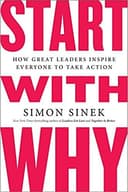
The Celery Test comes from Simon Sinek's landmark 2009 book *Start with Why*, and it's a deceptively simple filter for organisational decision-making. Sinek's central argument is that most businesses communicate from the outside in, they lead with *what* they do, then *how* they do it, and rarely articulate *why* they exist. Great organisations, he argues, reverse this. They start with purpose, and every decision they make, every product, every message, every hire, flows from that core belief.
The Celery Test is his metaphor for this consistency principle. Picture yourself at a health food party where well-meaning guests suggest all sorts of things: gluten-free, paleo, vegan, carnivore. If your stated 'Why' is optimal health, you don't go home and buy a little of everything. You go to the supermarket and buy celery, because *that's* what's consistent with your purpose. The test isn't about what's popular or what's on sale. It's about filtering every choice through your core belief, so that your actions always reflect who you say you are.
The psychological mechanism underneath this principle is what researchers call *self-consistency theory*, first articulated by Abraham Tesser and later developed through identity-based research. Humans are exquisitely sensitive to incongruence. When an organisation's behaviour doesn't match its stated values, it triggers what Leon Festinger famously called *cognitive dissonance* in patients or customers, a kind of low-grade psychological discomfort that erodes trust without people being able to name exactly why. They just get a feeling that something's off. In healthcare, where trust is the foundation of the therapeutic relationship, that feeling is lethal to retention.
Sinek's framework has been widely validated in brand and organisational research. Studies in consumer psychology consistently show that perceived brand authenticity, the degree to which an organisation's actions match its stated values, is a stronger predictor of loyalty and advocacy than price, convenience, or even clinical outcomes. When patients feel that your communications come from a place of genuine care rather than commercial self-interest, they are significantly more likely to re-engage, refer others, and view their care as meaningful rather than transactional.
The Research
One of the most cited demonstrations of consistency's power in persuasion research comes from Jonathan Freedman and Scott Fraser's 1966 'foot-in-the-door' studies at Stanford, which examined how small, consistent commitments build a coherent self-image that people then feel compelled to honour. However, the most directly relevant real-world evidence for Sinek's Celery Test principle comes from research on brand authenticity. A landmark study by Beverland and Farrelly (2010), published in the *Journal of Consumer Research*, examined why consumers described certain brands as 'authentic' and found that consistency between stated values and observable behaviour was the primary driver, more important than heritage, craft, or even quality signals. Participants in the study could quickly identify when a brand's promotional behaviour contradicted its stated purpose, and this incongruence significantly reduced purchase intent and willingness to recommend. For service businesses like allied health clinics, where patients interact with communications repeatedly over months or years, this incongruence compounds, each mismatched message chips away at the foundation of perceived authenticity until patients simply stop responding altogether.
How to Apply This in Your Practice
The first step in applying the Celery Test to your re-engagement strategy is to articulate your clinic's 'Why' with genuine specificity. Not 'we provide quality healthcare', that's the equivalent of buying everything at the supermarket. Something like: 'We exist because we believe people shouldn't have to live with pain that limits what they love doing.' Once that's written down and agreed upon by your team, it becomes the filter through which every re-engagement touchpoint must pass. Ask yourself: does this message feel like it comes from a practice that genuinely believes in that purpose, or does it feel like it comes from a business chasing revenue?
The most common failure mode in allied health re-engagement is alternating between two entirely different voices. One week you send a message that says, 'Hi Sarah, we've been thinking about you, how's that knee holding up since your last session?' The next week you send: 'FLASH SALE, 20% off your next appointment, this week only!' These two messages don't come from the same 'Why.' The first sounds like a clinician who cares. The second sounds like a retailer clearing stock. Even if patients can't consciously articulate the inconsistency, they feel it, and it undermines the credibility of every care-based message you ever send. The Celery Test demands you choose one lane and stay in it.
If your 'Why' is genuinely patient wellbeing, then even your promotional communications need to be reframed through that lens. Instead of 'Book this week and save 20%,' try: 'We noticed it's been a while since your last visit. Research shows that the benefits of your treatment can diminish after eight weeks without follow-up, we'd love to help you maintain the progress you worked so hard for. We've kept a spot open for you.' This message is still driving a booking. But it's doing so from a place of clinical concern rather than commercial urgency. It passes the Celery Test. The offer, if you include one, becomes a gesture of care rather than a discount mechanism, 'To make it easier to come back, we're waiving the gap fee for returning patients this month.'
At the workflow level, this means building a communication framework, not just templates, that begins with your 'Why' statement and works outward. Every SMS, every email, every recall script your front desk uses should be reviewed against that statement before it goes out. If you're using a platform to automate re-engagement sequences, audit those sequences the same way. Ask: if a patient received only these messages and nothing else, would they come away believing this clinic genuinely cares about their health? If the answer is yes, you've passed the Celery Test. If the answer is 'maybe, but that discount one feels a bit off,' revise until every touchpoint is coherent with your purpose.
Get one behavioral science principle per week
Applied to patient retention. Backed by research. No fluff.
Seeing It in Action
Consider the case of Northside Osteopathy, a three-practitioner clinic in Brisbane that had been running a standard recall system for two years. Their re-engagement sequence included a warm 'we miss you' SMS at the 60-day mark, followed by a 15% discount offer at 90 days, and a 'last chance' urgency message at 120 days. On paper, it looked like a sensible funnel. In practice, their re-engagement rate had plateaued at around 11%, well below the industry benchmark, and they were getting occasional patient complaints that the discount messages felt 'pushy.'
When the practice principal, a senior osteopath named Daniel, sat down to audit the sequence through the lens of his clinic's stated purpose, 'helping people stay mobile and active so they can show up fully in their lives', he immediately saw the problem. The 15% discount message had nothing to do with mobility or showing up fully. It was a retail tactic wearing a healthcare costume. He rewrote the entire sequence so that every message connected back to that purpose. The 90-day message became: 'Daniel here from Northside. It's been about three months since your last visit, and I wanted to check in, how are you managing with your lower back day to day? Patients often find that without maintenance care, old patterns start creeping back in. If you're noticing that, we'd love to see you before it becomes a bigger issue.' No discount. No urgency. Just a clinical concern framed in human language.
Within two months, their re-engagement rate climbed to 19%. More importantly, Daniel reported that the nature of the re-engagement conversations had changed, patients were calling back and describing specific symptoms or concerns, rather than just booking because of the discount and cancelling later. The consistency of purpose had rebuilt something that the discount approach had been quietly eroding: the patients' belief that the clinic actually gave a damn about them.
Your Action Plan
- 1Write your clinic's 'Why' statement in one or two sentences, not what you do, but *why* you exist. Be specific enough that it could only describe your clinic, not every allied health practice in the country.
- 2Audit every existing re-engagement message, SMS template, email sequence, and recall script against that 'Why' statement. For each one, ask: does this feel like it comes from a clinician who genuinely believes our purpose, or does it feel commercial and transactional?
- 3Identify and remove or rewrite any touchpoints that fail the Celery Test, particularly discount-driven or urgency-based messages that contradict a care-focused 'Why'. If you need to include an offer, reframe it as a gesture of care ('we've made it easier for you to come back') rather than a promotional mechanism.
- 4Create a one-page 'communication filter' document for your team that lists your 'Why' statement at the top, followed by three to five criteria that any outbound patient message must meet before it's sent. Make this part of your onboarding for new admin staff.
- 5Review your automated re-engagement sequences quarterly and run each message through the Celery Test again, business pressures have a way of creeping discount-driven logic back into care-focused systems over time.
Key Takeaway
When every message your practice sends, including the re-engagement ones, is filtered through a single, genuine 'Why,' patients don't just come back; they come back trusting you, and that trust is the foundation of retention that no discount can buy.
Related Principles
Start with Why (Purpose-Driven Communication): Lead with Purpose, Not Appointment Details
Start with Why · Simon Sinek
Most organizations communicate from the outside in (what > how > why). Inspiring organizations communicate from the inside out (why > how > what).
The Golden Circle and Emotional Decision-Making: Hook Emotions First, Then Offer the Logistics
Start with Why · Simon Sinek
The "Why" maps to the limbic brain (emotions, decisions, loyalty). The "What" maps to the neocortex (rational analysis). People make decisions emotionally and j
Scarcity: Use Limited Availability to Drive Appointment Urgency
Influence · Robert B. Cialdini
People assign more value to opportunities that are limited in availability. Fear of missing out drives action.
The Decoy Effect (Asymmetric Dominance): Structure Pricing to Guide Patient Commitment
Predictably Irrational · Dan Ariely
When choosing between two options, adding a third "decoy" option that is clearly inferior to one of them makes the superior option far more attractive.