
The Golden Rule of Habit Change
A patient completes their six-week shoulder rehabilitation program, thanks you sincerely, and walks out the door, and you never see them again. Three months later, they're back to hunching over their laptop, the mobility gains quietly eroding. They haven't stopped wanting to feel good. They've simply found a different, easier routine to tell themselves is 'good enough.' Understanding why that happens, and how to reverse it, is one of the most commercially valuable things a practice owner can learn.
The Science Behind The Golden Rule of Habit Change
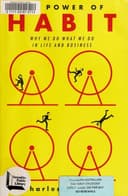
At the heart of Charles Duhigg's 2012 bestseller 'The Power of Habit' sits a deceptively simple framework: every habit is built from three components, a cue, a routine, and a reward. The cue is a trigger (a time of day, an emotional state, a physical sensation). The routine is the behaviour you perform in response. The reward is what your brain receives for completing it. Together, these three elements form what Duhigg calls 'the habit loop,' and the brain encodes this loop deep in the basal ganglia, a region associated with automatic behaviour rather than conscious decision-making. This is why habits feel effortless, they bypass the deliberate, energy-intensive prefrontal cortex entirely.
The Golden Rule of Habit Change emerges from a critical insight: you cannot simply delete a habit loop. The neurological pathway, once formed, remains. What you can do, what all successful behaviour change is built on, is substitute the routine while keeping the cue and the reward intact. The craving that drives the loop doesn't disappear; it just needs a different vehicle to satisfaction. This finding is supported by decades of research in behavioural psychology and neuroscience. Studies on addiction recovery, for instance, consistently show that abstinence-only approaches have significantly higher relapse rates than substitution-based approaches, precisely because the underlying craving (the reward the brain is seeking) goes unaddressed.
Duhigg drew heavily on research from MIT's Ann Graybiel, whose laboratory work in the 1990s and 2000s mapped how habits are encoded in the basal ganglia of rats and, by extension, humans. Graybiel's team demonstrated that as a behaviour becomes habitual, the brain's activity actually decreases, the routine becomes automatic and requires minimal cognitive resources. The implication is profound: a lapsed patient who used to attend fortnightly physiotherapy hasn't 'forgotten' the value of treatment. Their brain has simply automated a different routine in response to the same cue (discomfort, stiffness, a rough week at work), typically something lower-effort like stretching at home, taking an over-the-counter anti-inflammatory, or simply ignoring the sensation and hoping it resolves.
For allied health practitioners, this reframes the entire challenge of patient retention. The question is not 'How do we remind people we exist?' but rather 'What routine has replaced clinic attendance, and how do we demonstrate that our routine delivers the same reward more effectively?' This shift in thinking, from broadcasting your services to understanding your patient's existing habit loop, is what separates re-engagement campaigns that convert from those that get ignored.
The Research
One of the most compelling real-world demonstrations of the Golden Rule comes from research Duhigg describes involving Alcoholics Anonymous, an organisation that, despite having no formal grounding in neuroscience, has applied habit substitution more systematically than almost any other behaviour-change programme in history. Researchers who studied AA's mechanisms found that its effectiveness was not primarily social accountability or spiritual commitment, as commonly assumed. Instead, AA works because it provides a direct substitution: when the cue (stress, loneliness, a difficult emotion) fires and the craving for relief emerges, AA replaces the routine of drinking with the routine of attending a meeting or calling a sponsor, an activity that delivers genuine neurological reward through social connection and narrative sharing. The reward changes slightly in texture but satisfies the same underlying craving.
What makes this finding directly applicable to your practice is the specificity of the mechanism. Studies examining AA participants who relapsed versus those who maintained sobriety found that relapse was most likely during high-stress periods when no substitute routine was available, in other words, when the cue fired but the new routine wasn't accessible. The lesson for allied health is concrete: a lapsed patient who relapses into self-management does so not because they no longer value professional care, but because in the moment the cue fires (a flare-up at 9pm, a stiff morning before a busy workday), the substitute routine, doing a few stretches, taking a painkiller, is simply more accessible than booking an appointment. Your re-engagement strategy must address that accessibility gap.
How to Apply This in Your Practice
The first step in applying the Golden Rule to patient re-engagement is diagnosing which substitute routine your lapsed patient has adopted. This matters because your re-engagement message needs to acknowledge that routine rather than ignore it. Patients who feel their self-management efforts are being dismissed will disengage. A message that opens with empathy toward the substitute routine, 'We know a lot of our patients manage well at home between appointments', creates far more receptivity than one that leads with urgency or guilt. Once you've established that acknowledgement, you can introduce the repositioning: clinic visits are not a replacement for what they're already doing, they're the superior path to the same reward they've been chasing.
In practical terms, this means your re-engagement communications, whether SMS, email, or a personal phone call, should be structured around the reward, not the routine. Instead of 'It's been a while since your last appointment, book now,' try something like: 'A lot of patients tell us they've been keeping up with their exercises at home, which is fantastic. The research on your type of injury suggests that home exercise addresses around 40% of what's happening in the tissue. A hands-on session gets to the rest. When you're ready to feel the difference, we're here.' This message does several things simultaneously: it validates the substitute routine (home exercises), it introduces a credible gap (the 40% framing), and it positions the clinic visit as delivering the same reward, feeling better, more completely.
For workflow implementation, segment your lapsed patient database by the nature of their original presentation. Patients who came in for acute pain management have a different cue-reward structure than those who came for performance optimisation or preventative care. An acute pain patient's cue is likely a physical sensation; their reward is relief. A performance-focused patient's cue might be a training plateau or competitive goal; their reward is capability. Tailor your substitute-routine acknowledgement accordingly. Your practice management software should allow you to filter by presenting complaint, and platforms like Routiq can automate the delivery of segmented re-engagement sequences timed to when lapsed behaviour is most likely to have set in, typically six to twelve weeks post-discharge.
Finally, consider how you can reduce the friction of the new routine at the exact moment the cue fires. Research on behaviour change consistently shows that reducing the number of steps required to perform a desired behaviour dramatically increases uptake. If a patient's cue is morning stiffness and your clinic opens at 8am, make sure your booking link goes directly to available early-morning appointments rather than a general calendar. If their cue is post-work pain, an SMS that arrives at 5:30pm with a single-tap booking option is far more likely to convert than an email they'll read tomorrow morning when the craving has subsided.
Get one behavioral science principle per week
Applied to patient retention. Backed by research. No fluff.
Seeing It in Action
Marcus is a 44-year-old project manager who completed an eight-week treatment programme at a Melbourne osteopathy clinic for chronic lower back pain stemming from long hours at a desk. At discharge, his pain scores had dropped significantly, and his practitioner had given him a personalised exercise programme to maintain his results. Four months later, Marcus hadn't returned. The clinic's records showed no follow-up bookings, no cancellations, just silence. He hadn't left a bad review. He wasn't unhappy. He'd simply stopped coming.
When the clinic's practice manager reviewed Marcus's file as part of a lapsed patient re-engagement campaign, she noted his original presentation (postural lower back pain, aggravated by sedentary work) and made an educated inference: Marcus had probably defaulted to his exercise sheet and perhaps some strategic standing breaks at his desk, a perfectly reasonable substitute routine. Rather than sending a generic 'We miss you, book now' SMS, she sent a personalised message that read: 'Hi Marcus, it's been a few months since we worked together on your back. If you've been keeping up with the exercises, that's great, they're genuinely useful. That said, desk posture tends to load the lumbar differently than exercises address. A 30-minute check-in session can often reset things before they become an issue again. Happy to hold a spot for you, just reply YES and we'll confirm a time.' The message acknowledged his likely substitute routine, identified a specific gap it left unaddressed, and made the next step almost frictionless.
Marcus replied within two hours. At his appointment, he admitted he'd been doing his exercises 'most days' but had noticed the stiffness creeping back over the past few weeks, a cue he'd been ignoring. The practitioner reframed the maintenance appointment not as treatment, but as a routine check-in that would make his home exercises more effective, essentially repositioning clinic attendance as complementary to, rather than competitive with, his established substitute routine. Marcus booked a follow-up four weeks later. His reactivation wasn't the result of a discount, a fear-based message, or a hard sell. It was the result of a message that understood his habit loop and offered a better path to the reward he was already seeking.
Your Action Plan
- 1Audit your lapsed patient database and segment by original presenting complaint, acute pain, chronic condition, performance, or preventative care, because each group has a different cue-reward structure driving their absence.
- 2For each segment, identify the most likely substitute routine your patients have adopted (home exercises, self-medication, inactivity, or alternative therapies) and craft re-engagement messages that explicitly acknowledge that routine before repositioning your service.
- 3Rewrite your re-engagement message templates to lead with the reward your patients originally sought (pain relief, mobility, energy, performance), not with the appointment itself, the routine is the means, not the message.
- 4Reduce friction at the exact moment the cue is most likely to fire, schedule SMS re-engagement messages at times aligned with your patient's likely pain or stress triggers (e.g., early morning for chronic pain patients, late afternoon for desk workers) and include a single-step booking link.
- 5At the reactivation appointment, explicitly reframe ongoing attendance as a habit loop by helping the patient identify their personal cue, establish clinic visits (or a structured hybrid of clinic and home care) as the routine, and celebrate the reward clearly, so the new loop is consciously reinforced before they leave.
Key Takeaway
Your lapsed patients didn't stop wanting to feel better, they found an easier routine to chase that reward, and your re-engagement job is simply to prove that your routine gets them there faster and more completely than whatever they've been doing instead.
Related Principles
The Habit Loop (Cue-Routine-Reward): Design the Patient Journey as an Automatic Loop
The Power of Habit · Charles Duhigg
Every habit operates on an automatic loop: a cue triggers a routine, which delivers a reward. Once established, habits run on autopilot without conscious though
Craving Drives the Loop: Reignite the Craving for Post-Session Relief
The Power of Habit · Charles Duhigg
Habits stick because we develop cravings for the reward. Without craving, the loop weakens and breaks.
External and Internal Triggers: Rebuild the Trigger System for Lapsed Patients
Hooked · Nir Eyal
Habits start with external triggers (notifications, emails) but graduate to internal triggers (emotions, routines) once established. A lapsed patient has lost b
Variable Rewards: Keep Patients Engaged with Unpredictable Value
Hooked · Nir Eyal
Unpredictable rewards are more engaging than predictable ones (the slot machine effect). The brain's dopamine system responds most strongly to anticipation and