
The Habit Loop (Cue-Routine-Reward)
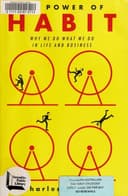
Every week, dozens of patients who genuinely benefited from your care simply stop coming back, not because they recovered, not because they were unhappy, but because the habit broke. Charles Duhigg's landmark research into human behaviour reveals a confronting truth: most of what people do each day isn't driven by conscious decision-making, but by automatic loops running quietly in the background. Understanding how those loops work is the single most practical thing a physio, chiro, or osteo practice owner can do to stop the patient dropout cycle for good.
The Science Behind The Habit Loop (Cue-Routine-Reward)
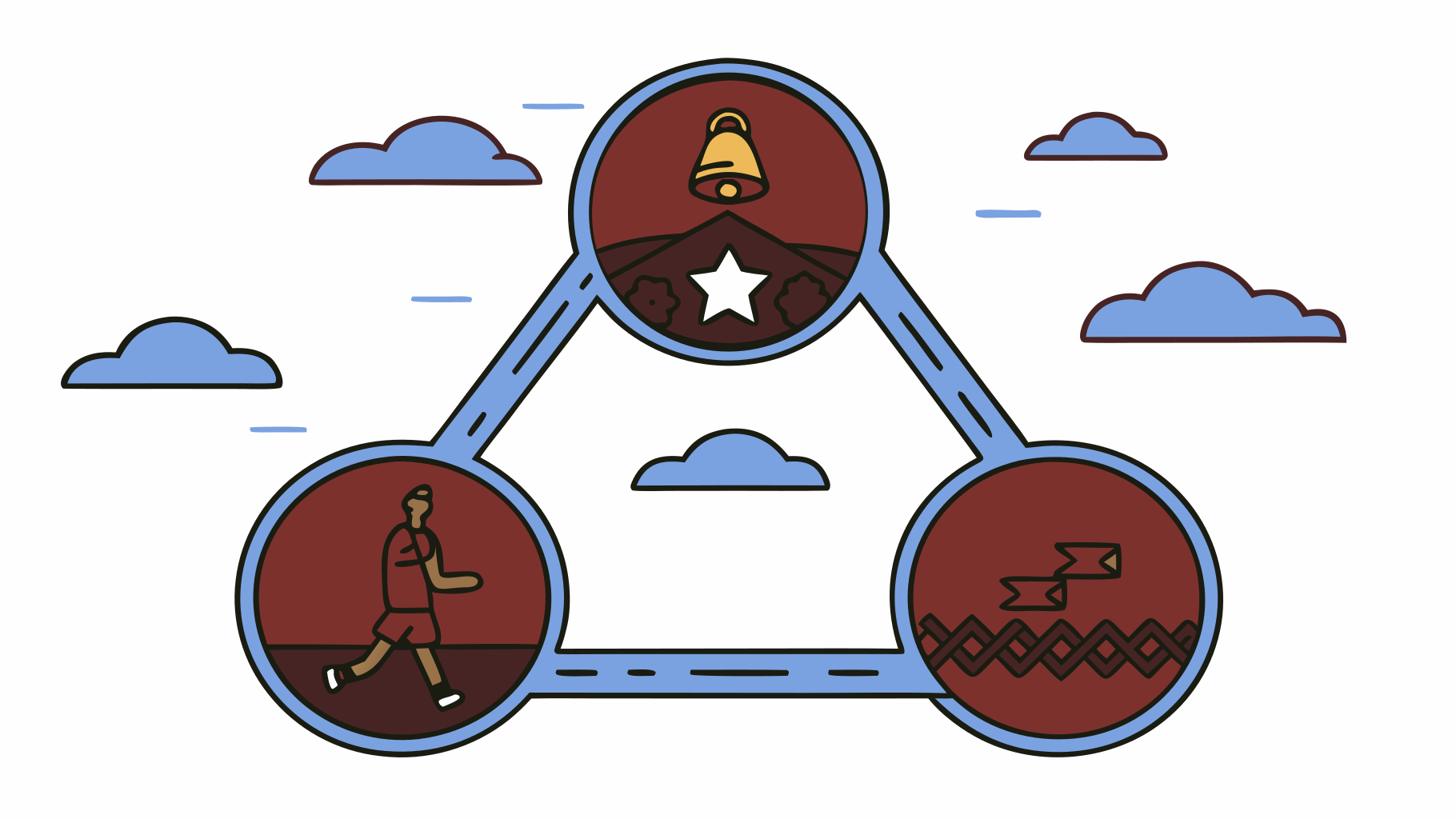
At the heart of Charles Duhigg's 2012 bestseller 'The Power of Habit' is a deceptively simple model called the Habit Loop. Every habitual behaviour, from brushing your teeth to attending a weekly appointment, operates on a three-part cycle: a cue that triggers the behaviour, a routine that executes it, and a reward that reinforces it. Over time, this loop becomes encoded in the basal ganglia, the part of the brain responsible for procedural memory and automatic behaviour. Once a habit is formed, the brain essentially outsources that behaviour, running it with minimal conscious effort.
The neuroscience behind this is well established. Research from the Massachusetts Institute of Technology, including studies by Ann Graybiel's lab, demonstrated that as rats learned to navigate a maze for a chocolate reward, their brain activity initially spiked throughout the entire experience. But as the behaviour became habitual, neural activity collapsed, spiking only at the cue (a click signalling the maze was open) and at the reward (finding the chocolate). The middle portion, the routine itself, became automatic. This chunking of behaviour is how habits conserve cognitive energy, and it's why habits are so durable once formed, and so fragile when disrupted.
For allied health practices, this has enormous implications. When a patient attends regularly, say, every Tuesday at 5:30pm for six weeks, they are not making a fresh decision each week. The calendar notification becomes the cue, driving to the clinic is the routine, and the feeling of reduced pain or improved mobility is the reward. The loop runs almost on autopilot. But when that loop is broken, by a holiday, an illness, or even a busy period at work, the automaticity disappears. The patient is suddenly back to square one, requiring conscious motivation to rebook. And conscious motivation, research consistently shows, is unreliable.
What makes Duhigg's framework particularly powerful for practice operators is the concept of the 'craving.' Between the cue and the routine, the brain begins anticipating the reward, generating a craving that drives the behaviour forward. Studies suggest it is this anticipatory craving, not willpower, that sustains habits. This means that re-engaging a lapsed patient isn't just about reminding them to book, it's about reigniting that craving. Your re-engagement strategy must deliberately reconstruct all three elements of the loop, not just send a generic 'we miss you' message.
The Research
One of the most compelling real-world demonstrations of the Habit Loop cited by Duhigg involves the work of researcher Wendy Wood, then at Duke University (now at the University of Southern California), whose research found that approximately 45% of everyday actions people perform are habits, repeated in the same location almost every day, driven by context cues rather than active intention. Wood's work revealed that habits are highly context-dependent: when people's environments change (they move house, change jobs, or alter their routine), old habits destabilise and new ones are easier to form. This 'habit discontinuity' is directly relevant to patient retention. A patient whose Tuesday evening slot was disrupted by a school holiday or a work project has had their environmental cue removed. Wood's research underscores why simply sending a rebooking reminder to a lapsed patient often fails, the contextual scaffolding that made attendance automatic has collapsed, and the practice needs to actively reconstruct it rather than assuming the old cue will still fire.
How to Apply This in Your Practice
The first step in applying the Habit Loop to patient retention is to design the initial patient journey with habit formation in mind, not just clinical outcomes. This means establishing a consistent cue from session one. Automated appointment reminders sent exactly 48 hours before each session function as a reliable, recurring cue. But the timing and framing matter. Rather than a generic 'Reminder: appointment tomorrow,' consider a message that begins to prime the reward: 'Your Tuesday 5:30pm session is confirmed, Sarah. Last week you reported a 20% reduction in lower back stiffness, let's build on that tomorrow.' You are anchoring the cue to the anticipated reward before the routine has even begun, which is precisely how cravings are generated.
For re-engaging lapsed patients, those who haven't attended in six weeks or more, the approach must be more deliberate because all three elements of the loop need to be rebuilt simultaneously. A well-structured re-engagement message should reconstruct the cue (a specific, personalised prompt tied to their previous slot), reference the routine (making it frictionless to rebook, a single tap, a pre-populated time), and remind them of the reward they previously experienced. Example message copy: 'Hi Marcus, it's been seven weeks since your last session with us. When you were coming in regularly on Thursdays, you told us your knee was finally letting you get back to morning walks. We have your old Thursday 6pm slot available this week, one tap to confirm and we'll pick up right where you left off.' Notice this message names the reward ('morning walks') in the patient's own terms, not clinical language.
Workflow implementation should be automated but feel personal. Your practice management software should flag any patient who has not rebooked within a defined window, typically 21 days past their expected return date. The first automated outreach (SMS or email) should go at day 21, framed around the reward and progress. A second touchpoint at day 35 should introduce mild social proof or practitioner-specific connection: 'James has been asking after you, he wants to make sure your shoulder rehab doesn't stall now that you've made such good progress.' A third outreach at day 49 can introduce a gentle urgency or a low-barrier offer. Each message should contain a single, frictionless call to action, one link, one tap, zero form-filling.
Finally, when the lapsed patient does return, the in-session experience must immediately deliver a tangible reward to re-anchor the loop. This is where objective progress feedback becomes critical. If your practice uses outcome measures, pain scales, range of motion assessments, functional tests, share the results verbally and visually in the session. 'Your dorsiflexion is back to where it was in week four, that's a real win given the break.' This is not just good clinical communication; it is neurologically significant. You are firing the reward signal that trains the brain to anticipate value from attending. Without this explicit reward delivery, the loop remains incomplete and the patient remains vulnerable to dropping off again.
Get one behavioral science principle per week
Applied to patient retention. Backed by research. No fluff.
Seeing It in Action
Consider a fictional but realistic patient: Priya, a 38-year-old primary school teacher who began attending a Melbourne osteopathy clinic every fortnight for chronic neck tension related to desk posture. For the first eight weeks, she attended consistently, her Tuesday 4:30pm slot had become a fixed part of her routine. She'd receive her reminder on Sunday evening, pack her bag on Monday, and leave each session feeling measurably looser and less irritable. Her practitioner had noted a 30% improvement in her cervical rotation over six weeks. Then the school holidays arrived, disrupting her timetable, and she didn't rebook. Six weeks passed.
At the six-week mark, the clinic's automated system triggered a personalised re-engagement message: 'Hi Priya, it's been a while since your last session, we noticed you mentioned you were hoping to avoid that tension headache cycle before term three. Your Tuesday 4:30pm slot is available this week. Tap here to confirm and we'll pick up from where your neck mobility left off.' The message reconstructed all three loop elements: the cue (her specific day and time), the routine (a frictionless one-tap rebook), and the reward (referencing her own stated goal in her own terms). Priya rebooked within two hours.
At the session, her osteopath used a cervical range-of-motion tool to demonstrate that despite the break, she had retained most of her progress, her rotation was still 22% better than her initial assessment. That explicit, numerical reward fired the craving again. Priya left the session and rebooked her next four appointments on the spot. The habit loop had been successfully rebuilt, not by luck or a persuasive receptionist, but by a deliberate, science-backed process that addressed all three elements of habit formation.
Your Action Plan
- 1Audit your current reminder system, ensure every patient receives a consistent, same-format cue (SMS or email) at the same interval before each appointment, ideally 48 hours prior, and that the message previews the reward they can expect from attending.
- 2Implement outcome tracking in every session using simple, repeatable measures (pain scales, range of motion, functional scores) so you have concrete progress data to use as reward feedback both in-session and in re-engagement communications.
- 3Set automated lapsed-patient flags in your practice management software at 21, 35, and 49 days past a patient's expected return date, triggering a personalised outreach sequence that names their previous appointment slot, references their personal health goal, and contains a single frictionless rebooking link.
- 4Train your clinical and admin team to deliver explicit progress feedback at the end of every session, a specific number, a tangible milestone, or a patient-reported outcome, so the reward signal is consistently fired and the brain's anticipatory craving is reinforced before the next appointment.
- 5For returning lapsed patients, conduct a brief 'loop reset' at the start of the session, revisit their original goals, celebrate retained progress, and before they leave, lock in their next two to four appointments to re-establish the temporal cue structure that made attendance automatic in the first place.
Key Takeaway
Patient retention isn't a marketing problem, it's a habit engineering problem, and once you design your practice systems to deliberately build and rebuild the cue-routine-reward loop, dropout stops being inevitable and starts being preventable.
Related Principles
The Golden Rule of Habit Change: Replace the Routine, Keep the Reward
The Power of Habit · Charles Duhigg
You cannot eliminate a habit; you can only replace the routine while keeping the same cue and reward.
Craving Drives the Loop: Reignite the Craving for Post-Session Relief
The Power of Habit · Charles Duhigg
Habits stick because we develop cravings for the reward. Without craving, the loop weakens and breaks.
External and Internal Triggers: Rebuild the Trigger System for Lapsed Patients
Hooked · Nir Eyal
Habits start with external triggers (notifications, emails) but graduate to internal triggers (emotions, routines) once established. A lapsed patient has lost b
Variable Rewards: Keep Patients Engaged with Unpredictable Value
Hooked · Nir Eyal
Unpredictable rewards are more engaging than predictable ones (the slot machine effect). The brain's dopamine system responds most strongly to anticipation and