
Investment and Stored Value

A patient books 10 sessions with your physiotherapy practice, makes genuine progress, then simply... stops coming. Three months later, they're back to square one, and starting fresh with a competitor down the road. What if the very history they built with your practice was your most powerful tool to bring them back? The behavioural science of investment and stored value says it absolutely is.
The Science Behind Investment and Stored Value
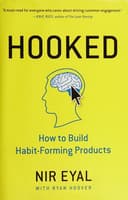
The principle of Investment and Stored Value sits at the heart of Nir Eyal's landmark 2014 book, *Hooked: How to Build Habit-Forming Products*. Eyal observed that the most habit-forming products and services in the world, think Spotify, LinkedIn, Duolingo, share a counterintuitive quality: they become more valuable to the user the more the user puts into them. Every playlist built, every connection made, every streak maintained increases the psychological cost of walking away. Eyal called this the 'Investment Phase' of the Hook Model, and it fundamentally changes how we should think about patient retention.
The psychology underpinning this principle draws from several decades of behavioural economics research. The most well-known contributor is the concept of the sunk cost effect, first formally studied by researchers Hal Arkes and Catherine Blumer in the 1980s, who demonstrated that people irrationally factor in past, unrecoverable investments when making future decisions. But Investment and Stored Value goes beyond mere sunk cost. It also draws on the endowment effect, the phenomenon, documented extensively by Nobel laureate Richard Thaler, whereby people assign significantly higher value to things they already possess than to identical things they do not yet own. When a patient has a treatment history, a progress record, a personalised plan, they own something. And ownership creates attachment.
There is also a powerful layer of effort justification at play. Research in cognitive dissonance theory, pioneered by Leon Festinger, shows that when people expend effort on something, they unconsciously increase their valuation of the outcome to justify that effort. A patient who has attended twelve physiotherapy sessions, completed home exercise programs, and tracked their pain scores has not merely spent money, they have invested cognitive effort, physical discomfort, and time. Their brain has already rationalised that investment as worthwhile. To abandon the treatment pathway would create psychological dissonance: it would mean all that effort was for nothing. The mind resists that conclusion strongly.
For allied health practices, this creates a remarkable and underutilised retention lever. Most lapsed patient re-engagement attempts focus on external incentives, discounts, reminder messages, promotional offers. These approaches treat the patient as if they have a blank slate, when in reality they carry a rich store of accumulated value inside your practice's records. Every session attended, every milestone reached, every personalised note taken by your practitioner is a piece of stored value that exists nowhere else. The behavioural science is clear: reminding patients of what they have already built is far more persuasive than offering them something new.
The Research
One of the most revealing experimental demonstrations of this principle comes from Arkes and Blumer's 1985 study published in *Organizational Behavior and Human Decision Processes*. In one of their experiments, participants who had paid more for a ski season pass attended significantly more skiing trips over the season than those who had paid a discounted price, even when weather, skill level, and stated enthusiasm were comparable. The higher-investment group were unconsciously motivated to 'get their money's worth,' demonstrating that past financial investment actively drives future behaviour. Critically, this effect was not rational; the money was already spent regardless of whether they skied or not. But the mind does not operate that way.
This finding has direct implications for healthcare settings. A patient who has attended eight chiropractic sessions and paid several hundred dollars has a psychological pull toward continuing, provided they are reminded of that investment at the right moment. The problem is that most practices allow lapsed patients to simply forget what they have built. Without a prompt, the stored value fades from conscious awareness, and the psychological anchor it provides disappears. The intervention required is not a new incentive, it is a well-timed reminder that reactivates the patient's awareness of what they already own inside your practice.
How to Apply This in Your Practice
The first step in applying Investment and Stored Value to lapsed patient re-engagement is conducting a data audit. Your practice management software already holds the raw material for this strategy: session counts, total investment figures, treatment milestones, practitioner notes, and exercise programs. Before you can leverage a patient's stored value, you need to be able to surface it quickly and personalise it specifically. A message that says 'We miss you' is forgettable. A message that says 'You've completed 9 sessions and invested $720 in your recovery, your personalised treatment plan and progress notes are right here waiting for you' is psychologically arresting. The specificity is not just a nice touch; it is the mechanism through which the behavioural principle actually operates.
When crafting your re-engagement communications, frame the stored value as something the patient risks losing, not something the practice is trying to sell them. The language of ownership and continuity is far more compelling than promotional language. Consider message copy along these lines: 'Hi [Name], it's been a little while since we've seen you. We wanted to let you know that your full treatment history, your [practitioner name]'s personalised notes, and the progress you made on your [specific condition] are all still here. Picking up where you left off is much easier than starting again from scratch, and you've already done the hard yards.' This framing activates both the endowment effect (you own something valuable here) and loss aversion (you risk losing the continuity of that investment).
Timing is critical to making this strategy work. Research on habit loops and behavioural triggers consistently shows that interventions are most effective when delivered at moments of natural reconsideration, not randomly. For allied health practices, the optimal re-engagement window is typically 4 to 8 weeks after a patient's last attendance, before the psychological distance becomes too great and before they have fully transitioned to a competitor or a 'do nothing' default. Set automated triggers in your practice management system to flag patients who have not rebooked within 28 days of their last appointment, and deploy your stored-value message within that window. A second touchpoint at 60 days, with a slightly more direct call to action, captures those who did not respond to the first.
Finally, consider the channel mix carefully. SMS messages have significantly higher open rates than email in the healthcare context, making them well-suited for the initial re-engagement touchpoint. However, email allows you to be more expansive, you can include a summary of the patient's treatment journey, a specific note from their practitioner, and a clear call to action link for rebooking. A two-step approach, SMS to prompt awareness, email to deliver the full stored-value message, tends to outperform either channel used in isolation. Whatever the channel, the behavioural principle remains constant: make the patient's past investment vivid, specific, and feel like something worth protecting.
Get one behavioral science principle per week
Applied to patient retention. Backed by research. No fluff.
Seeing It in Action
Sophie, a 38-year-old primary school teacher, attended a podiatry clinic in Brisbane for seven sessions over four months to address chronic plantar fasciitis. She made significant progress, her morning pain had reduced substantially, she had been fitted for custom orthotics, and her podiatrist had developed a detailed return-to-running program tailored specifically to her gait pattern and weekly schedule. Then, the school term picked up, life got busy, and Sophie simply stopped rebooking. Eight weeks passed.
The clinic's practice management system flagged Sophie as lapsed and triggered an automated re-engagement sequence. The first touchpoint was an SMS: 'Hi Sophie, we noticed it's been a little while since your last visit. You've come a long way with your plantar fasciitis, 7 sessions, custom orthotics fitted, and a running program built just for you. All of that is still here whenever you're ready. Want to pick up where you left off?' Two days later, she received a short email from her podiatrist that included a brief summary of her treatment progress and a specific note referencing the return-to-running program they had built together.
Sophie rebooked within 48 hours of receiving the SMS. In a follow-up conversation with the receptionist, she mentioned that the message had reminded her how much work she had already put in, and that the thought of losing that momentum, or having to explain her history all over again to someone new, was what tipped her back through the door. She completed her remaining treatment plan and transitioned to a twice-yearly maintenance schedule. The practice did not offer her a discount or a special promotion. They simply reminded her of what she had already built, and let the behavioural science do the rest.
Your Action Plan
- 1Audit your practice management software to identify all lapsed patients (no booking in 28+ days) and pull their session count, total spend, and key treatment milestones for each individual.
- 2Set automated triggers at the 28-day and 60-day post-lapse marks so no lapsed patient falls through the cracks without receiving a personalised re-engagement touchpoint.
- 3Craft re-engagement message templates that lead with the patient's specific stored value, session count, financial investment, named treatment plan, or milestone achieved, using the language of ownership and continuity rather than promotion.
- 4Deploy a two-channel approach: an SMS at the 28-day mark to prompt awareness, followed by a more detailed email within 48 hours that includes a practitioner-voiced summary of the patient's progress and a direct rebooking link.
- 5Review re-engagement conversion rates quarterly and A/B test different stored-value framings (e.g., emphasising session count vs. financial investment vs. specific milestone) to identify which resonates most strongly with your patient cohort.
Key Takeaway
Your lapsed patients haven't abandoned their health goals, they've simply forgotten how much they've already invested in achieving them, and a single well-crafted reminder of that stored value is often all it takes to bring them back.
Related Principles
External and Internal Triggers: Rebuild the Trigger System for Lapsed Patients
Hooked · Nir Eyal
Habits start with external triggers (notifications, emails) but graduate to internal triggers (emotions, routines) once established. A lapsed patient has lost b
Reducing Action Barriers (Simplicity): Make Rebooking Effortless with One-Tap Links
Hooked · Nir Eyal
The easier an action is to perform, the more likely it is to happen. Fogg's principle: Behavior = Motivation x Ability x Prompt.
Make It Obvious (Cue Design): Reintroduce Cues to Restart the Appointment Habit
Atomic Habits · James Clear
Habits are triggered by cues. If the cue is invisible, the habit dies. Lapsed patients have lost the environmental and calendar cues that prompted their visits.
Make It Attractive (Temptation Bundling): Bundle Rewards to Make Rebooking Irresistible
Atomic Habits · James Clear
Pair a behavior you need to do with one you want to do. Link the less appealing action with something enjoyable.