
The Unity Principle

Most allied health practices treat patient re-engagement like a transaction, send a reminder, offer a discount, hope for the best. But behavioural science tells us something far more powerful is available: when patients feel they genuinely belong to something, they don't need to be persuaded to return. They come back because leaving would mean abandoning a part of who they are.
The Science Behind The Unity Principle
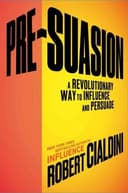
The Unity Principle, articulated by Robert Cialdini in his 2016 book *Pre-Suasion*, goes well beyond simple liking or rapport. It describes a specific category of social influence that activates when people perceive a shared identity, not just shared interests, but a genuine sense of 'we-ness.' This is the difference between saying 'I like you' and 'you are one of us.' Cialdini is careful to distinguish Unity from his earlier principle of liking: Unity is identity-based, not affinity-based. It taps into how human beings fundamentally categorise themselves and others, drawing on decades of social identity theory pioneered by psychologists Henri Tajfel and John Turner in the 1970s and 80s.
Tajfel and Turner's Social Identity Theory demonstrated that people derive a meaningful portion of their self-concept from the groups they belong to, their tribe, their community, their 'in-group.' Crucially, once someone identifies with a group, they instinctively act in ways that support and maintain that group membership. This isn't a conscious decision; it's a deeply wired social behaviour that evolved to help humans survive in cooperative communities. When you feel part of a group, the group's wellbeing becomes entangled with your own self-interest. This is why unity-based influence is so durable, it doesn't rely on a momentary emotional appeal or a time-limited offer. It reshapes how the person thinks about themselves in relation to your practice.
Cialdini identifies two primary pathways through which Unity operates: shared being (genuine commonalities of identity, place, or lineage) and shared acting (doing things together, co-creating, or collaborating). For allied health practices, both pathways are remarkably accessible. Your patients already share something profound, they are people who have chosen to invest in their physical health and long-term wellbeing. That is not a trivial commonality. In a culture where many people neglect their bodies until crisis hits, the patients who actively seek physio, chiro, osteo, or podiatry care represent a distinct group with a distinct identity. The opportunity is to name that identity, celebrate it, and reinforce it consistently.
The practical implication is significant. When your communications shift from 'here is a service you can purchase' to 'here is what it means to be part of this community,' you are no longer competing on convenience or price. You are speaking to something far stickier: a patient's sense of self. Research in social psychology consistently shows that identity-congruent behaviour is among the most resistant to change, people will go out of their way, pay more, and tolerate inconvenience to act in accordance with who they believe themselves to be. For lapsed patients specifically, this means re-engagement messaging that reconnects them to their identity as someone who prioritises their health can be dramatically more effective than a generic 'we miss you' reminder.
The Research
One of the most compelling demonstrations of identity-based influence cited by Cialdini involves research on the power of shared group membership in driving compliance and cooperation. In studies examining the effects of in-group identity on helping behaviour, researchers found that people are significantly more likely to assist, agree with, and be influenced by those they perceive as fellow group members, even when the group is newly formed or arbitrarily assigned. In classic experiments derived from Tajfel's minimal group paradigm, participants allocated more resources and expressed stronger loyalty toward others who had been assigned to the same group, even when that group assignment was entirely random and meaningless. The mere perception of shared identity was sufficient to trigger preferential treatment and cooperative behaviour.
More directly relevant to Cialdini's framing of Unity, he describes research in which participants were significantly more likely to comply with requests when the person making the request was identified as sharing a meaningful identity marker, same hometown, same heritage, same alma mater. In one study he references, the compliance rates nearly doubled when a requester established a genuine identity connection before making their ask. The critical insight is that the identity connection must precede the request, this is the 'pre-suasion' element. For allied health practices, this means establishing the community frame before asking a lapsed patient to book an appointment, not after.
How to Apply This in Your Practice
The first step in applying the Unity Principle to patient re-engagement is to consciously define and name your patient community. This sounds simple, but most practices have never done it. What do your patients have in common beyond their postcode? They are people who take their physical health seriously. They are people who understand that prevention is smarter than crisis management. They are people who have invested in understanding their own bodies. Give this community a name or a framing, it doesn't need to be a formal loyalty programme. Something as straightforward as 'the [Clinic Name] community' or 'our long-term health community' is sufficient. The language matters because it signals that belonging here is an identity, not just a transaction.
When crafting re-engagement messages for lapsed patients, those who haven't visited in three, six, or twelve months, lead with the identity frame before making any request. A text or email that opens with 'As part of the Coastal Physio community, you're someone who understands that consistent care is what separates short-term relief from long-term resilience' does something fundamentally different from 'It's been a while since your last visit.' The first message reminds the patient of who they are. The second merely highlights an absence. Example copy for a six-month lapsed patient: 'Hi [Name], you've been part of the [Clinic Name] community for [X] years, and we know you're someone who takes your long-term health seriously. We wanted to check in, not just as your practitioners, but as part of the same team working toward the same goal. When you're ready to pick things back up, we're here.' Notice there is no discount, no urgency tactic, no pressure, just an identity reinforcement and an open door.
The Unity Principle also applies powerfully to your in-clinic experience and broader communications strategy. Consider how you communicate on social media, in your newsletter, or in your waiting room. Do your communications speak to patients as consumers of a service, or as members of a community? Featuring patient stories (with consent), sharing content that reflects the values your patient group holds, resilience, proactive self-care, longevity, and using language like 'our community,' 'our patients,' and 'we believe' all reinforce the sense of shared identity. When patients see themselves reflected in your practice's values and voice, they feel the pull of belonging even between appointments.
For workflow integration, consider segmenting your lapsed patient list by how long they've been a patient, not just how long they've been absent. A patient who has been coming to you for four years but hasn't visited in five months has a much stronger identity connection to your practice than someone who came twice and disappeared. Your re-engagement sequence for long-term lapsed patients should explicitly reference that history: 'You've been part of our community since 2019, that's not something we take for granted.' For shorter-tenure lapsed patients, your Unity messaging should focus on the values they demonstrated by choosing your practice in the first place, and invite them more explicitly into the community: 'The fact that you sought care at all puts you in a group of people who think differently about their health.'
Get one behavioral science principle per week
Applied to patient retention. Backed by research. No fluff.
Seeing It in Action
Sarah had been a patient at Thornfield Osteopathy for nearly three years, coming in every six to eight weeks for management of a chronic lower back condition related to her work as a nurse. Life got busy, a shift change at the hospital, a house move, and the usual chaos of two young children meant her appointments kept getting pushed back. Before she knew it, eight months had passed. Thornfield's previous re-engagement approach would have been a standard SMS: 'Hi Sarah, it's been a while since your last visit. Book online at the link below.' She would have seen it, thought 'yes, I really should,' and then forgotten about it within the hour.
Instead, Thornfield had recently revised their lapsed patient communications using Unity-based messaging. Sarah received a personalised message that read: 'Hi Sarah, you've been part of the Thornfield community for almost three years now, and we know how much you care about staying on top of your health, especially with the physical demands your work puts on your body. We've been thinking about our long-term patients and wanted to reach out personally. How are you going? We're here whenever you're ready, and we'd love to help you get ahead of things before they become harder to manage.' There was no discount code. No urgency. Just a reflection of her identity as someone who understood the value of proactive care, and a reminder that she belonged to something.
Sarah booked within 48 hours. When she mentioned the message at her appointment, she said it felt 'different, like they actually knew me, not just my Medicare number.' She subsequently rebooked for a maintenance schedule and referred her colleague from the hospital within two months. The Unity-based message hadn't just re-engaged her; it had deepened her sense of belonging to the practice, transforming what might have been a permanent lapse into a reinvigorated patient relationship.
Your Action Plan
- 1Define your community identity. Write one or two sentences that articulate what your patients have in common beyond geography, their shared values, their commitment to proactive health, their approach to long-term wellbeing. This becomes the foundation of all Unity-based messaging.
- 2Audit your existing patient communications, SMS, email, social media, and identify every place where you speak to patients as service consumers rather than community members. Replace transactional language ('book now,' 'it's been a while') with identity language ('as part of our community,' 'as someone who prioritises their health').
- 3Build a segmented re-engagement sequence for lapsed patients that leads with the Unity frame before any call to action. Draft at least two versions, one for long-tenure patients (2+ years) that references their history with the practice, and one for shorter-tenure patients that connects them to the shared values of your community.
- 4Incorporate community language into your in-clinic environment and social media presence. Share patient stories, use 'we' and 'our community' language consistently, and create content that reflects the identity your patients aspire to, active, informed, proactive about their physical health.
- 5Train your reception and clinical team to reinforce Unity language at every touchpoint, from how they greet returning patients ('welcome back, it's good to have you here') to how they farewell patients ('we'll see you next time, looking after yourself in between'). Unity is not a marketing tactic; it's a culture that must be lived consistently across the entire patient experience.
Key Takeaway
When patients feel they belong to your practice community, not just visit it, retention stops being a marketing problem and becomes a natural expression of their own identity.
Related Principles
Privileged Moments: Time Outreach for Maximum Receptivity
Pre-Suasion · Robert B. Cialdini
There are identifiable windows in time when people are most receptive to a message. The same offer can produce drastically different results depending on when i
Attention Channeling: Direct Patient Focus Before the Ask
Pre-Suasion · Robert B. Cialdini
Whatever captures attention is perceived as more important. Simply drawing focus to an idea increases its perceived significance.
Social Proof: Show Patients That Others Complete Treatment
Influence · Robert B. Cialdini
People look to what others are doing to determine correct behavior, especially in uncertain situations.
Commitment and Consistency: Get Verbal Commitments to Increase Follow-Through
Influence · Robert B. Cialdini
Once people make a commitment (especially publicly or in writing), they feel internal pressure to behave consistently with it.