
Authority

A patient walks out of their third physiotherapy session feeling genuinely better, and then simply never comes back. No complaint, no cancellation, no explanation. Six months later, their condition has quietly regressed, and they're no closer to their original health goals. This scenario plays out in allied health practices every single day, and the frustrating truth is that a single well-crafted message from their treating practitioner could have brought them back, if that message was built around one of the most powerful psychological forces known to behavioural science: authority.
The Science Behind Authority
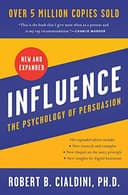
Authority, as defined by Robert Cialdini in his landmark 1984 book *Influence: The Psychology of Persuasion*, is the deeply ingrained human tendency to follow the guidance of credible experts, particularly in domains where we feel uncertain or vulnerable. It is not simply about prestige or titles; it is about the psychological relief that comes from deferring to someone who demonstrably knows more than we do. When we encounter a figure of genuine expertise, our cognitive load drops, our resistance softens, and we become far more likely to act on their recommendations.
The psychological roots of this principle run deep. From an evolutionary standpoint, deferring to experienced members of a group, those who had navigated danger, illness, or scarcity before, was an adaptive survival strategy. In modern life, that wiring remains fully intact. We look to doctors, specialists, and credentialed professionals to interpret complex information we don't feel equipped to assess ourselves. The healthcare context amplifies this dynamic considerably: patients are often anxious, uncertain about their bodies, and acutely aware of the limits of their own knowledge. This makes the authority of a trusted practitioner extraordinarily influential.
Cialdini identified three primary signals that trigger authority compliance: titles (such as 'Dr.' or 'Senior Physiotherapist'), trappings (visible symbols of expertise like credentials, clinical environments, and professional attire), and demonstrated knowledge. What makes this principle particularly potent in allied health is that all three signals are already present, practices simply need to activate them deliberately rather than leaving them dormant. The challenge is that many re-engagement communications strip out the human practitioner entirely, replacing genuine clinical authority with generic, system-generated reminders that carry none of the psychological weight that actually drives behaviour change.
Cialdini's research consistently showed that people comply with authority figures even when they have doubts, and even when the authority is relatively superficial. Studies in the medical field have found that patients are significantly more likely to follow treatment recommendations when they are framed as coming from a named, credentialed professional rather than a general health service. The implication for allied health practices is profound: the way you communicate with lapsed patients, specifically, whether your communications invoke practitioner authority, may matter as much as what you actually say.
The Research
One of the most compelling real-world demonstrations of authority compliance comes from research conducted by Cialdini and his colleagues examining physician authority in clinical compliance contexts, documented in *Influence*. The study that perhaps best illustrates the principle's raw power, however, is the now-famous Milgram obedience experiments conducted at Yale University in the early 1960s by Stanley Milgram. While not a healthcare study per se, its findings directly inform our understanding of authority in medical settings. Milgram found that approximately 65% of ordinary participants were willing to administer what they believed to be dangerous electric shocks to another person, simply because a figure in a white lab coat (representing scientific authority) instructed them to continue. The mere presence of authoritative trappings, with no genuine coercive power whatsoever, was sufficient to override participants' own moral discomfort.
More directly applicable to healthcare, research published in the field of patient adherence has consistently shown that personalised, practitioner-attributed recommendations outperform generic health reminders by a significant margin. Studies examining appointment adherence and treatment follow-through indicate that patients who receive communications framed as coming from their specific treating clinician, rather than from 'the clinic', demonstrate meaningfully higher rates of re-engagement. The mechanism is precisely what Cialdini described: when patients recognise that a qualified professional has personally assessed their situation and issued a recommendation, authority compliance kicks in and the cognitive barrier to re-booking drops substantially.
How to Apply This in Your Practice
The most important strategic shift your practice can make is to stop sending re-engagement messages that sound like they come from a scheduling system, and start sending messages that sound like they come from a clinician. This is not about deception, it is about accurately representing what actually happens in a well-run practice. When a practitioner reviews a lapsed patient's file and genuinely believes resumed treatment would benefit them, communicating that recommendation in the practitioner's voice is both clinically honest and behaviourally effective. The authority principle works because it is real: your practitioners do have expertise, and that expertise is directly relevant to the patient's situation.
In practical terms, this means restructuring your re-engagement message templates so that the practitioner is named and positioned as the source of the recommendation. Compare these two messages. Version A: 'Hi James, we noticed it has been a while since your last visit. Book online to secure your next appointment.' Version B: 'Hi James, Dr. Chen reviewed your file this week and wanted to reach out personally. Based on your progress with your rotator cuff rehabilitation, she recommends scheduling a follow-up before the gains from your treatment begin to plateau. She has availability on Thursday, would that work for you?' Version B invokes authority on three levels simultaneously: a named practitioner, a clinical assessment, and a specific professional recommendation framed around the patient's outcome. Research on persuasion tells us this kind of message is dramatically more likely to produce action.
From a workflow perspective, implementing this approach requires a structured review process. Set aside time, even 15 minutes per week, for practitioners to review a short list of lapsed patients flagged by your practice management system (or a platform like Routiq). The practitioner briefly reviews the patient's file, forms a genuine clinical view, and either approves a templated message or adds a personal note. This practitioner-review step is not just a compliance formality; it is the authentic act that gives your authority-based messaging its ethical and psychological foundation. Patients should receive a communication that genuinely reflects a clinical opinion, not a simulated one.
Finally, consider the broader signals of authority your practice can embed across the re-engagement journey. Include practitioner credentials in your message signature. Reference specific clinical details from the patient's treatment history to signal that a real expert reviewed their actual case, not just a generic patient record. If you follow up by phone, ensure the call comes from the treating practitioner when possible, or from a staff member who can accurately convey the practitioner's recommendation. Every additional authority signal reinforces the same psychological trigger, compounding the likelihood that the patient will re-engage and, more importantly, complete a meaningful course of treatment.
Get one behavioral science principle per week
Applied to patient retention. Backed by research. No fluff.
Seeing It in Action
Marcus, a 44-year-old logistics manager, had attended six sessions of chiropractic care at a Melbourne clinic for chronic lower back pain. After his sixth appointment, his pain had reduced by roughly 60%, and he felt well enough to return to his normal routine. He intended to book a follow-up but kept postponing, telling himself he would 'wait and see.' Eight weeks passed. The clinic's practice management software flagged him as lapsed and automatically sent a standard reminder: 'Hi Marcus, it's been a while, book your next appointment online.' Marcus glanced at it, thought 'I'll do it later,' and forgot about it entirely. His back pain had quietly begun returning.
The clinic then implemented a new re-engagement workflow using Routiq, which prompted his treating chiropractor, Dr. Lena Kovacs, to review his file during her Tuesday admin block. Recognising that Marcus was at the exact stage where patients commonly regress without a consolidation phase, she approved a personalised message: 'Hi Marcus, Dr. Kovacs here, I reviewed your file this week and wanted to reach out. The progress you made across your first six sessions was genuinely strong, but this is typically the stage where the underlying joint and soft tissue changes need reinforcement to hold long-term. I'd strongly recommend one or two consolidation appointments before the gains plateau. I have space on Thursday at 5:30 PM if that suits you.' Marcus read the message twice. The specificity of the clinical reasoning, combined with knowing his actual practitioner had personally looked at his case, made it feel impossible to dismiss.
Marcus booked within the hour. He attended two further sessions, completed a home exercise programme Dr. Kovacs tailored for him, and, critically, remained pain-free at a three-month follow-up. When asked later what had prompted him to rebook, he said, 'When Dr. Kovacs said she'd actually looked at my file and had a specific concern, I took it seriously. If it had just been a generic reminder, honestly, I probably would have ignored it.' That is the authority principle working exactly as Cialdini described: in a domain of uncertainty, a credible expert's personalised recommendation bypasses rationalised inaction and produces a concrete behavioural outcome.
Your Action Plan
- 1Audit your current re-engagement templates and identify every message that does not include a named practitioner, a specific clinical context, or a direct professional recommendation, these are your highest-priority messages to rewrite.
- 2Build a weekly practitioner file-review ritual of 10-15 minutes where treating clinicians review a short list of lapsed patients flagged by your system, forming a genuine clinical view on whether resumed treatment is warranted.
- 3Rewrite your core re-engagement message templates so that every version names the treating practitioner, references a specific clinical detail from the patient's treatment history, and frames the recommendation as a professional opinion, not a scheduling prompt.
- 4Ensure all outbound re-engagement communications include the practitioner's full name, professional title, and relevant credentials in the sign-off or sender field, reinforcing the authority signal at every touchpoint.
- 5Track re-engagement response rates separately for practitioner-attributed messages versus generic reminders, and use the data to continuously refine your messaging, letting the behavioural science validate itself in your own patient population.
Key Takeaway
When a lapsed patient hears from their actual practitioner, not a system, not 'the team,' but the named expert who knows their case, the authority principle transforms a dismissible reminder into a clinical recommendation they feel genuinely compelled to act on.
Related Principles
Social Proof: Show Patients That Others Complete Treatment
Influence · Robert B. Cialdini
People look to what others are doing to determine correct behavior, especially in uncertain situations.
Commitment and Consistency: Get Verbal Commitments to Increase Follow-Through
Influence · Robert B. Cialdini
Once people make a commitment (especially publicly or in writing), they feel internal pressure to behave consistently with it.
The Unity Principle: Build Tribal Identity Around Your Clinic
Pre-Suasion · Robert B. Cialdini
People are most influenced by those they perceive as part of their in-group, people who share their identity, values, or experiences.
Belief and Community: Use Patient Stories to Build Belief in Coming Back
The Power of Habit · Charles Duhigg
Belief in the possibility of change is essential, and it is strengthened by community and social connection.