
Belief and Community
A patient walks out of your clinic after their final scheduled appointment, feeling great, and you never hear from them again. Six months later, they're back in pain, but they're booking with a competitor because they assumed you wouldn't remember them, or worse, that returning would feel awkward. This silent dropout pattern is one of the most costly problems in allied health, and the solution isn't a discount offer or a generic reminder SMS, it's rooted in something far more fundamental: the human need to believe that change is possible, and to feel part of a community that validates that belief.
The Science Behind Belief and Community
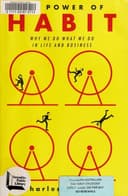
In 'The Power of Habit,' Charles Duhigg draws on years of reporting and neuroscience research to identify something that surprised even the scientists studying habit formation: knowing how habits work isn't enough to change them. The missing ingredient is belief. Specifically, people need to believe that change is genuinely possible for them, not just theoretically, but personally and concretely. And that belief, Duhigg found, is almost impossible to sustain in isolation. It needs to be nurtured by community.
This insight emerged most powerfully from Duhigg's investigation into Alcoholics Anonymous, which has helped millions of people transform entrenched behaviours despite having no formal grounding in clinical psychology. What AA got right, almost by accident, was the architecture of belief. When a new member hears someone else in the room say 'I was where you are, and I got through it,' something neurologically significant happens. The brain's threat-assessment system, which had been generating the unconscious message 'this is too hard, it won't work for me,' is interrupted by lived social proof. The abstract possibility of change becomes concrete. Research on social learning theory, pioneered by Albert Bandura in the 1970s and 1980s, formalised this mechanism: we update our sense of what we're capable of, what Bandura called 'self-efficacy', primarily by observing others who are similar to us succeed.
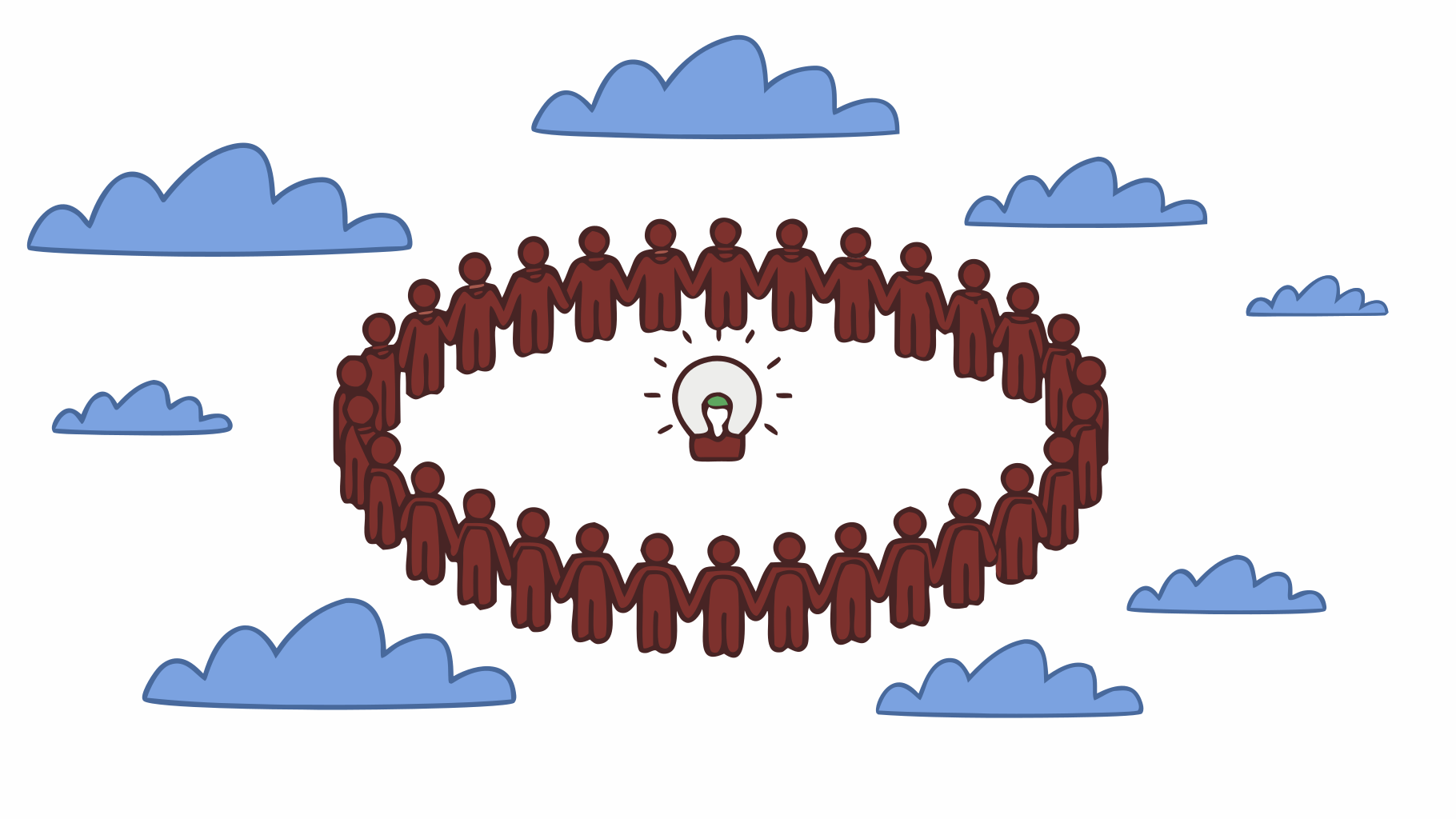
For habit change to stick, Duhigg argues, people need repeated exposure to others who have made the same journey. This isn't about peer pressure or cheerleading. It's about the brain receiving ongoing evidence that the behaviour is achievable, normal, and worthwhile. In clinical terms, this maps onto what practitioners already know about therapeutic alliance and patient activation, but it extends beyond the one-to-one relationship between practitioner and patient into the broader social fabric surrounding the practice. When patients feel they belong to a community of people who prioritise their health and who have experienced similar challenges, their intrinsic motivation to engage is significantly strengthened.
The implications for patient retention are profound. A lapsed patient isn't simply someone who forgot to book. They are, in most cases, someone whose belief in the value and accessibility of returning has quietly eroded. They may have told themselves 'it's been too long,' or 'they'll wonder why I left it so long,' or 'I'll wait until it gets bad enough.' These are belief barriers, not logistical ones. And research consistently shows that social proof, hearing that others in similar situations came back and found it worthwhile, is one of the most effective mechanisms for dismantling those barriers.
The Research
The most instructive real-world demonstration Duhigg documents involves a study of habit change programmes conducted by researchers examining why some AA groups achieved dramatically better long-term sobriety rates than others. What separated the high-performing groups wasn't the quality of the facilitators, the frequency of meetings, or the severity of participants' addiction histories. It was the depth of social bonds formed within the group. In groups where members genuinely knew each other, shared personal stories, and developed a sense of mutual accountability and belonging, the rate of sustained behaviour change was significantly higher. Duhigg references the work of researchers who found that when people joined groups where change seemed not just possible but expected and supported by the community, they were far more likely to maintain new behaviours through setbacks, the inevitable moments when motivation alone would have failed them.
Bandura's foundational self-efficacy research, conducted across multiple studies from the late 1970s onward, provides the mechanistic explanation. In one classic experimental paradigm, participants who observed a peer, someone they perceived as similar to themselves, successfully complete a difficult task showed measurably higher confidence and performance on the same task compared to those who only received instruction or encouragement. The effect was strongest when the observer identified closely with the model. This is why a testimonial from 'a 52-year-old with chronic lower back pain' lands differently for your 54-year-old lapsed patient than a generic success story, the brain is constantly asking 'does this apply to me?' and social similarity is how it answers yes.
How to Apply This in Your Practice
The first step in applying the Belief and Community principle to patient re-engagement is building a library of authentic patient stories, specifically stories of people who lapsed and returned. These aren't marketing testimonials about how great your clinic is. They are belief-building narratives that follow a specific arc: the patient was doing well, life got in the way, they stayed away longer than they intended, they had some hesitation about coming back, and then they did, and it was easier and more valuable than they expected. That story structure directly addresses the belief barriers your lapsed patients are experiencing right now. With appropriate consent, collect these stories through a brief follow-up conversation after a patient's return appointment, and capture them in written or video format.
When reaching out to lapsed patients, those who haven't booked in 3, 6, or 12 months, your reactivation message should lead with one of these stories rather than a call to action. For example: 'We wanted to share something from one of our patients, David, a 48-year-old tradesman who hadn't been in for seven months. He told us he kept putting it off because he figured the pain wasn't quite bad enough yet. After his first session back, he said, I can't believe I waited this long. My body feels like it used to.' Follow this with a warm, low-pressure invitation: 'If any part of that sounds familiar, we'd love to welcome you back. No judgement about the gap, we're just glad when patients come back before things get harder to manage.' This message works because it isn't selling; it's demonstrating that return is normal, worthwhile, and welcomed.
Beyond individual reactivation messages, consider how your practice environment itself communicates community. Do your waiting room walls show real patient stories? Does your email newsletter include a regular 'patient spotlight' that features someone's health journey, including honest moments of lapsing and returning? Does your front desk team know to say 'It's great to see you back, you're not the first person who's taken a break and come back in, and they're always glad they did'? These touchpoints cumulatively shape a patient's sense that your practice is a community they belong to, not a service they occasionally transact with. That sense of belonging is what reduces the psychological friction of re-engagement.
From a workflow perspective, platforms like Routiq can automate the delivery of these belief-building messages at precisely the right moments in the lapse timeline, but the content strategy must be intentional. Segment your lapsed patients and match the story you share to their demographic and clinical profile where possible. A 60-year-old osteoporosis patient responds to a different story than a 30-year-old runner with a recurrent hamstring issue. The mechanics of automation handle the timing and delivery; the behavioural science demands that the content itself carries genuine social proof, specific detail, and emotional resonance. Generic 'we miss you' messages don't activate the belief mechanism, specific human stories do.
Get one behavioral science principle per week
Applied to patient retention. Backed by research. No fluff.
Seeing It in Action
Consider the case of a physiotherapy clinic in suburban Melbourne that was struggling with a common pattern: a high volume of patients completed their initial treatment plan, reported good outcomes, and then disappeared from the books entirely. The practice manager, reviewing their data, identified over 200 patients who had been discharged as 'successful' but hadn't booked a maintenance or review appointment in more than six months. Standard reactivation attempts, a discount offer on a review session, a generic 'how are you feeling?' SMS, yielded almost no response.
The clinic changed its approach based on the Belief and Community principle. They spent four weeks collecting short written testimonials from recently returned lapsed patients, focusing specifically on the experience of coming back after a gap. They gathered eight stories, including one from Margaret, a 61-year-old retired teacher who had managed her knee osteoarthritis well for two years before a family health crisis caused her to stop attending. She had stayed away for eight months, assuming the problem had resolved well enough. When she eventually returned, her condition had regressed noticeably, but three sessions restored much of her function. Her quote: 'I kept thinking I'd wait until it was really bad. I wish someone had told me that coming back early is so much easier than starting again.'
The clinic built Margaret's story, with her consent and first name only, into a reactivation sequence delivered to their lapsed patient cohort. The message included her quote, a brief explanation of why gaps in care can lead to regression, and a simple booking link with a note that the first return appointment would include a complimentary reassessment. Within three weeks, 34 of the 200 lapsed patients booked, a reactivation rate the practice manager described as unlike anything they'd seen from previous campaigns. More importantly, exit surveys from those returning patients frequently referenced the patient story as the reason they finally made the call. The story didn't just remind them the clinic existed, it gave them permission to believe returning was the right thing to do.
Your Action Plan
- 1Identify your lapsed patient cohort by pulling a report of all patients who haven't booked in 90+ days, segmented by how long they've been absent and their primary presenting condition, this gives you the foundation for targeted, relevant outreach.
- 2Collect belief-building patient stories by reaching out to 5-10 recently returned lapsed patients with a simple request: 'Would you be willing to share a few sentences about what made you come back, and what that first session felt like?' Obtain written consent for use in communications, and capture their name, age, and condition category for relatability.
- 3Build a reactivation message template that leads with a specific patient story matched to the recipient's profile, for example, send the story of a returned shoulder pain patient to your lapsed shoulder pain cohort, followed by a warm, judgement-free invitation to rebook, and a single clear call to action.
- 4Brief your front desk and clinical team on the Belief and Community principle so that when lapsed patients call or return in person, staff reinforce the message verbally, normalising the gap, affirming the decision to return, and referencing that many patients come back after similar breaks.
- 5Create an ongoing system for refreshing your patient story library every quarter, and integrate community-building content, patient spotlights, return stories, practitioner updates, into your regular email communications so that even patients who aren't currently lapsed maintain a sense of connection and belonging to your practice community.
Key Takeaway
Lapsed patients don't need a discount to come back, they need to believe that returning is possible, normal, and worthwhile, and the most powerful way to create that belief is to show them someone just like them who already did it.
Related Principles
The Habit Loop (Cue-Routine-Reward): Design the Patient Journey as an Automatic Loop
The Power of Habit · Charles Duhigg
Every habit operates on an automatic loop: a cue triggers a routine, which delivers a reward. Once established, habits run on autopilot without conscious though
The Golden Rule of Habit Change: Replace the Routine, Keep the Reward
The Power of Habit · Charles Duhigg
You cannot eliminate a habit; you can only replace the routine while keeping the same cue and reward.
Social Proof: Show Patients That Others Complete Treatment
Influence · Robert B. Cialdini
People look to what others are doing to determine correct behavior, especially in uncertain situations.
Commitment and Consistency: Get Verbal Commitments to Increase Follow-Through
Influence · Robert B. Cialdini
Once people make a commitment (especially publicly or in writing), they feel internal pressure to behave consistently with it.