
Reciprocity
A patient walks out of your practice after their sixth session, feeling better than they have in years, and then you never hear from them again. Six months later, they're back in pain, but they've booked with a competitor down the road. This isn't a loyalty problem or even a satisfaction problem; it's a reciprocity problem, and behavioural science has a remarkably elegant solution.
The Science Behind Reciprocity
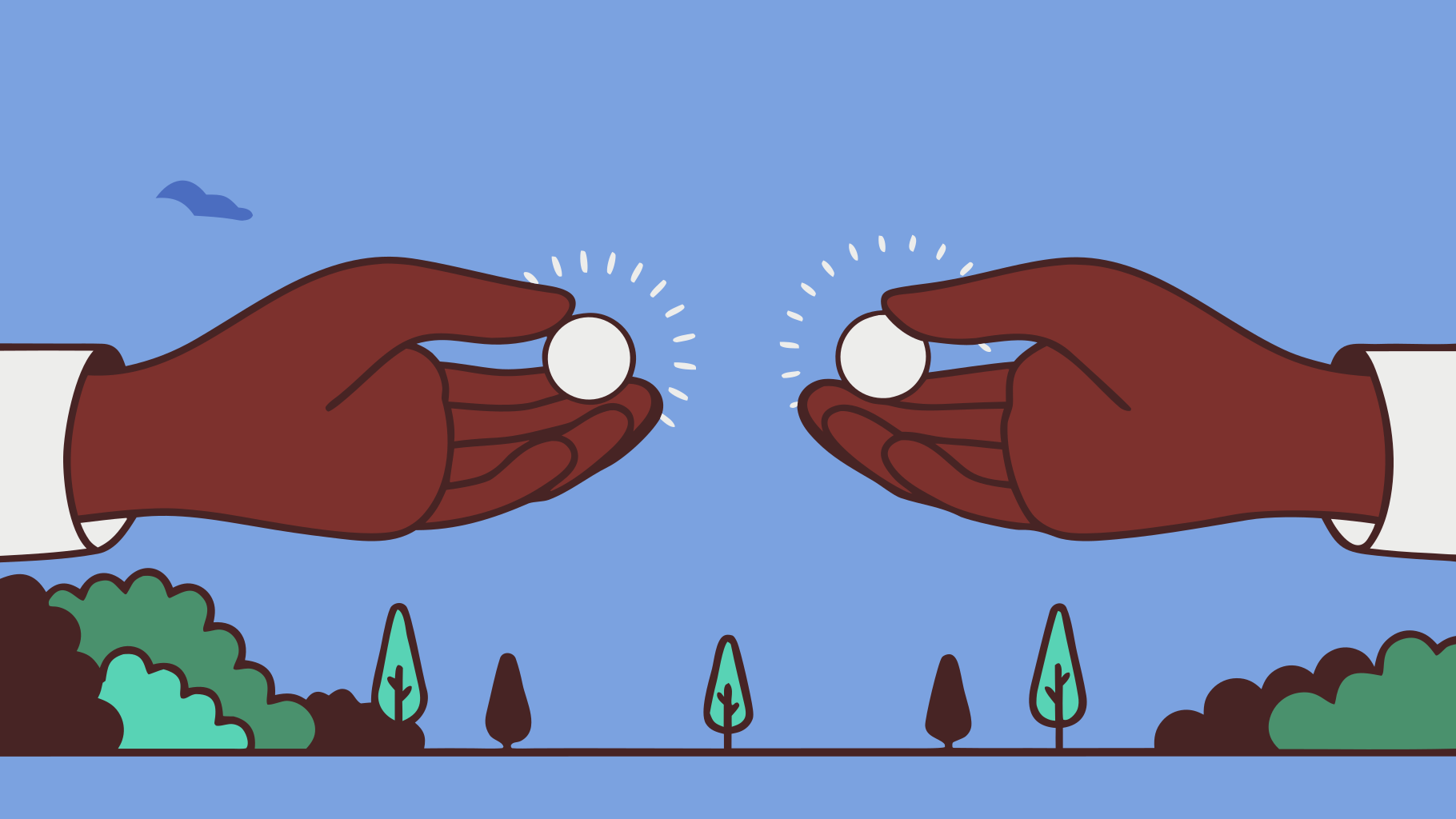
Reciprocity is one of the most deeply embedded social norms in human psychology. At its core, it describes our near-universal compulsion to return favours, when someone gives us something, we feel a psychological obligation to give something back. This isn't a polite social convention we consciously choose to follow; it operates at a level that bypasses rational decision-making entirely. Anthropologists have found evidence of reciprocity norms in every human culture ever studied, suggesting it is wired into us as a species, likely because cooperative exchange was essential to our survival as social animals.
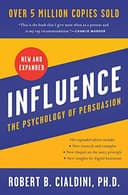
Robert Cialdini, a social psychologist at Arizona State University, brought reciprocity to mainstream awareness in his landmark 1984 book 'Influence: The Psychology of Persuasion.' Drawing on years of field research and controlled experiments, Cialdini identified reciprocity as one of six core principles of influence, and arguably the most powerful. What made his findings so striking was not just that people feel obligated to return favours, but the degree to which this obligation overrides other factors. People will return favours even when the original gift was uninvited, even when they didn't particularly like the giver, and even when the favour they return is significantly larger than the one they received.
The psychological mechanism behind reciprocity involves what researchers call 'psychological indebtedness', an uncomfortable emotional state triggered when we receive something without immediately reciprocating. This discomfort is not trivial. Studies suggest that unreciprocated gifts create genuine psychological tension that people are strongly motivated to resolve. This is why charities that include small gifts in fundraising mail, personalised address labels, calendars, or notepads, consistently outperform those that simply ask for donations. The gift creates an obligation, and the donation becomes the resolution of that tension.
For allied health practitioners, this principle reframes the entire challenge of patient re-engagement. Most practices approach lapsed patients by leading with an ask, a reminder, a promotion, a 'we miss you' message. But behaviourally, this is backwards. You are asking for something (a booking, attention, a response) before you have created any psychological obligation in the patient. When you reverse the sequence, when you give something of genuine value first, you activate the reciprocity norm and make the subsequent ask feel like a natural, comfortable response rather than a commercial interruption.
The Research
The most famous experimental demonstration of reciprocity in Cialdini's research involved a study by psychologist Dennis Regan in the early 1970s. Regan had participants rate paintings alongside a confederate (an actor posing as another participant). In one condition, the confederate did the participant an unsolicited favour, disappearing briefly and returning with two Coca-Colas, one for himself and one for the participant. In the control condition, the confederate returned with nothing. Afterward, the confederate asked participants to buy raffle tickets to support his cause. The results were striking: participants who had received a Coke bought roughly twice as many raffle tickets as those who had not, even though nobody had asked them to accept the drink in the first place. Crucially, Regan also measured how much participants liked the confederate, and found that likeability had virtually no effect on ticket purchases among those who had received the favour. The obligation to reciprocate was so strong that it operated independently of whether the person actually wanted to help the giver. The gift itself was sufficient to create the obligation.
How to Apply This in Your Practice
The strategic insight here is straightforward: before you ask a lapsed patient to rebook, give them something genuinely useful. Not a discount voucher (that's still an ask dressed as a gift), and not a generic newsletter, something that specifically addresses their condition, their history with your practice, and their life outside the clinic. The more personalised and relevant the gift, the stronger the reciprocity response. A physiotherapist sending a lapsed patient with a history of lower back pain a short video demonstrating two evidence-based stretches they can do at their desk is not marketing, it is care. And care, when it arrives unexpectedly, creates obligation.
In practical terms, this means structuring your re-engagement workflow in two distinct phases. In phase one, you deliver the value, no strings attached, no call to action, no booking link. A good example message might read: 'Hi Sarah, we were thinking about you this week. We know you've been managing some recurring shoulder tension, so we put together a short three-minute video with two mobility exercises that our patients find really helpful between sessions. No need to reply, just wanted to share something useful.' That's it. Send the resource, close the message, and wait. The absence of an immediate ask is itself a powerful signal that you are giving without expectation, which paradoxically makes the obligation feel stronger, not weaker.
Phase two comes two to four days later, after the patient has had time to receive and use the resource. Now you follow up: 'Hi Sarah, we hope those shoulder exercises were helpful. We wanted to check in and see how you've been going, it's been a few months since we've seen you. If you've noticed things tightening up again, we have some availability this week and would love to see you back in. You can book directly here.' This message lands very differently than a cold re-engagement prompt. The patient has just received something of value from you. They feel, behaviourally speaking, that they owe you a response. Booking an appointment becomes the psychologically satisfying way to resolve that sense of indebtedness.
For maximum effectiveness across your patient base, segment your lapsed patients by condition and tailor the gift accordingly. Podiatry patients might receive a guide to footwear selection for their specific foot type. Chiropractic patients managing desk-related neck pain might get a workspace ergonomics checklist. Osteopathy patients recovering from a sports injury might receive a progressive return-to-training framework. The specificity signals that you actually remember them and care about their individual situation, which amplifies the reciprocity effect because the gift doesn't feel mass-produced. Platforms like Routiq make this segmentation and sequencing manageable at scale, allowing you to automate the two-phase delivery while keeping the content genuinely personalised.
Get one behavioral science principle per week
Applied to patient retention. Backed by research. No fluff.
Seeing It in Action
Marcus is a 41-year-old project manager who completed a six-week course of treatment at a chiropractic clinic in Brisbane for chronic thoracic stiffness linked to long hours at a standing desk. He responded well, left feeling significantly better, and fully intended to come back for a maintenance session every six to eight weeks. Eight months passed. Life got busy, his discomfort crept back gradually enough that he adapted to it, and the clinic faded from his awareness. From the clinic's perspective, Marcus had simply lapsed, one of dozens of patients who disappear not out of dissatisfaction but out of inertia.
The clinic's practice manager, using Routiq, identified Marcus in their lapsed patient cohort and triggered a two-phase re-engagement sequence. On day one, Marcus received a text message from his treating chiropractor: 'Hey Marcus, we were reviewing some resources for our desk-based patients and thought you'd find this useful. It's a five-minute thoracic mobility routine specifically designed for people on standing desks. Hope things are going well.' The message included a link to a short video. Marcus watched it that evening, found it genuinely helpful, and forwarded it to a colleague. He felt, without quite articulating it, that the clinic had done something kind.
Four days later, a follow-up message arrived: 'Hi Marcus, hope the thoracic routine has been useful. We'd love to catch up, it's been a while since your last visit and it would be great to do a quick check-in and see how you're tracking. We have a few spots available this week and next. Would any of these times work for you?' Marcus booked within twenty minutes of reading the message. When asked later what prompted him, he said simply, 'They reached out with something helpful, it felt right to go back.' He had no conscious awareness of the reciprocity norm operating on his decision. He only knew that booking felt like the natural next step.
Your Action Plan
- 1Segment your lapsed patient list by condition or treatment type, create at minimum three to four groups (e.g., musculoskeletal, sports injury, postural/desk-related, post-surgical) so you can match resources to patient history rather than sending generic content.
- 2Develop a small library of genuinely useful resources, short exercise videos, condition-specific guides, self-assessment tools, that you can assign to each segment. These should be created or curated by your treating practitioners to ensure clinical credibility and a personal voice.
- 3Send the value-first message with no call to action, using the patient's name, referencing their specific condition or treatment, and delivering the resource with no booking link or promotional language. The message should read as care, not marketing.
- 4Wait two to four days, long enough for the patient to receive and engage with the resource, then send a warm, low-pressure follow-up that acknowledges the previous message, invites them to rebook, and makes it easy with a direct scheduling link.
- 5Track response rates by segment and resource type, and refine your library over time based on what generates the highest re-engagement, this turns your reciprocity strategy into a continuously improving asset rather than a one-off campaign.
Key Takeaway
Before you ask a lapsed patient for anything, give them something genuinely useful first, because reciprocity doesn't just make people feel good, it makes rebooking feel like the obvious and natural response.
Related Principles
Social Proof: Show Patients That Others Complete Treatment
Influence · Robert B. Cialdini
People look to what others are doing to determine correct behavior, especially in uncertain situations.
Commitment and Consistency: Get Verbal Commitments to Increase Follow-Through
Influence · Robert B. Cialdini
Once people make a commitment (especially publicly or in writing), they feel internal pressure to behave consistently with it.
The Unity Principle: Build Tribal Identity Around Your Clinic
Pre-Suasion · Robert B. Cialdini
People are most influenced by those they perceive as part of their in-group, people who share their identity, values, or experiences.
Belief and Community: Use Patient Stories to Build Belief in Coming Back
The Power of Habit · Charles Duhigg
Belief in the possibility of change is essential, and it is strengthened by community and social connection.